Risk Management

The Utility Myth

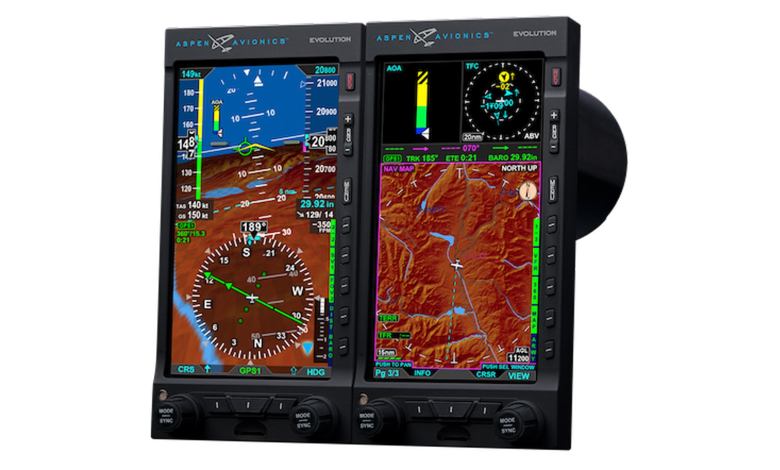
Not a winter goes by without someone sending me an e-mail that includes the sentence, “You aren’t really suggesting I don’t fly my airplane in IMC in the winter?” It’s usually from the pilot of a very capable piston single or light twin that is not certificated for flight in icing conditions; often the pilot includes something like, “I live in the Great Lakes and we get icing a large part of the year.” Sometimes I get a similar question about passenger and baggage loads. “The engineers at [insert airplane manufacturer name here] wouldn’t have designed the airplane with six seats if it couldn’t carry six adults, or at least four adults and two kids. Do you really mean I can’t fill the seats and the fuel tanks?” A current trend is questions about synthetic vision systems in glass cockpit panels or cutting-edge heads-up displays. “With an essentially VFR depiction of the runway, I can make a zero-zero takeoff and even a zero-zero landing ‘if I have to’, can’t I?”
Read More »

A Tale Of Two Pilots

In this article, I will ask readers to suspend disbelief until you have read the article completely. I am sure you will have your own opinions, about both the article and my own motivation in writing it. I believe, however, that most of you will appreciate the message I am trying to convey and that you will also observe how the stakeholders in aviation safety may be approaching the subject in completely different ways. The key questions are not only about how effective they are individually but how they can remain complementary.

Read More »

Adding It All Up

Are we at risk of things that never happen? Can we be hurt by what we don’t know? The answers are “Yes” and “Yes.” From the start of training, one thing our instructors and mentors try to infuse in us is that knowledge is power, but only if we suitably use that knowledge and apply it to the tasks at hand. Conditions—of the weather, to be sure, but also the airplane and facilities we plan to use, as well as our own skills—tend to drive the risk to which we’re exposed. And the more conditions depart from the expected, the greater is the risk of something going wrong.

Read More »

Blue-Sky Briefings

The reports, preliminary and final, too often contain this fateful 10-word sentence: “The pilot did not obtain a weather briefing before departing.” It runs right up there with the tried-and-failed “continued VFR into IMC.” How and why any pilot would fly without a weather briefing almost defies logic these days. Accurate weather information has never before been more plentiful or accessible. The FAA even recognizes a pilot can fulfill all legal requirements of a pre-flight briefing without dialing a Flight Service Station on 1-800-Wx-Brief. Thanks to the wonders of technology, even flight-critical information—Notams, TFRs and the like—can be accessed independently.

Read More »

Analyzing Fatals

The NTSB (or FAA when delegated by NTSB) investigates fatal accidents and the Board issues reports on the probable cause of the accident. The reports also list contributing factors to the accident. Typically, the final reports are peppered with words such as loss of control, controlled flight into terrain (CFIT) and other language describing the final event in the accident sequence and attributing it to one or more other events. But rarely does the report explain the “why” of the accident or the “how” of the pilot’s or other participants’ actions relating to the “why.” For example, in a loss-of-control accident, why did the pilot lose control of the aircraft and how did he or she place themselves in that predicament?

Read More »

Automating Weather

Properly managing risk is essential to successfully pursuing life’s more exciting adventures. Activities such as scuba diving, downhill skiing, motorcycling, mountaineering and, of course, flying, all entail elements of risk which we must consider and manage if the thrills we seek are to be experienced more than once. But risk management often is poorly understood: While most people believe themselves to be prudent, the reality is large risks are often ignored and minor dangers grossly exaggerated. In general aviation, our inability to assess risk properly is evidenced by the number of weather-related accidents consistently gracing NTSB logs, even in the face of widely available near-real-time meteorological data on the ground and in the cockpit.

Read More »

The Training Mix

In recent years, the general aviation community has complained our activity has grown too complicated and, as a result, applicants for the private pilot certificate now average about 70 or so hours before passing a checkride. Yes, aviation has gotten more complicated, but we should question the notion it takes that many hours in an airplane to become a competent private pilot. A corollary is that existing practices also can be improved to benefit existing pilots and enhance their recurrent training experience.

Read More »

Risk Management, Military Style

No matter what we do in an aircraft, we cannot eliminate risk entirely. Instead, we can manage that risk and take positive steps to mitigate or reduce it; in rare cases, we may even be able to eliminate it. An example of the latter might be cancelling a trip for poor weather, or because of a mechanical issue. But we should be mostly concerned with mitigating and reducing the risks our flying poses.. Of course, there are many ways to accomplish these goals. I believe most of us in general aviation have sat through a presentation or seminar discussing risk management.

Read More »

Is It Safe?

Anyone spending much time around personal aircraft sooner or later will be forced to confront the increased risk flying them can entail. It might be after a close call in the traffic pattern, or a rough-running engine without a decent landing area in sight. And we won’t even mention trying to intelligently discuss general aviation safety with a skeptical co-worker, nosy neighbor or unimpressed mother-in-law who’s convinced those little airplanes we fly are deathtraps. The fact is, flying personal airplanes does increase our risk of death or injury. So does engaging in many other activities—skiing, motorcycling, rock climbing, scuba diving—as well as things as mundane as commuting to work or taking a shower. Basically, everything we do carries some risk. Understanding and mitigating those risks is key to our longevity.

Read More »

Are Flight Instructor Reforms Needed?

Both industry and the FAA recently have emphasized the importance of effective flight training to improve the fatal accident record. Flight instructors, who serve on the front lines in this effort, are the crucial human element in the flight training delivery system and the glue holding the other elements together. But questions regarding their experience, training, continuing education and professionalism raise doubts about whether the service they provide is effective, consistent, relevant and customer-friendly. After all, if they were doing their job, would the trend lines in general aviations safety record be as flat as they are?

Read More »
Pilot in aircraft
Sign-up for newsletters & special offers!

Get the latest stories & special offers delivered directly to your inbox.

SUBSCRIBE