











Few chapters in the great book of safe flying are as incomplete and misleading as guidance for avoiding mid-air collisions. In over 50 years of active flying, I have not yet seen any information accurately describing a workable method ensuring awareness and avoidance of mid-air collisions for the general aviation pilot. In fact, the FAAs well-meaning rules and guidance may be dysfunctional seeds of disaster, sown early in a pilots flying career, later leading to a mid-air collision. Its actually a familiar story: Concepts based on intuitive 288
Mid-Air Collisions: The Myth And The Math
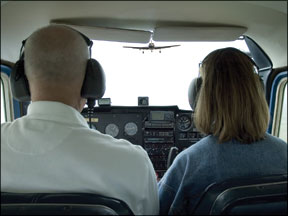
Few chapters in the great book of safe flying are as incomplete and misleading as guidance for avoiding mid-air collisions. In over 50 years of active flying, I have not yet seen any information accurately describing a workable method ensuring awareness and avoidance of mid-air collisions for the general aviation pilot. In fact, the FAAs well-meaning rules and guidance may be dysfunctional seeds of disaster, sown early in a pilots flying career, later leading to a mid-air collision. Its actually a familiar story: Concepts based on intuitive assumptions-instead of empirical knowledge-so often become concrete and immutable. The pilots ability to see and be seen is one of the most profound of all safety myths, and understanding why pilots are not always able to meet this obligation will help avoid complacency, motivating us all to compensate for deficiencies in the system. Lets get started.

Key Takeaways:
- Current "see and avoid" guidance and some FAA regulations (e.g., speed limits, altitude rules) are flawed, potentially increasing mid-air collision risk by promoting conditions where aircraft fly at similar speeds.
- Mid-air collision potential is highest when aircraft fly at similar speeds, as this maximizes blind spots and the visual scan area, making it extremely difficult for pilots to see and avoid other traffic.
- To mitigate this risk, pilots should aim for a significant speed differential with other aircraft when safe, and actively perform a "clearing-weave" (continuous slight maneuvering) to help clear blind spots and enhance visual acquisition.
Key takeaways sponsored by Aviator Pro | Start Your Training ->
See a mistake? Contact us.

