











For most general aviation pilots, military aviation is something of a mystery. The equipment usually is different-though many civilian designs have been placed in military service-and its the rare GA pilot whose mission involves dropping or 288
A Military Perspective On General Aviation
For most general aviation pilots, military aviation is something of a mystery. The equipment usually is different-though many civilian designs have been placed in military service-and its the rare GA pilot whose mission involves dropping or shooting things. Of course, the process of taking someone off the street and turning them into a pilot commanding several million dollars of often-lethal hardware-after only months of training and a few hundred hours of flight time-is much more refined than most civilian flight training.But military aviation can offer several lessons for general aviation, especially when considering risk management. And while civilian operations also are vastly different from the militarys, that doesnt mean the transfer of valuable lessons is one-way. After years of Marine Corps flying, I recently "transitioned" to general aviation. I learned a few things worth sharing.
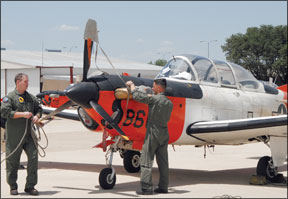

Key Takeaways:
- Military aviation employs an exhaustive, multi-departmental process for preflight planning, risk management, and maintenance, often involving over 100 personnel for each flight.
- In stark contrast, general aviation pilots bear the sole responsibility for all aspects of preflight planning, risk assessment, and mission execution with minimal external oversight.
- Despite differences in mission, fundamental safety principles like checking weather, NOTAMs, fuel, and weight/balance are crucial for both military and GA, and their neglect can lead to equally catastrophic outcomes.
- The article emphasizes the immense personal responsibility of GA pilots to adopt thorough planning and risk mitigation strategies, drawing lessons from the military's rigorous approach to enhance flight safety.
Key takeaways sponsored by Aviator Pro | Start Your Training ->
See a mistake? Contact us.

