Risk Management

Teaching PAVE

Flight instructors exist, at a minimum, to impart knowledge gained from experience, preferably their own. In the past, thats how risk management was taught: by telling there I was stories. Since younger, less-experienced instructors dont have the same backgrounds as their senior colleagues, risk management concepts and tools were introduced. Yet some instructors may not fully understand or implement them. Heres a primer on what students need to know.
Read More »

An Ounce Of Prevention

While this article targets what to do post-crunch, it cant hurt to think a little about how to avoid having to worry about the whole issue. As briefly and bluntly as possible, if you want to avoid an accident the data clearly show the single most effective way to do so is to take regular recurrent training. Take an hour of dual every six months-it will cut your risk of damaging an airplane substantially. Better still, get involved with and stay current in the FAA WINGS program. The accident rate for pilots who do so is so close to zero; its astonishing.

Read More »

Is This Even Reportable?

If what just happened meets certain NTSB definitions, theyll want immediate notification. And even if your event wasnt an accident, they still may request you submit a report by completing NTSB Form 6120.1, Pilot/Operator Aircraft Accident/Incident Report. Its always a good idea to consult with counsel before filing any such form, and you have up to 10 days. But theres a good chance what happened doesnt require notification. How can you tell? The NTSB rules do a pretty good job of laying it out.

Read More »

Aftermath

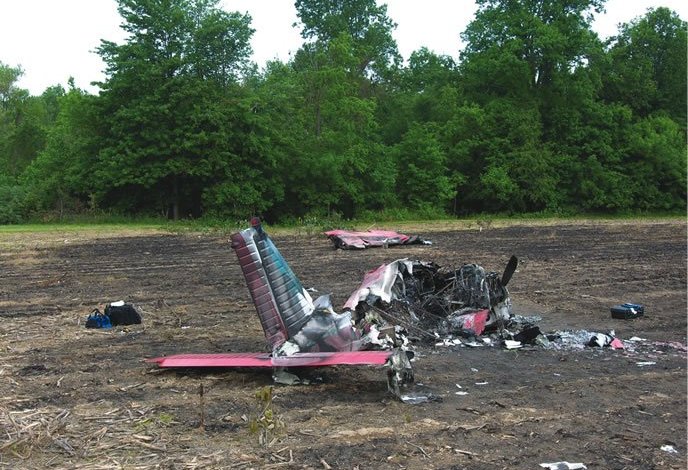
The bumper sticker tells us a bad day flying is better than a good day at the office. I think most pilots would agree, however, there can be bad days flying and there can be really bad days flying. If the latter involves bending an airplane, there are things to do after the airplane stops and the dust cloud departs. There also are things you can to help prevent the event in the first place. Once something happens, however, your priorities need to change.

Read More »

Summary: Risk In The Red

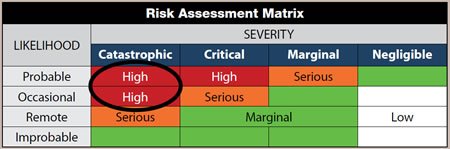
There was a demonstrably high probability this flight would end tragically. If we assess honestly all the risks identified, along with their likelihood (probability) and severity (consequences), its clear that mitigation was needed to reduce these high risk levels.

Read More »

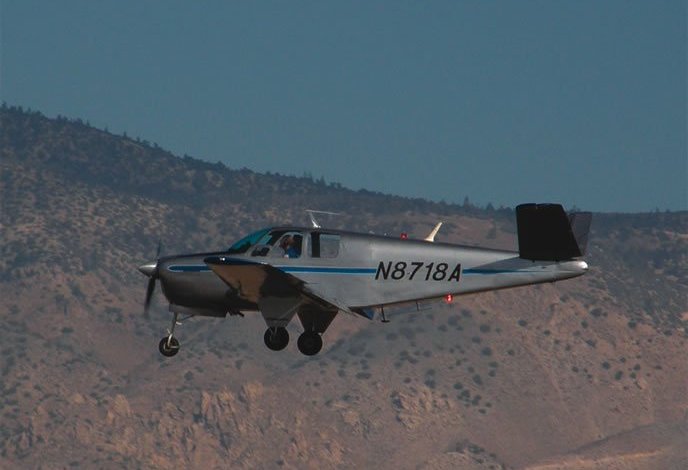
The Pilot

Despite pilot Roger Peterson being a young married man who built his life around flying, he had failed his instrument rating checkride nine months prior to the accident. He held a waiver to his second-class medical certificate for a hearing deficiency, although this almost certainly was not a factor in the accident. Most significantly, he had taken instrument training in an aircraft with a different type of attitude indicator than the one in the Bonanza. It provided a direct movement of the airplane on the face of the instrument, similar to todays modern steam-gauge attitude indicators, but opposite that of the then more-prevalent war-surplus attitude indicators in which the airplane stayed constant in the instrument while the artificial horizon moved instead.

Read More »

In Contrast to 1959

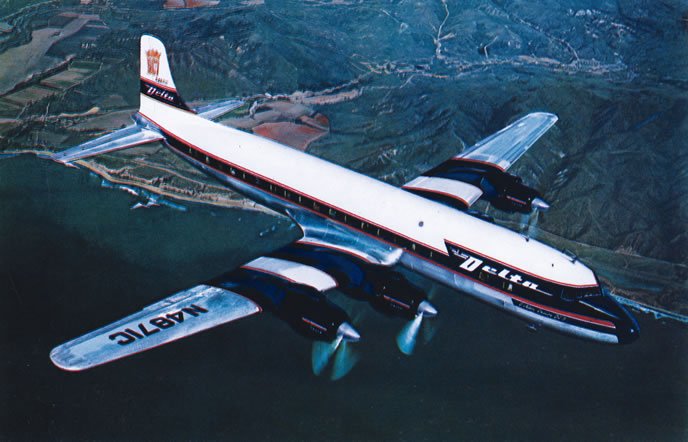
Its enlightening to contrast 1959 with today. The civilian jet era had barely begun, and the skies were still ruled by DC-7s, Connies and Stratocruisers, with Convairs and DC-3s for the short hops. Airline fares were tightly regulated and four-engine airliners stopped at a surprising number of out-of-the-way places. Yet a large majority of Americans had never flown in any kind of airplane.

Read More »

The Day The Music Died

Its tragic that so many public figures have perished in general aviation accidents. The death of a celebrity in a general aviation aircraft almost always leaves a strong negative impact on the industrys image, probably creating additional downstream challenges ranging from local airport restrictions to reduced student pilot starts. Traditional media rarely is helpful and the ignorance of mainstream journalism causes additional harm.

Read More »

Tips From The NTSB

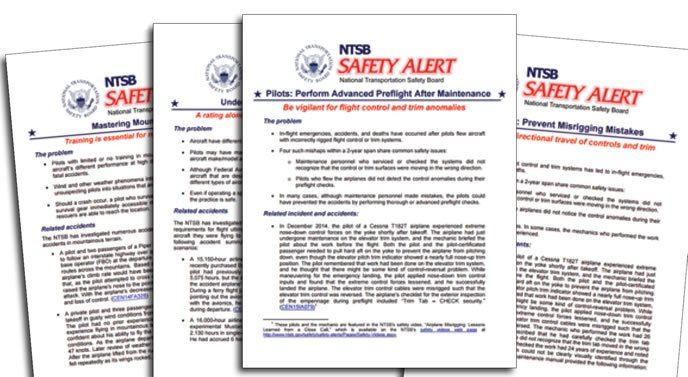
Theres no question pilots can make dumb mistakes-each month, the back pages of this magazine have the proof. In many instances, however, pilots make mistakes because they werent warned of the consequences of their (in)actions. In other words, sometimes they dont know what they dont know. Its the NTSBs role to investigate aviation accidents in the U.S., and to come up with recommendations on ways to prevent them.

Read More »
Pilot in aircraft
Sign-up for newsletters & special offers!

Get the latest stories & special offers delivered directly to your inbox.

SUBSCRIBE