Summary: Risk In The Red

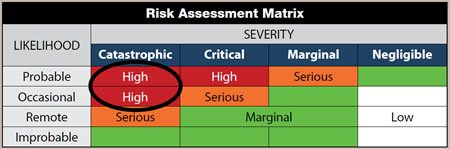
There was a demonstrably high probability this flight would end tragically. If we assess honestly all the risks identified, along with their likelihood (probability) and severity (consequences), its clear that mitigation was needed to reduce these high risk levels.

Gemini Sparkle

Key Takeaways:

  • The flight had a demonstrably high probability of a tragic outcome due to multiple unmitigated high-risk factors.
  • Key risks included a non-instrument rated pilot unprepared for severe weather, an aircraft not equipped for icing or with a working autopilot, and hazardous environmental conditions.
  • External pressures on the inexperienced pilot further elevated the likelihood of an in-flight loss of control (I-LOC).
  • Each identified risk independently constituted a "HIGH (RED)" threat that required mitigation, indicating a critical failure in risk management.
See a mistake? Contact us.

There was a demonstrably high probability this flight would end tragically. If we assess honestly all the risks identified, along with their likelihood (probability) and severity (consequences), it’s clear that mitigation was needed to reduce these high risk levels.

To do so, let’s begin by agreeing that an in-flight loss of control (I-LOC)is of potentially catastrophic severity—the loss of the aircraft and all of its occupants. If we agree about I-LOCs, then we must assess the likelihood of each hazard/risk to result that outcome. Let’s look at the risks we’ve identified and plug them into an assessment matrix like the one above.


Pilot

Under the weather conditions he faced, and without an instrument rating and the required proficiency, the likelihood of I-LOC for the Bonanza pilot on this flight was at least “occasional” and more likely “probable.” That’s clearly in the HIGH (RED) risk category and requires mitigation. In this case, it would either be canceling or re-scheduling the flight, or possibly waiting until daylight to depart.

Aircraft

The Bonanza was not equipped to fly in icing conditions and the pilot likely wasn’t familiar with its instrumentation, plus there was no working autopilot. Thanks in part to its light control feel and possibly being out of weight-and-balance limits, one result would have been an unstable instrument platform. The likelihood of an I-LOC event was probably more than “remote” and thus is another HIGH/RED risk requiring mitigation.

Environment

The potential for turbulence and icing, plus the overcast night sky and lack of horizon made instrument conditions a given, greatly increasing the possibility of I-LOC for a non-instrument rated pilot. Yet again, the environment in which the planned flight was to occur was a HIGH/RED risk requiring mitigation.

External Pressures

The combination of a young, inexperienced pilot subtly (or overtly) pressured to make this flight, combined with the other conditions, makes the possibility of an I-LOC event more than “remote,” again creating a HIGH/RED risk requiring mitigation.


While it’s always easier to make these assessments in hindsight, at least some of the certain dangers he faced on this flight should have been clear to Roger Peterson. Yet, in a world where Legal=Safe, he may have suppressed his gut feelings. The absence of risk management training certainly made it easier to rationalize.

Ready to Sell Your Aircraft?

List your airplane on AircraftForSale.com and reach qualified buyers.

List Your Aircraft
AircraftForSale Logo | FLYING Logo
Pilot in aircraft
Sign-up for newsletters & special offers!

Get the latest stories & special offers delivered directly to your inbox.

SUBSCRIBE