Human Factors

Braking Tactics

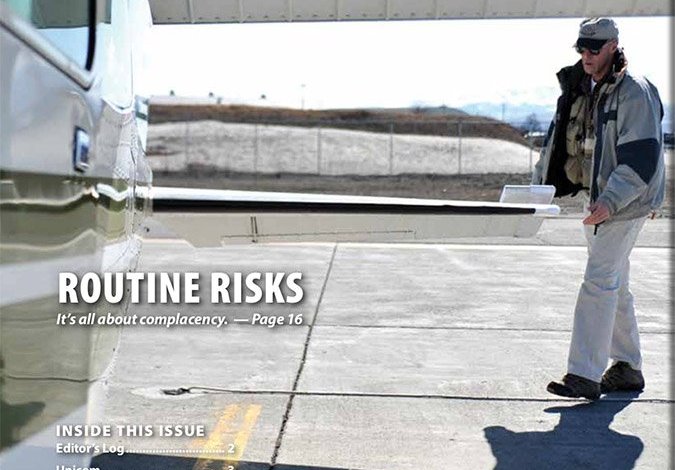
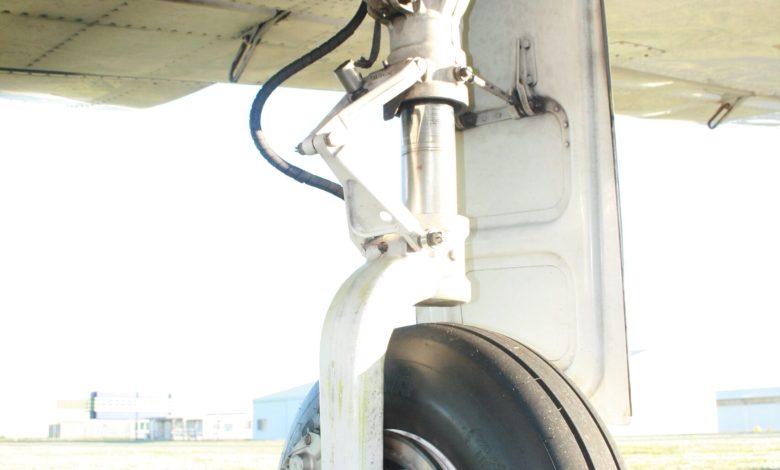
While conducting flight reviews and stage checks for students working toward various airman certificates, Im finding pilots who do not have a strong understanding of the operation and limitations of light aircraft braking systems. Ive also noticed many pilots misuse the brakes in landing and taxiing. For the former, brakes are incorrectly and/or unnecessarily applied immediately following landing. For the latter, excessive engine power requires the pilot to ride the brakes to control the airplane. Both are examples of poor technique.

Read More »

Nuts And Bolts

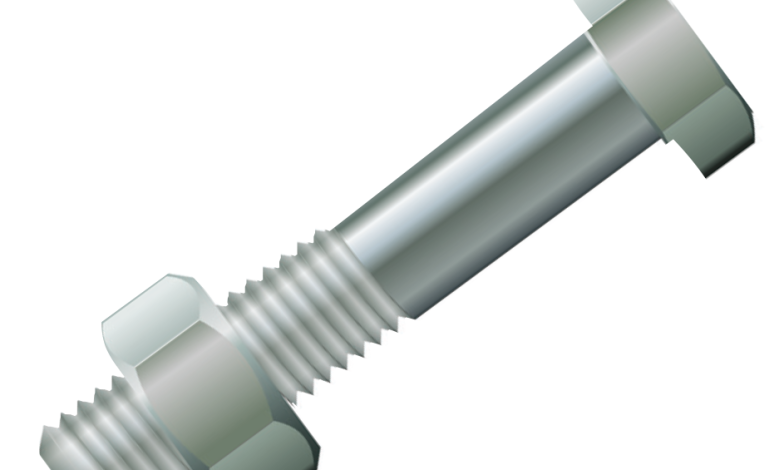
While changing an IO-520-BBs oil during an annual inspection, steel and red rubbery pieces were found in the filter. Metal determined to be coming from crankshaft gear driving alternator. Rubber was coming from alternator drive coupler. Four bolts holding crankshaft gear to crank were loose, allowing gear to slop around and cause wear of gears and coupler. Locking plates securing the four bolts were missing.

Read More »

Black-Hole Approach

For the last few years, my home airport has been a private, paved and lighted strip in a rural area. The pilot-controlled lighting is non-standard, however. For one, the systems intensity is relatively weak. For another, there seem to be fewer runway lights than at most other airports Ive used. And the light fixtures themselves seem located farther from the pavement than Im accustomed. Often, there are few other ground lights in the area to help provide perspective at night. The runway does not have a rotating beacon, only a dimly lit windsock that may or may not tell the truth. There are few obstructions in the area above a couple of hundred feet, although theres a tall tower about five miles north.

Read More »

Minimizing The Risk Of Engine Failure

Almost from the beginning of our training, pilots are taught how to react to an engine failure. Before that, though, were also taught how to conduct a preflight inspection to ensure the engine (and the rest of the aircraft) is ready for what we are planning. Thats as it should be, since mechanical failures are a major component of overall accident causes, right after the pilot making a mistake. The good news is that the typical piston engine in a personal aircraft is much more reliable than it was a few years ago. The bad news is those reliability improvements often result in pilots giving little thought to piston engine aircraft reliability because failures have become so rare.

Read More »

ICON A5 Feedback

First my condolences and prayers go out to the entire Halladay family; his was a tragic loss.I commend Mr. Wright on his emphasizing risk management awareness, not only regarding the A5 but similar general aviation safety issues. Unlike many light sport aircraft that I am familiar with, the A5s inherent engineering design and safety features are second to none.

Read More »

FAA Updates Weather Services Guidance

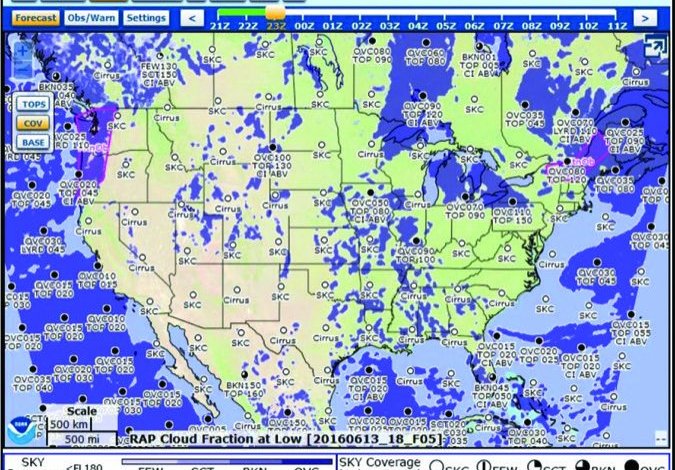
Open your favorite EFB or log onto a web-based aviation weather site and youll be presented with a deluge of information on the environment in which we fly. Text-based weather observations and forecasts, plus Nexrad weather radar mosaics, satellite-based cloud and moisture images, and information-dense graphical products are but a few taps or clicks away. With a smidgen of understanding, a lot of it becomes self-explanatory to even the infrequent pilot.

Read More »

Download the Full December 2017 Issue PDF

When it does, that new generation of personal aircraft likely will include technologies designed to prevent accidents. Things like envelope protection, where the machine doesnt allow its pilot to put it into an unsafe situation. Technologies like GPS and ADS-B are a given, along with a networked operating environment where it and all other nearby aircraft talk to each other to manage collision avoidance, sequencing and efficient routing. Operator certification wont be nearly as complex, time-consuming or expensive as it is today.

Read More »

Maneuvering Speed

Early in our primary training, we encountered the concept of maneuvering speed (VA), or design maneuvering speed as its sometimes called. Were basically told its the speed at below which we should fly in turbulence and when entering advanced maneuvers, hence its name. If were lucky and have a good ground-school instructor, well also learn that VA changes with weight: As the airplanes weight decreases, so will maneuvering speed. Although VA isnt marked on our airspeed indicators, there should be a placard listing it at the airplanes gross weight, with the admonition to not make full control deflections above it.

Read More »

Approach Vectors Checklist

Theres nothing quite like hearing the phrase, vectors for the approach. To me at least, this is a calming phrase from an approach or center controller that says, Youre just about there; now well take care of you. On vectors, its easy to let your guard down and lose track of where you are and whats going on, subconsciously delegating those things to that friendly controller.

Read More »

NTSB Highlights Gas Fuel-Related Accidents

The NTSB in August released the latest in a series of what it calls Safety Alerts, which focused on preventable accidents stemming from fuel starvation or fuel exhaustion. According to the Safety Alert (SA-067, Flying On Empty, August 2017), an average of more than 50 accidents each year in the five years from 2011 to 2015 occurred due to fuel management issues.

Read More »
Pilot in aircraft
Sign-up for newsletters & special offers!

Get the latest stories & special offers delivered directly to your inbox.

SUBSCRIBE