Human Factors

Are You Ready For This?

The days mission was a relatively simple out and back to a Class C airport, a couple of hours on the ground, and back to home plate. It was about 45 minutes of flying time each way. Although it was spring in Texas, the same weather would be a nice but humid peak summer day in many locations. White puffies with bases around 3500 feet msl and extending to at least 10,000 were everywhere.

Read More »

Flight Following

Thank you for addressing the issue of VFR flight following (Hacking VFR Flight Following, May 2017)! Your piece was good enough that I recognize I sometimes have gotten short shrift from ATC due to some communications ineptitude. An item you didnt address was the loss, and subsequent efforts to reestablish, radio contact en route. Another clarification could be wording with ground control at Class C airports to request advisories prior to departure.

Read More »

NTSB Reports: May 2017

The pilot reported that when he raised the landing gear shortly after takeoff, he heard a loud crunch as the gear entered the wells. The pilot climbed the airplane to about 3000 feet and observed the landing gear circuit breaker was popped and the alternator was off. The pilot attempted to extend the landing gear normally several times, however, the circuit breaker popped each time and the gear remained retracted. The pilot also attempted to use the emergency gear extension, to no avail.

Read More »

Disappearing Runway

I was flying out of Boeing Field (KBFI), something I had done hundreds of times before. Tonights flight was to maintain night landing proficiency, so after making landings at a few airports in the area, the adventure started as I returned home in the dark. The wind was from the north, so the active runway was 31L. And because I was making the approach at night, I did what I always do: approach the runway from the north over Elliot Bay. As expected, I was assigned a left pattern to 31L.

Read More »

More Changes Coming

For almost as long as Ive been flying, the general aviation industry has been in upheaval. By the mid-1980s, product liability concerns and tax law changes helped remove what was propping up things, and the bottom fell out. Among other outcomes, Cessna stopped making piston-powered airplanes altogether while other manufacturers discontinued numerous models, preferring to concentrate on one or two.

Read More »

All Of The Performance

Most of us fly from nice, long, level and wide paved runways with minimal obstructions. Whether for fun, variety or vocation, others of us use less-developed runways and airports, most notably back-country airstrips. All of us know that whenever were off the beaten path-a term holding different meanings for different people-the risk of whatever flight operations we engage in goes up. While Ive done my share of off-pavement operations, most of them were to or from well-maintained grass runways with clear approach and departure paths, or from sometimes-remote lakes using a seaplane. So Im a little familiar with the roll your own style of flight operations in which many pilots engage.

Read More »

NTSB Reports: April 2017

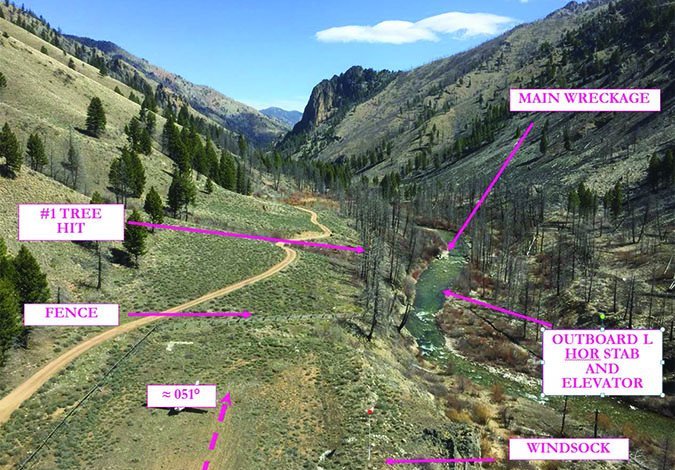
At about 0937 Mountain time, the airplane was destroyed when it collided with mountainous terrain. The private pilot and three passengers were fatally injured. Instrument conditions prevailed.Radar data show the airplane reached its cruising altitude of approximately 8000 feet msl some 12 minutes after takeoff. The airplane subsequently descended about 1300 feet in one minute before entering a momentary climb, which was followed by a shallow descent. In the remaining two and a half minutes, the airplane maintained a 300 fpm descent rate, with some intermittent climbs. The final two radar targets show the airplane climbed about 425 feet in 12 seconds. The airplane maintained a straight track from its departure airport to the last radar target, which was within 0.1 nm of the 6670 feet msl accident site.

Read More »

Taming The Taildragger

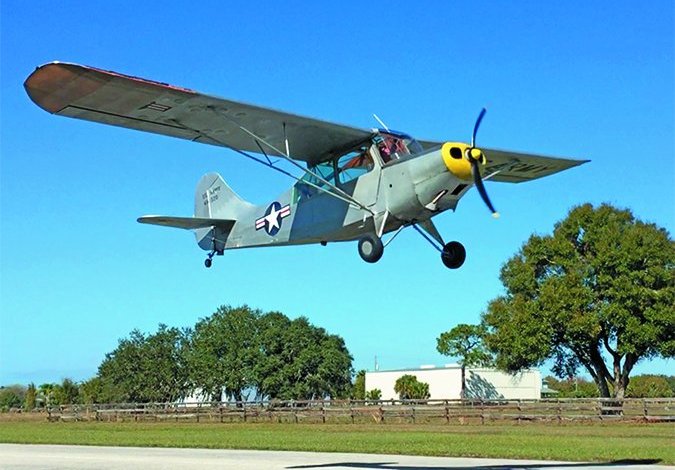
Ive long wanted regular access to a tube-and-fabric taildragger, something to fly low and slow, with my arm hanging out the window. Im happy with my go-places airplane, which fits most of my missions, but variety is a good thing. A few flights in a friend and neighbors nice, simple, original Aeronca 7AC Champ didnt whet my appetite for that kind of flying. Instead, it was stronger than ever.

Read More »

NTSB Reports: February 2017

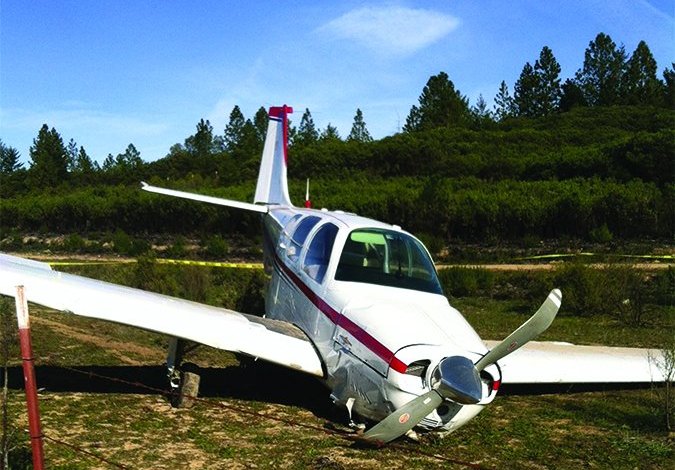
According to the pilot, about 10 minutes into an otherwise-normal the flight, the engine began to run rough. The pilot adjusted the power controls, but the engine started to backfire and continued to lose power. He made a spiraling descent from about 1000 feet agl and maneuvered the airplane to land on a paved area of a driving track. During the landing roll, the airplane struck a fence. The pilot stated the engine continued to operate throughout the landing and landing roll until the airplane struck the fence.

Read More »

5 Ways to Crash an Airplane

Lately, the general aviation community has focused, quite correctly, on the very preventable loss-of-control in-flight type of accident (LOC-I). Too many people somehow manage to bend an airplane-or worse-each year basically because they forget to fly it. Its a broad category, and includes a mix of accident causes, from low-level maneuvering, to VFR-into-IMC and to multi-engine training operations. As complex and dynamic as the LOC-I category is, it most assuredly doesnt include the full range of things pilots do to make the accident reports. For example, a look at the other category of pilot-related accidents, as broken down by the AOPA Air Safety Institute (AOPA ASI) in its 25th Nall Report, highlights some other areas where pilots regularly make contributions to the aviation-accident records. Here are five of them, not related to LOC-I.


Read More »
Pilot in aircraft
Sign-up for newsletters & special offers!

Get the latest stories & special offers delivered directly to your inbox.

SUBSCRIBE