Human Factors

After The Prop Stops

One of the oldest jokes in aviation holds that the big fan is there to cool the cockpit: Whenever it stops unexpectedly, the pilot starts to sweat. Every aviator whos had that experience can probably confirm a significant uptick in pulse and respiration. In the best case, thats accompanied by a corresponding intensification of focus, rapid execution of the memory steps of the emergency procedures checklist and efficient assessment of available alternatives. In the worst…well, those pilots arent available for interviews, but tapes of their radio transmissions can make for uncomfortable listening.
Read More »

Why We Lose Control

The aviation industry in recent years has highlighted loss of control in-flight (LOC-I) as the leading cause of general aviation fatal accidents. Many aviation organizations, including government agencies, have devoted considerable time and resources to target this problem and develop effective mitigations to reduce the number of LOC-I accidents. Much of that effort focuses on a pilot losing control, and how to train and equip to prevent it, because its the final event in the accident chain.

Read More »

Control System Servos

At FL400, the autopilot started porpoising and was turned off. Afterward, the aircraft would not trim properly. The crew diverted; it was difficult to keep it pitched down while descending. During the final phase of flight, the yoke was very difficult to input pitch changes, but was okay in the roll axis. After landing, troubleshooting duplicated the problem. Elevator servo (p/n 4006719914) was replaced with serviceable unit.

Read More »

NTSB Reports

After flying south through the Cajon Pass at 6500 feet msl, the airplane turned west and encountered what the commercial pilot presumed was leeside turbulence from the mountain range. She turned back south to find smoother air but the turbulence became more severe and the airplane began to descend rapidly. As the airline transport pilot struggled to change frequencies in the turbulence, the airplane descended to 2000 feet msl (about 500 feet agl). The commercial pilot applied full power but the engine did not respond. After the airline transport pilot enrichened the mixture and applied carburetor heat, the engine momentarily regained power. At about 2300 feet msl, the engine again lost power, and the ATP decided to land on the westbound lanes of a freeway. As he attempted to avoid a vehicle, the airplane landed hard.

Read More »

Trim Failures

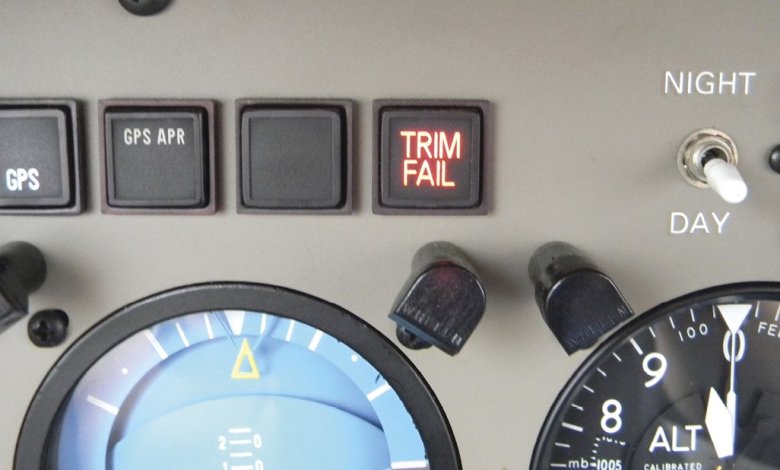
Years ago, when I first heard the term runaway trim, my initial thought was something along the lines of, How can that happen? All of the trim systems Id seen up to that time had been manual, unassisted crank, lever or thumbwheel affairs, which rely on the pilot grabbing something and moving it to achieve the desired change. I was aware that trim systems could mechanically fail, but generally would stay in a fixed position when they did. I had discussed and trained for abnormal trim conditions, but how could a trim system run away? Then I learned about electric trim, autopilots and runaway trim, and it all became clearer.

Read More »

Whos In Charge?

I started my lessons (at 50 years old!) at an airport called Howell-New Lenox in Illinois. On my first solo, I had to go around due to a back taxi by another student with his instructor (my first exposure to being PIC in a two-pilot operation. But I was cool; I also learned that I was pretty calm in an abnormal situation-when Im alone.

Read More »

When To Go Visual

I had flown a full day with the new owner of a turbocharged Beech Bonanza, a recently retired airline pilot who also had been a U.S. Air Force tanker pilot. He was IFR proficient from the airline and wanted to focus on visual and hand-flying skills while orienting to his airplanes autopilot and avionics. He did a great job and got markedly more comfortable with the airplane as the day progressed. At the end of the day, I recommended he get more experience with the airplane before going IFR in it. We shook hands and I went to my office to complete my paperwork.

Read More »

NTSB Reports

The pilot-rated passenger later stated he verified that the flaps were down and the three green landing gear lights were illuminated in the cockpit during the approach. Just before landing, he heard the angle of attack indicator alarm. The airplane landed hard, and he heard a loud pop and felt the left main landing gear fracture. The airplane then slid off the left side of the runway, colliding with PAPI lights, and continued sliding until the right wing dug into the ground. The airplane then flipped over and caught fire. The cockpit canopy was jammed, but several observers helped open it and egress the two occupants.

Read More »

Air In The Tanks

I was flying my Cessna T210R Turbo Centurion from the Westchester County Airport (KHPN) in White Plains, N.Y., to the Dekalb-Peachtree Airport (KPDK) in Atlanta, Ga., on a dark night. I departed KHPN IFR but encountered unlimited visibility over North Carolina and cancelled. Before takeoff, I observed line personnel fill both fuel tanks. I had planned to have an hours fuel reserve on landing at PDK, and there hadnt been any unforecast headwinds. However, as I passed over Greenville, S.C., at 12,500 feet, both fuel gauges showed the tanks nearly empty.

Read More »

Separation Anxiety

If there were some way I could make a series of trips back in time to change things, one of the stops on my itinerary would be to somehow infiltrate the small cadre of early pilots and airplane designers to convince them to use a word other than stall to describe what happens when a wing exceeds its critical angle of attack. The word obviously has numerous other applications, and using it for this purpose has confounded student pilots and television news anchors ever since. That said, Im not sure what should replace it, and remain open to suggestions.

Read More »
Pilot in aircraft
Sign-up for newsletters & special offers!

Get the latest stories & special offers delivered directly to your inbox.

SUBSCRIBE