











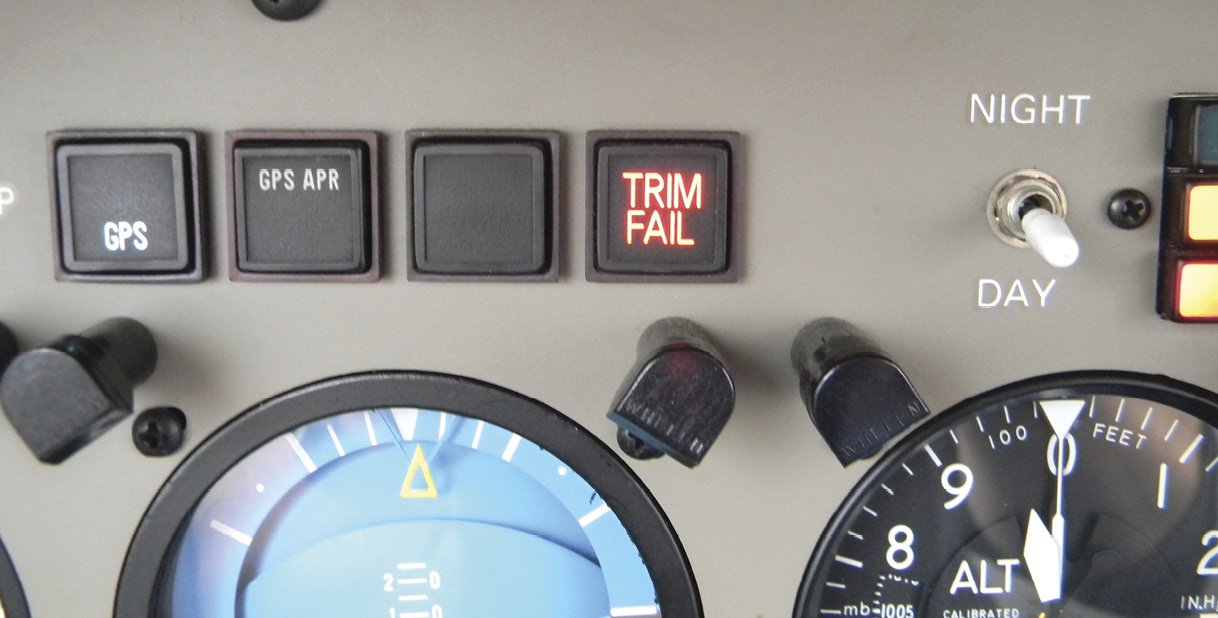


Years ago, when I first heard the term “runaway trim,” my initial thought was something along the lines of, “How can that happen?” All of the trim systems I’d seen up to that time had been manual, unassisted crank, lever or thumbwheel affairs, which rely on the pilot grabbing something and moving it to achieve the desired change. I was aware that trim systems could mechanically fail, but generally would stay in a fixed position when they did. I had discussed and trained for abnormal trim conditions, but how could a trim system “run away”? Then I learned about electric trim, autopilots and runaway trim, and it all became clearer.
The closest I’ve come to a runaway trim situation was pilot-induced: I mistook the pitch trim button on the yoke for the push-to-talk switch. Several times. Hilarity ensued, and ATC, especially, was clearly entertained by the whole thing. Thankfully, some on-the-job training regarding which switch did what resolved the matter, but it highlights one of the keys to managing an abnormal trim situation: There’s no substitute for complete system knowledge. As important as that knowledge is, it’s usually easy to come by.

