Features

Non-Radar IFR

November 12345, youre cleared from the Backwoods Airport to the Backwoods NDB, then hold as published. Climb and maintain 3000 feet, squawk 2012. Report airborne on frequency 125.1. Clearance void if not off by two-zero past the hour; time now zero-five past the hour. Expect further clearance at two-five past the hour.” Fly IFR from non-towered, out-of-the-way airport, and youll eventually get a short-range clearance like the one above. Its a clearance to a nearby fix with a time window (until the “void time”) allowing you to enter controlled airspace without conflicting with other IFR airplanes. Since ATC cant see you on radar yet and wont know exactly when youll enter controlled airspace from that non-towered field, theyll keep a small area clear for you until the void time

Read More »

Playing Defense On Takeoff

A recent spate of high-profile runway excursions involving airline operations got me thinking: Runway overruns are not a topic on which the average GA pilot receives much comprehensive instruction during flight training. The pros have operational policies providing the parameters and protocols by which takeoffs and landings must be done each and every time. But for the rest of us not flying the big iron in conformity to op specs, theres no similar, systematic defense strategy utilized against running into the ditch. In fact, the varied nature of GA flying itself-sporadic flights, from local VFR practice to an IFR cross-country-actually presents a greater challenge than that done by the pros flying the same bus route day in and day out.

Read More »

Low And Slow

Pilots like to talk about speed and how fast they fly, often to the exclusion of other aircraft characteristics; its fun to go fast, no doubt. Witness how many aviators seek out the fastest flivver their finances can support. But the ability to power up to cruise, trim for speed, engage the autopilot and start fiddling with an iPod requires far less skill and hand-flying ability than working at the lower end of the airspeed dial. And we dont learn much at the top of the green. Demonstrating slow-flying skills takes up part of our training time; slow flying is an item in the FAAs Practical Test Standards for sport pilot certificates on up.

Read More »

Training For Risk Management

Todays typical flight training curricula are largely maneuver-based, with little emphasis on higher order pilot skills, especially risk management. At its heart, the typical curriculum is designed to train a pilot to pass the practical test for the certificate or rating he or she seeks. A rare curriculum includes training to identify, assess and mitigate risk. In previous articles, Ive asserted the root cause of many accidents-and perhaps most fatal accidents-is poor risk management (Aviation Safety, July 2010, “TAA Training”). I also postulated better risk management training, especially in risk mitigation, could be an effective way to reduce these accidents (Aviation Safety, September 2010, “Train to Mitigate Risk”).

Read More »

Density Altitude: Five Things To Remember

Weve all been through enough ground school to know and understand that high ambient outside temperatures adversely impact aircraft performance. The relationship between temperature and altitude, of course, is termed density altitude, which describes a locations pressure altitude adjusted for temperature. To put it another way, density altitude is your elevation when measured in terms of the density of the air rather than height above sea level. It can be higher or lower than your actual altitude above sea level.

Read More »

Enemy Of The Good

Whenever were in a single, and sometimes with twins, where wed land in event of engine failure should be a conscious thought. The usual answer is the nearest airport, something facilitated in personal aircraft several years ago by Loran navigators, and carried forward with their GPS-based successors. Having been there, done that, I know theres a wide range of emotions, thoughts and priorities going through a pilots mind when power production stops and theres an urgent need to land somewhere-anywhere!-right now.

Read More »

What Goes Around Comes Around… Again

Sometimes the only answer to a situation is, “No, not this time.” Maybe it applies during a to-minima instrument approach where the ground never appears; maybe while attempting VFR flight toward weather deteriorating into IMC. Often, it should be the first part of the answer to a questionable landing-with the second part of the answer being, “Yes, Im going around.” The high-profile landing accident involving a Hawker Beechcraft Premier IA at EAA AirVenture 2010 in Oshkosh, Wis., served to elevate the topic. But venue aside, normal application of the requisite skills and judgment can work there, just as they do elsewhere.

Read More »

Pitot/Static Checks

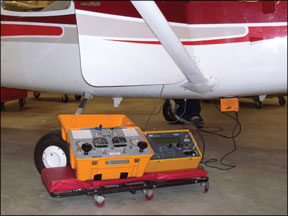
Aside from annual inspection, one of the most dreaded chores of aircraft ownership is complying with FAA-required pitot, static and transponder system recertification. You do comply, dont you? Maybe its the hassle of clearing your schedule to fly the airplane to the shop for the inspection. Or the bigger hassle when the inspection reveals problems that create unplanned expense because the huge amount of labor involved with static-system repairs can cost real money. For the aging fleet of steam-gauge equipped aircraft, pitot/static systems and related instruments often require repair or rebuild. Many owners motor along clueless to their substandard system.

Read More »

(Oh) No Procedure Turn

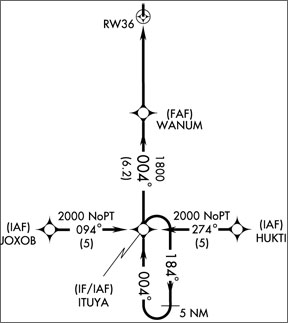
Where you are, smoking into your destination airport. Winds are calm, traffic is sparse, the ceiling is 1500 broken with good VFR underneath, youve got plenty of gas. But a close look at the approach plate creates confusion: Youre being vectored to a nearby fix, but its not at all clear how-or even whether-some kind of course reversal will be necessary. You certainly can slow down enough to easily nail the turn onto final, along with the approach, but something in the back of your mind says it wont be that simple. Suddenly, it dawns on you: Youre going to need to execute a procedure turn.

Read More »

Right Seat Tips

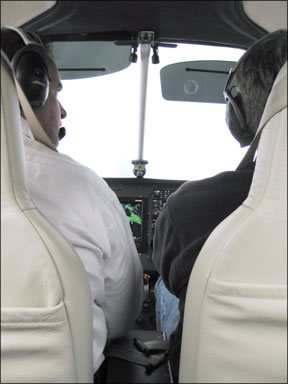
General aviation is just as prone to pithy sayings as any other worthwhile endeavor. When it comes to managing risk and defining the top three riskiest things weve seen, they include taking off with air in the fuel tanks, a private pilot with a #2 Phillips screwdriver and two pilots trying to fly the same airplane at the same time. While statistics and common sense bear out the fact two pilots up front enhances safety, there remain numerous instances when this has not proven true. Not surprisingly, after accidents with two pilots onboard, the actions of the PIC get the most scrutiny when fault is being assigned.

Read More »
Pilot in aircraft
Sign-up for newsletters & special offers!

Get the latest stories & special offers delivered directly to your inbox.

SUBSCRIBE