Features

Mitigating Terrain Risks

There we were in a friends F33A Bonanza at 9000 feet in radio darkness from Houston, Jacksonville, and Miami Centers. That put us plus or minus six feet from the geographical center of the Gulf of Mexico. We were droning along under a full moon at about 10 pm, listening to Jimmy Buffett on the CD player. The in-cockpit conversation mainly focused on debating which Key West bar we were going to grace as soon as we landed. Then the radio came to life and ruined the mood. “Baron 12345, this is American 3743, are you on the frequency?” My friend paused, then answered, “Uh, yep; were IFR to KEWY, niner thousand with Buffett on the CD player, 345.” “Okay; Miami asked us to see if you were on the radio. Theyre expecting you to check in.” “Yeah, we cant get em yet-too low,” he explained and gave a position report and ETA for the fix where we would report in before adding, “By the way, were a Bonanza.”
Read More »

Coming Up Short of The Runway

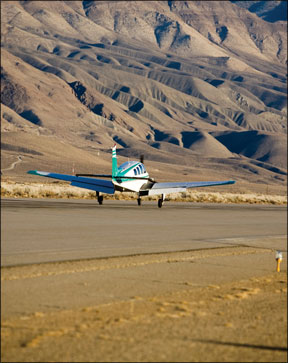
Its morbidly fascinating to look at landing accidents involving pilots who came to grief while shooting an ILS in instrument weather. By contrast, VFR landing accidents tend to involve loss of control after landing, usually a result of too much speed at touchdown. Few VFR landing accidents involve crashing short of the runway itself. Yet, when actual IFR weather moves in and the airplane is on the ILS, the converse occurs, and suddenly pilots develop a proclivity for crashing before ever getting to the runway. As would be expected because an airplane is going far faster prior to the time it touches down than when it is when rolling out, landing accidents when flying the ILS in IFR conditions are more often fatal than landing accidents when flying VFR. The instrument landing system has been around for over a half century. In its own way, it is instrument flyings simple and reliable old boot; the two-needle, three-dimensional approach system that funnels one to a touchdown spot about 1500 feet down a comfortingly long runway. With a time-proven design that guides arriving aircraft over the runway threshold at a safe 50 feet or so, how come so many GA pilots find a way to depart from the friendly confines of the ILS arrival cone and smack into the planet before getting to the runway? Why are so very few GA ILS accidents in IFR of the sort where the airplane overshot the touchdown point and went off the end of the runway as is expected in VFR conditions?

Read More »

How To Fly Twin Engine Aircraft At Single Engine Performance Levels

Twin-engine airplanes certified under FAR 23 do not have the same performance guaranteed for transport category airplanes certified under FAR 25. Especially, light twins weighing less than 6000 lbs and have VS0 equal to or less than 61 KCAS are not required to have any positive single-engine performance. Twins weighing more than 6000 lbs and/or having VS0 above 61 KCAS must demonstrate, in still air at 5000 ft, with the inoperative engine feathered, a climb gradient of 1.5 percent (if certified after February 1991), or a rate of climb of 0.027 V2S0-not exactly earth-shaking performance. We often hear that losing an engine in a light twin-engine airplane is far more dangerous than losing the only engine in a single-engine airplane. Melville Byington Jr. (1989 and 1993) of Embry-Riddle Aeronautical University conducted an experimental study of the bank angles required to obtain the zero sideslip flight, and consequently, the maximum performance in light twins. Based on the NTSB accident data, Byington concluded that 30 percent of twin-engine airplane accidents occur due to the loss of directional control (VMCA rollover), while 43 percent can be traced to insufficient performance with one engine inoperative (OEI). The remaining 26 percent or so are stall/spin accidents, which also carry the highest fatality rate. Evidently, more accidents happen due to the inadequate SE performance planning or understanding, than due to the control problems.

Read More »

Maintaining Light Sport Aircraft

The light sport aircraft (LSA) community holds strong promise to attract a new population of pilots for a variety of reasons, many of them overlapping. For some, the lower prices for a new airplane-some starting at around $40,000, compared to a base price of $175,000 for an FAA-certified Diamond DA20 Katana, as one example-holds appeal. For others, the draw is the reduced cost of learning to fly: A sport pilot certificate will set back a student between one-third to one-half the cost to obtain a private ticket. And, for some newcomers and a growing number of long-time pilots, the absence of a formal medical examination holds sway. Combined, these forces propelled the delivery of about 2500 factory-new LSAs in the three-plus years since the rules went into effect. Meanwhile, about 2200 have earned their sport pilot certificates and an as-yet unknown-and perhaps unknowable-number of existing pilots received formal transition training required to legally fly LSA-category aircraft.

Read More »

You Are The Backup To Safety Enhancing Aircraft Avionics

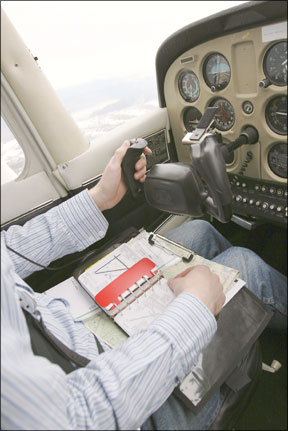
Theres no going back-we are in an era of high-tech avionics and cockpit automation. Even some LSAs are sporting “glass” cockpits and simple autopilots; cross-country airplanes sport panels and equipment unheard of even in high-end turbines scant years ago, and the turbines themselves are becoming more accessible to owner-pilots. Even the most capable of these airplanes, however, has its automation limitations. Proper operation and constant monitoring of automated systems remains the responsibility of well-trained and emergency-current pilots. On April 19, 2008, a Cessna Citation Mustang suffered substantial damage when its pilot ground-looped the light jet to prevent a runway overshoot at Carlsbad, Calif. According to the NTSBs preliminary report, this was an intentional act to prevent going off a cliff past the end of the runway after the pilot landed “fast” and beyond the mid-point of Carlsbads 4600-foot available landing surface. The pilots quick action may be credited with sparing injury (or worse) to the four people on board.

Read More »

Flying Below Minimum Altitudes

Its nearing dusk as two Piper Senecas descend toward Highfuelprices Regional Airport on vectors for the VOR approach. Published minimums are 500 and 1. The airport has weather reporting and forecasting, the airplanes have the same avionics. Seneca A is being flown by a pilot with commercial, instrument and multi-engine ratings and a current Part 135 approval; the flight is being operated under Part 135 as there is a five-pound box of urgent documents under the cargo net behind the rear seats. Meanwhile, Seneca B is being flown by a pilot with commercial, instrument and multi-engine ratings, a 23-month-old flight review and some question as to whether he is instrument-current. It is a Part 91 flight. There are four passengers on board who are splitting the cost of the flight with the pilot. Before they reach the final approach fix, the controller advises both aircraft that the airport weather is now 400 overcast and mile visibility in rain and mist. Seneca A pilot advises the controller she cannot continue the approach and that shed like to climb 1000 feet or so and hold at the FAF while she decides whether to go to her alternate or wait for the weather to improve. The pilot of Seneca B hears the weather report and continues with the approach because he wants to take a look.

Read More »

Flying in High-Density Altitude Conditions

It happens every summer. Temperatures rise and with them so does density altitude. It may seem we should simply avoid flying when the density altitude (DA) creeps up, but this would be very short-sighted-although there are some hazards warranting a delay when the air heats up (thunderstorms and desert turbulence among them), the fact is we can safely fly in most high-density-altitude conditions. Doing it, however, requires some technique and some compromise. We all learned the basics of density altitude when we first learned to fly. But what are the practical techniques necessary to maximize airplane-and pilot-performance when hot and high? And when do we need to employ them? What is high density altitude? Its really a function of the airplanes capabilities…and those of the pilot. Youll find Piper Cubs and Cessna 150s flying out of Leadville, Colo., (elevation 9927 feet msl), yet hear of DA-related accidents involving much more powerful airplanes at much lower altitudes. Air density increases to “high” levels in summers heat, even at relatively low-altitude airports. When you consider that maximum available power drops by about 10 percent for every 3000 feet of density altitude increase above sea level (in naturally aspirated engines), even flat-land flyers need to compensate for power lost due to high DA in summer.

Read More »

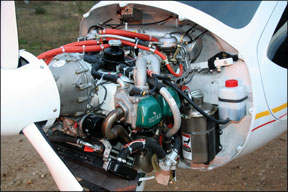
Proper Maintenance of Your Aircraft

We all have had a life experience or two in which we “should have known” about the results of a decision and could kick ourselves for not heeding our instincts. When it comes to flying safely, the need to follow those internal alarms is all the more important. For example, there is a big difference between instrument flying where we need to faithfully heed the data on the panel in spite of our inner ear sensations and the attention we should pay to our “sixth sense” of self-preservation when we get hints from the aircraft systems that something isnt right. We often fly with other pilots and, depending on our role in the cockpit, we may notice more or less about the aircraft or environment. When a system offers up a hint, we analyze it and take some action, but do we take enough action or give enough credence to our sixth sense of feelings about the potential impact on the flight? Can that inner warning be “waived off” by a casual remark from the other pilot or a controller? Lets look at some instances and examples.

Read More »

Are Some FAA Flight Regulations Too Lax?

Theres no way the FAA can come up with a regulation covering every possible scenario, which is a good thing. If they did, wed rarely be able to roll our airplanes out of their hangars except on the clearest of days when no airliners were about. So, the FARs set certain minimum standards for pilots and once we determine were in compliance, its up to us to decide if the proposed operation is safe, morally acceptable and non-fattening. Or something like that. Frequently what we want to do complies with both the FARs letter and spirit. Sometimes its borderline; certainly legal but safe only if everything goes our way and nothing on the airplane breaks. And then, there are occasions when the proposed operation is both legal but really not smart.

Read More »

Taking Off Into Inclement Weather

Way back in the bad old days when I had just a few hundred hours of flight time, I recall how I would get quite obnoxious during my preflight preparations. (Of course, some say I still am, regardless of when I might be flying next, but thats only because I know what they dont.) The challenge of herding all the cats necessary for a safe departure sometimes made for brusque conversation with me. Get over it. These days, Im more laid back before departing, at least outwardly. Im still running through a mental checklist, though, and trying to make sure everything gets done in a logical order. Ive also come to grips with what was driving my concerns: a misplaced belief that filing for, say, a noon departure meant advancing the throttle no later than 11:59. No exceptions. So, I readily understand how anxious some pilots can get when preparing to depart. Add in various external challenges from business and personal lives, passengers who need to be at the destination by a certain time and the peer pressure of other airplanes coming and going seemingly without problems, and the physical and mental effort of actually flying an airplane can seem like a vacation.

Read More »
Pilot in aircraft
Sign-up for newsletters & special offers!

Get the latest stories & special offers delivered directly to your inbox.

SUBSCRIBE