











It happens every summer. Temperatures rise and with them so does density altitude. It may seem we should simply avoid flying when the density altitude (DA) creeps up, but this would be very short-sighted-although there are some hazards warranting a delay when the air heats up (thunderstorms and desert turbulence among them), the fact is we can safely fly in most high-density-altitude conditions. Doing it, however, requires some technique and some compromise. We all learned the basics of density altitude when we first learned to fly. But what 288
Flying in High-Density Altitude Conditions
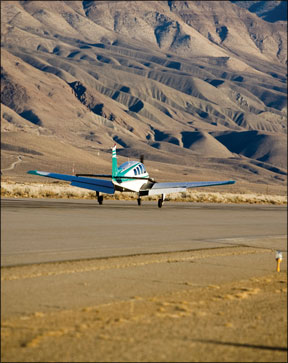
It happens every summer. Temperatures rise and with them so does density altitude. It may seem we should simply avoid flying when the density altitude (DA) creeps up, but this would be very short-sighted-although there are some hazards warranting a delay when the air heats up (thunderstorms and desert turbulence among them), the fact is we can safely fly in most high-density-altitude conditions. Doing it, however, requires some technique and some compromise. We all learned the basics of density altitude when we first learned to fly. But what are the practical techniques necessary to maximize airplane-and pilot-performance when hot and high? And when do we need to employ them? What is high density altitude? Its really a function of the airplanes capabilities...and those of the pilot. Youll find Piper Cubs and Cessna 150s flying out of Leadville, Colo., (elevation 9927 feet msl), yet hear of DA-related accidents involving much more powerful airplanes at much lower altitudes. Air density increases to "high" levels in summers heat, even at relatively low-altitude airports. When you consider that maximum available power drops by about 10 percent for every 3000 feet of density altitude increase above sea level (in naturally aspirated engines), even flat-land flyers need to compensate for power lost due to high DA in summer.

Key Takeaways:
- High density altitude (DA) significantly degrades aircraft performance, necessitating meticulous consultation of POH performance charts, applying generous safety margins, and carefully considering adverse winds for all flight phases.
- For high-DA takeoffs, pilots must ensure maximum engine power through precise mixture setting, climb at an airspeed closer to Vy, and carefully manage flap deployment and landing gear retraction to optimize initial climb performance.
- Maintaining maximum power during high-DA climbs and cruise requires continuous mixture adjustments, and pilots must remember that effective service ceiling and single-engine capabilities are significantly reduced based on density altitude.
- Optimal engine temperature management in high-DA conditions prioritizes leaning for best power during critical takeoff and initial climb, then enriching for cooling, or controlling temperatures via increased airflow rather than relying on inefficiently rich mixtures.
Key takeaways sponsored by Aviator Pro | Start Your Training ->
See a mistake? Contact us.

