Wind Gusts Effect on Airframes and Airspeeds
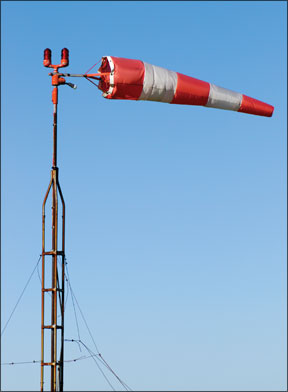
Comanche seven-three Papa, Wichita approach; winds two-zero-zero degrees at one-eight, gusts to 30.” “Approach, seven-three Pop; copy the winds…guess well keep up the pace a bit.” “Comanche Seven-Three Papa, Dorothy says, Welcome to Kansas.” When first sitting down to assemble this article, my initial thoughts turned to my logbook. Inside it are more than a few notations about such not-unusual days; the controllers welcome in this one made me chuckle. At almost the same instant, the sound of 30-knot gusts rattling the trees outside my office focused my attention on the days local conditions-an environment offering abundant signs that any flying means dealing with gusts. My familiarity with gusty conditions started developing during my primary training. A regular part of my time-building solo practice involved August afternoons hopping among five Wichita-area fields. Typically, those hot summer days and nights brought winds blowing hard, in the teens to low 20s, and usually gusty-as much as 20 knots above the mean. For much of that month gusty winds served up a significant challenge for a student pilot armed only with a Cherokee 140 and determination. Hey, its Kansas.
![CFIs need to adopt best practices for teaching navigation by pilotage and dead reckoning so the clients don’t become lazy or slaves to the magenta line. [Credit: FLYING Archive]](https://www.flyingmag.com/wp-content/uploads/2019/10/0508-Student_CFI.jpg?w=288&h=216&crop=1)