Features

Gladden MOA Mess

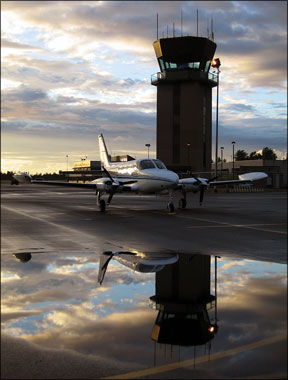
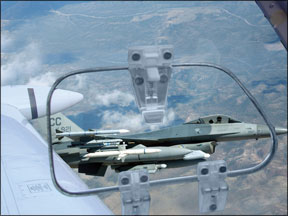
The military operations area, or MOA, is the Rodney Dangerfield of special use airspace (SUA): It doesnt get any respect. Part of the reason few pilots pay much attention to whether a MOA is hot or not is VFR operations are allowed-at our own risk-in an active MOA. This is much different from a MOAs more-serious brethren, the restricted or prohibited areas, or even the temporary flight restriction. That doesnt mean punching through an active MOA is a good idea. In late March, two civilian pilots found out the hard way that what goes on in a MOA probably should stay there. Online sister publication AVweb.com was on this story like a wet blanket-including a podcast with one of the civilian pilots and another with an F-16 driver-and the story generated a lot of comments from rank and file pilots. Many of those comments evidence some misunderstandings of MOAs and SUA: What kind of operations is the military engaged in, anyway? Are civilian aircraft endangering themselves or military pilots by entering? Under what rules, if any, is the military operating when in a MOA? As often is the case in an online discussion, these and other questions got thrown about with no clear answers. But were here to help make sense of it all.
Read More »

Speak No Evil

Thunderstorm avoidance is a perennial topic among GA pilots. There are all kinds of tips and equipment recommendations thrown about, including suggestions on how to use and interpret both airborne and data-linked Nexrad weather radar, plus sferic devices and, we suppose, animal entrails, powdered unicorn horns and coin flipping. All methods pretty much depend on a pilot actively seeking information, processing it and reacting to what is learned. As we detailed in last months feature article, On A Mission: Thunderstorms, operators who absolutely, positively have to fly when thunderstorms are present have evolved a wide range of tools and rules they employ to ensure safe flight. Those same methods, including the time-honored step of simply parking the airplane until the bad weather moves off, are easily adapted and adopted by more casual operators.

Read More »

Deferring Airplane Maintenance

My grandmother loved an adage. “Never put off until tomorrow what you can do today.” “A stitch in time saves nine.” “If you dont find time to do it now, when will you find time to do it later?” All fine words to live by, but my grandmother never paid for an aircrafts annual inspection. With the base price of a straight-leg single-engine airplane annual at some shops hovering around $1500-thats the price if nothing is actually wrong with the airplane-some of the adages heard around the shop are “It flew in, itll fly out.” “You said it was fine that way last year: why is this year different?” and the most common, “I cant afford that-just sign it off now and well get it on the next annual.” To fix or not. What will it cost now versus the price later? Does it affect airworthiness? What does the FAA say about it? Whats the worst that can happen?

Read More »

Aircraft Awakenings

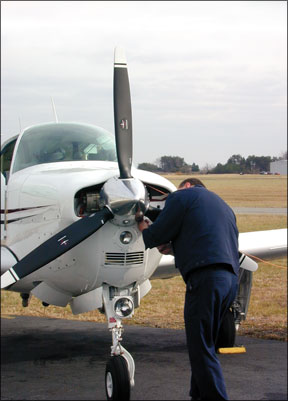
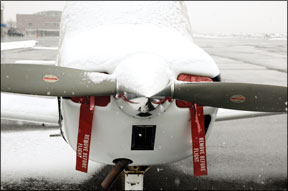
Now that winter snows have passed and the foliage is turning green, its time to get out and go flying. If you havent committed aviation since the seasons first snowfall, its going to take some effort to get both you and your craft ready to go. You might presume when pilots go out to resume flying in the spring after a winter hiatus theres an increase of certain kinds of accidents. An examination of the accident records for 1996 and 1997 and again for 2003 just didnt show any patterns. Runway loss of control (RLOC) accidents account for a significant portion of general aviation accidents throughout the year but theres no particular spike during the months many of us are out trying to knock off the rust. If there is an increase of RLOC accidents in the spring, its lost in the noise of the overall increase in flying.

Read More »

Making Practice Count: IFR Self-Critique

I fly a lot of IFR year round and a fair amount of actual IMC during the winter, but not much in the summer. Like everyone else, Ive heard the wakeup call from Center in that unmistakable tone that says, “Were not amused that you think flex-altitudes are in use today…please get back to 5000 feet. Now.” That sort of thing may be a minor mistake, but if you add up enough minor mistakes, youve got a trend and that could lead to something ugly. The 24-month flight review and instrument proficiency checks are supposed to correct the inevitable decline in skill for those of us who dont fly much, but there may be a better way.

Read More »

Aircraft Engine Turbo Trouble

Airplane ownership is not for the faint of heart. In addition to the responsibilities coming with the financial commitment to acquire, operate and maintain an aircraft, theres the decision-making and judgement calls one must make, even before the first flight of the day. These decisions become especially difficult when paired against possible consequences of missing an important business meeting or failing to fulfill a personal commitment, to name but two. And, since an airplane is designed to go places, the ownership burden often becomes more complicated when, at a distant airport, a mechanical problem rears its ugly head. In such a situation, prudence often requires contracting with a facility or person whose skill and dedication isnt known to you. Frequently, conflicting schedules means a maintenance facility cant find the time to perform a detailed diagnosis of a transient airplanes troubles before the pilot is scheduled to leave. One result is attempting to fly an airplane with known deficiencies.

Read More »

On A Mission: Best Practices On Thunderstorm Avoidance

Thunderstorms can impede our progress any time of the year. If we kept the plane in the hangar every time a forecast called for them, however, wed almost never fly in the spring and summer months. To learn how to safely dispatch and conduct a flight in areas of thunderstorms, weve asked pilots “on a mission” to fly in almost all conditions-priority cargo and business transportation-what it takes to make it to their destination on schedule. More important, we also asked when storms are strong enough to sit it out despite the sometimes severe economic consequences. With far less stress to “go” than these commercial and business operators, pilots of owner-flown airplanes can learn from their expert strategy for thunderstorm avoidance.

Read More »

Safer Flight Maneuvering

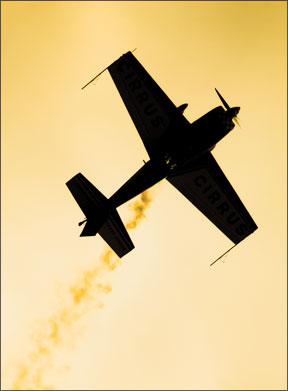
In this series first installment (“The Problem With Flight Training,” March 2008), we identified a few of the systemic errors and omissions committed during flight training, and how they feed into typical aviation accidents. We dealt primarily with issues pertaining to the mechanics of flying an airplane. In this second of three articles, well look at some of the psychological aspects involved. A lot of educational material has been generated in recent years on aeronautical decision making, hazardous attitudes and cockpit resource management. The FAA has been actively promoting the Perceive-Process-Perform (P-P-P) risk management decision path as well. Perceiving risk in the P-P-P model is aided with the PAVE checklist; processing levels of risk is facilitated with the CARE checklist; and performing risk management is prompted by the TEAM checklist (see the sidebar on page 6 for more).

Read More »

Trimming

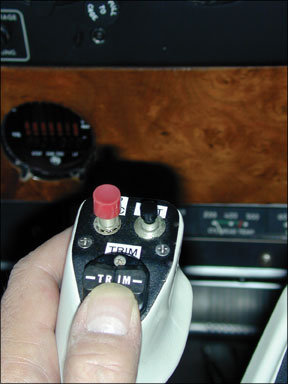
Like most student pilots, I tended to fly with the type of casual lan my primary instructor described, none too deferentially, with the term “death grip.” Then somewhere along the way came my first introduction to that little knurled disk, which is usually just called the trim wheel. Trim? Huh? Whats that? What does it do? How does it work? How is it used? Its nothing miraculous, really. Just think back to your childhood. If you were like me and many other airplane-crazy kids, when you built a balsa wood glider and you started flying it, whats the first thing you adjusted? You adjusted its surfaces balance and deflection so it would fly the way you wanted it to, thats what. Unlike what youre doing today, there was no little man or woman in there jockeying the controls. Instead, the slots in the fuselage within which one could adjust the forward or aft position of the wings and horizontal stabilizer was strictly a hands-off affair. If youre younger, and your glider was made of that new-fangled plastic foam, you might have had the luxury of “bendable” control surfaces. Same idea; different solution.

Read More »

Automation Complacency

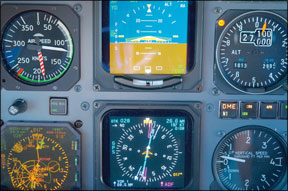
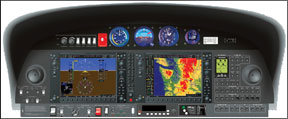
It happens all the time. We invest in all this fancy hardware and top it off with that new autopilot that does everything for us except close the flightplan. We like using that stuff because its easy, precise and, well, kind of cool. However, reliance on the automation can go too far and actually cause the very trouble were trying to avoid. A good coupled autopilot is a wonderful thing. It frees us from much of the mind-numbing concentration of keeping the airplane right side up to allow us to focus on bigger things like setting up for the approach or even just relaxing a bit at cruise. Add a GPS and you can program everything but your initial departure vectors and the vectors to final. The airplane can fly your entire flight plan while you pay attention to more important things like fuel management or the weather. Or not, and thats one of the problems.

Read More »
Pilot in aircraft
Sign-up for newsletters & special offers!

Get the latest stories & special offers delivered directly to your inbox.

SUBSCRIBE