











Its probably a fair bet that every person who has flown an airplane more than about 20 hours has made at least five landings he or she not only considers personally embarrassing but remains convinced to this day could be measured on the Richter scale. So, lets be honest with ourselves from the very beginning: As active pilots, we are going to make ugly landings from time to time. Further, Murphys Law says we will probably make them when a lot of people are watching. Therefore, lets recognize that a little humility (and perhaps humiliation) is the price Jorge Santos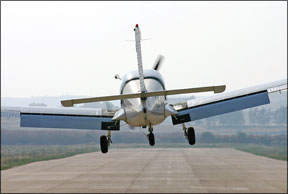
Ten Tips For Recovering Bad Landings
Its probably a fair bet that every person who has flown an airplane more than about 20 hours has made at least five landings he or she not only considers personally embarrassing but remains convinced to this day could be measured on the Richter scale. So, lets be honest with ourselves from the very beginning: As active pilots, we are going to make ugly landings from time to time. Further, Murphys Law says we will probably make them when a lot of people are watching. Therefore, lets recognize that a little humility (and perhaps humiliation) is the price of acquiring and maintaining the skills necessary to cause a rapidly moving flying machine to return to the planet in a condition to be reused immediately. As a result, once we firmly accept that from time to time were going to make runway arrivals of the sort to make cement contractors rub their hands in financial glee, we are going to be less likely to try to force the airplane onto the ground due to embarrassment after we have bounced telephone pole high, and more likely to think rationally about the attitude, speed and altitude of the airplane and proceed to coolly evaluate whether to try to salvage the landing or go around.

Key Takeaways:
- All pilots will experience "ugly" landings; accepting this allows for more rational decision-making, including choosing a go-around, rather than attempting to force an unsafe landing.
- Bounced landing accidents commonly involve pilots who are low-time in the aircraft type, lack recent training, or carry excessive speed on final, often leading to misjudged flares, pilot-induced oscillations, or loss of control.
- When recovering from a botched landing, prioritize directional control over a smooth touchdown; avoid pushing the yoke forward after a bounce, use power to control descent, and be prepared to execute a go-around, particularly after a second bounce or if touchdown doesn't occur in the first third of the runway.
Key takeaways sponsored by Aviator Pro | Start Your Training ->
See a mistake? Contact us.

