Features

Aircraft Takeoffs and Landing on Shorter Runways

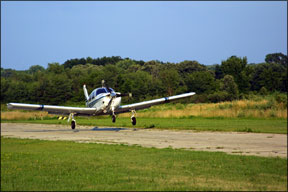
Early on in my flying career, taking off automatically meant, absolutely free, one mandatory dead-stick landing. Thats because I was flying hang gliders and developed an easy appreciation for fitting into small spaces. Later, after someone thought to put a small engine and propeller on one and dub the results an ultralight, my well-honed, dead-stick landing skills proved handy too frequently. Thankfully, the engines used on ultralights in those early days have improved greatly but-like a catchy tune you just cant shake after hearing it on the radio-I still think in terms of whether a nearby field is large enough for landing. Coincidentally and for the same reasons, short-field takeoff skills with an ultralight received equal attention. After all, once you “land out” in an ultralight and resolve whatever caused the engine to fail, you still need to get back to the car. Best of all, the better our short-field skills, the more options we had for operating, powerplant status aside. Once I moved up to flying larger, heavier, faster airplanes, those same instincts came with me, as did the comfort of knowing I had the ability to safely operate from fields that might make a knowledgeable passenger utter an audible, “Whoa….”

Read More »

Pilot and Air Traffic Controller Communication

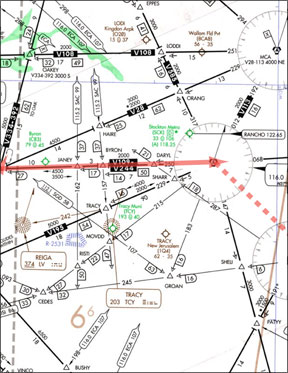
When you think about it, the IFR system is really a wondrous thing. For example, every airport, navaid, fix and procedure has certain basic characteristics shared by all other similar facilities. For another example, a unique name or identifier is assigned, helping eliminate confusion between ATC and pilots. To navigate from one to another, the operator requests a route, naming the various facilities to be used. A flight plan is filed, or a radio request is made, a controller compares the request to his or her needs and a clearance is issued. On one level, its a simple system. On another, its incredibly complex. So complex, in fact, errors are found every day by pilots and controllers, and then corrected. The result is a relatively safe and efficient national airspace system. One of the keys to making it all work, however, is pilots and controllers cross-checking each others work. Most of the time, no errors are found. Sometimes, though, someone forgets something, or the system proves too inflexible. In those situations, operators and ATC sit down to figure out what went wrong and develop procedures to consider each others needs. This is my tale of finding an omission in the system, and how little effort it took for a fix to be implemented.

Read More »

Flying Your Aircraft Above Its Gross Weight

I regularly fly my airplane some 250 pounds overgross. But, I do it legally, since its equipped with an STCd tip tank installation. The STC (supplemental type certificate) allows operation at a maximum gross takeoff weight of 3550 pounds, an increase of around 7.5 percent from the airplanes original 3300-pound gross weight when it left the factory. But theres no paperwork accompanying the admittedly older STC providing performance charts at the higher gross weight. Theres no question performance suffers at the higher weight, but Im legally allowed to use the older, lighter weight in computing performance. To compensate, I make sure I use runways of adequate length when operating at the higher weight and higher-than-published airspeeds, accepting a lower climb rate. The tradeoff is worth it. Whether by placing too much aboard, or putting it in the wrong place, loading an airplane outside its weight and balance envelope is relatively easy to do with most GA aircraft. Its one thing to know youre slightly over the gross weight and have the runway to handle it. Its quite another to overload the airplane and then fail to consider the impact on performance.

Read More »

Forget The Checklist

Every Flight Manual, every Pilots Operating Handbook and every aftermarket pilots guide contains checklists. Normal and emergency, and in some airplanes, abnormal and alternate procedures checklists attempt to cover most situations youre likely to encounter. The FAA, instructors and authors (myself included) expend great effort trying to get pilots to use printed checklists. So it may seem odd to read there are times when a printed series of steps is too cumbersome to use. There are some times when you should forget the checklist. Most in-flight situations are not so time-critical that forgetting to move a switch or control spells immediate disaster. These conditions provide enough time for you to make inputs or move controls, then as time permits pull out a checklist and verify you have forgotten nothing. For instance, when leveling off from climb to cruise you may forget to close cowl flaps; the engine may cool rapidly as airflow accelerates, and cooling drag may prevent the airplane from reaching its maximum speed. But the engines not going to quit, and the airplane isnt going to fall from the sky. Level off, then as time permits reference a printed checklist to catch and correct your omission.

Read More »

Job One

One of a pilots most dreaded scenarios-beyond, perhaps, the mid-air collision-is an engine failure shortly after takeoff. Even multi-engine pilots arent immune, since the pilot of the typical light twin at gross weight and little altitude often has little from which to choose-except exactly where the NTSB investigation will begin. In a single, at least, when the engine fails shortly after takeoff-for whatever reason-we know whats going to happen. We also know to maintain control of the airplane, choose the most suitable off-field landing site and do everything we can to avoid obstacles. Of these maxims, maintaining control is always the most important and, depending on the terrain, sometimes the easiest to ensure. Over the years, much research and actual accidents have proven the likelihood of surviving such an event is much greater if the airplane touches down at minimum speed, in a slightly nose-high attitude and with its wings level. In other words, under control. Or, as legend R.A. “Bob” Hoover has been quoted, “If youre faced with a forced landing, fly the thing as far into the crash as possible.”

Read More »

The Right Airplane?

Two wings. Check. Horsepower up front (or maybe in the back). Check. Liquid money in the tanks. Check. Somewhere to go? Hell, yeah! Hang on a minute. As absurdly simple as it sounds, it is a fact that different aircraft serve different roles. Sometimes, the plane, pilot and mission dont match up any more. We know how it goes. You go through primary flight training in a tame little trainer, perhaps a short-legged Cessna 152 or 172, or maybe a Piper Warrior. Youve become accustomed to the frequent fuel stops and finite loading capabilities, and know every avgas-fueled diner within 100 miles. But maybe youve started a family, gained a baby or just want to get out of your own backyard without stopping for fuel quite as often. Maybe something faster, more comfortable, something that will get you over the terrain and out of that miserable chop. And if you need to cover half the country in a day, youll definitely need a faster ride. Or not. If youve passed the point in your flying or professional career where you no longer need that go-fast airplane, youre a good candidate for a lower fuel burn and lower cockpit workload. Too, if your medical renewal isnt much of a gimme any more, perhaps the Sport Pilot and LSA world can open new doors to you as others close.

Read More »

Deviant Behavior

Its been said that experience is what you get when you dont get what you wanted to get. Well, taking significant liberties, a pilot might then say that a deviation is where you go when you dont get to go where you planned to go. Got it? We pilots are typically a robust and determined bunch. We dont like to admit we cant travel our planned route. Once were on our way and it looks like Mother Nature doesnt want us on our planned route, the common technique is to simply go have a look before deciding on a different, longer route. To understand the fallacy in this, lets cover a little basic geometry to see that its better to deviate early for the shortest practical addition to your route while maintaining your sanity and keeping your blood pressure in check with a conservative deviation.

Read More »

Unfamiliar Territory

Theres little I find more exciting than launching for a new destination across unfamiliar territory. Exploring the great unknown makes adventurers out of pilots who use their planes for, you know, actually going places. But, getting there requires a little-sometimes a lot of-extra planning. My bride enjoys the adventure of personal airplane travel as much as any pilot; she also appreciates the added risks involved when tackling new terrain, new airspace, new weather systems and new destinations. Shes such a good sport, in fact, weve enjoyed the thrill many times. Our first “real” trip took us on a 2300-mile journey starting only five days after passing my private pilot checkride. Then, there was our first time to Sun n Fun; to coastal North Carolina and the sands of the Wright Brothers; our first flight to Oshkosh and-well, you get the picture. We also made a couple of international trips that still stand out years later: Key West to Grand Cayman for one, and Cancun, by hugging the Bay of Campeche to Vera Cruz, then the West Yucatan city of Campeche and across the Yucatan. The latter one took two days each way.

Read More »

Batteries Not Required

When was the last time you planned a flight? No, we dont mean hop in the aircraft and punch direct on the nearest GPS navigator; we mean really planned the flight the good old-fashioned way…with a pencil, a plotter, an E6-B, a sectional and a flight log. Its been a while, hasnt it? At this point, youre probably thinking, “Here comes another really boring article about navigation,” but thats not the case. Instead, this really is about safety and situational awareness; its about really understanding what is happening when you fly from point A to point B. Finally, its about remembering and utilizing the basic skills of a VFR pilot that may have some rust on them. Youll recall the three basic forms of navigation: Pilotage, ded reckoning and electronic. (Okay, there also is celestial, but were making the broad assumption that there are not a lot of flight navigators out there.) Each has its own tricks and tips. But the most important lesson is never, ever to rely on just one of them.

Read More »

Aircraft Engine Carburetor Ice

For student pilots who arent mechanically inclined-and even for many who are-some of the basic concepts in aviation are difficult to grasp. Recent advances in technology and aircraft design have resulted in new aircraft which more closely resemble the high-end luxury car the pilot may have driven to the airport. But thats pretty much where any similarities-accidental or purposeful-between automobiles and aircraft end. As a primary student somewhat familiar with engines and other mechanical contrivances, one of the aviation-centric concepts I found challenging involved carburetor ice. Since most of my training took place during what I recall as a long, hot, humid summer in southern Georgia, the idea of any ice forming anywhere outside of a beer cooler was totally foreign. Being the dutiful student pilot, however, I readily accepted the instructors explanation of why and how to apply carburetor heat. Anything to get my hands on a mighty Cessna 150s controls and aim it skyward.

Read More »
Pilot in aircraft
Sign-up for newsletters & special offers!

Get the latest stories & special offers delivered directly to your inbox.

SUBSCRIBE