Features

Cold-Weather Flight Operations

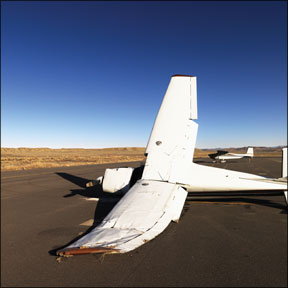
When living in a locale with winter weather cold enough for clichs and wanting to commit aviation, there are three alternatives for coping: 1) Borrow a snowplow and drive south-when someone asks, “Whats that?” stay there and fly; 2) subdue the urge (as did 1920s barnstormers, realizing the oversupply in warmer climes would cause them to starve), secure the airplane, rent a hotel room and hibernate after contracting with a bootlegger for regular deliveries; or, 3) keep flying. While not expressing a preference, our habit has been to continue flying while modifying our behavior. Among the changes is realizing winter means more than cold: It means fewer hours of daylight, so more-risky night flying also is likely. It means everything takes longer to accomplish, be it as mundane as putting on appropriate flying attire or as complex as readying a tied-down airplane for flight. It means hurrying means radically increasing the chance of making a small mistake and, in winter, small mistakes are far more likely to have a fatal outcome than in summer.
Read More »

Departing Non-Towered Airports

When departing IFR from a tower-controlled airport, planning your initial route is easy. You may have a challenging departure procedure, but you depart as cleared or as directed, immediately under positive control. It sounds complicated, but its actually easier than the alternative. The alternative, since you asked, is an IFR departure from a non-towered airport. In this case, youre entirely responsible for terrain clearance until you make it into controlled airspace and you must plan an obstacle clearance departure route on your own. Your options (and responsibilities) are different depending on whether its VMC, marginal VFR or IMC. What do you need to consider? How do you choose? If you want to know what youre expected to do under a given set of circumstances, the first place to look is the regs. FAR 91.175 specifies what pilots are required to do for takeoff and landing under IFR. Although 91.175 gives us a lot of good information about landing minima and decision heights, and what needs to be visible to proceed from the missed approach point to landing, it is basically mute on the subject of instrument departures.

Read More »

Proficiency Checklist Could Save You Fuel Costs

We all work hard to develop the skills necessary to pass a checkride. A lot of effort and expense is involved. But we often lose sight of the real objective-not just building those skills to pass a checkride, but to keep those skills sharp so that we might call upon them when theyre needed. One mechanism to help us do that efficiently is a proficiency checklist, one inspired by an Aviation Safety article enough years ago that its been lost in the easily accessed archives. Recently weve gotten some feedback from long-time readers that they liked the article and still use the ideas presented there. They suggested we revisit the idea and present it again. Given the extraordinary cost of fuel and flying today, its become ever more difficult to allocate the money to just go up and play or even to simply maintain proficiency. Increasingly, weve got to have a specified purpose to justify going flying. Before we delve into the proficiency checklist, though, lets take a look at the way a typical GA pilot maintains proficiency.

Download a FREE Checklist To Track Your Proficiency

Read More »

Flying All The Angles

Are you a proactive or reactive pilot? From our early primary training days, weve learned to fly by the airspeed indicator and listen for the stall warning horn when we venture too close to the lower edge of the planes airspeed envelope. Or, we live with the monotone blare while practicing the stall series. But what does it really tell us? Like other traditional primary instruments, there is some level of lag in their indications, and the information we receive is delayed or incomplete. Enter the angle of attack (AOA) indicator. While ubiquitous in gliders, where lift is life, chances are good your primary trainer did not have such instrumentation on board, although your training covered the concept of angle of attack. Ah, stalls. During primary training, we memorize the aircrafts stall speeds, clean and dirty, in 1G flight. We are further admonished that the stall speed increases as the wing loading, as well as gross weight, increases. And then theres density altitude to consider. All these factors conspire to sabotage lift, and while the dissipation of lift has its place (such as right before touchdown), its better to be proactive in preserving lift than chasing its loss.

Read More »

What Makes One Airplane Different From Another?

The trickle-down effect of installation of glass cockpits in increasingly modest airplanes has changed the type of checkout a pilot gets when seeking to rent a machine from the local FBO. Because presentation of attitude, altitude and speed of the airplane, along with health of its various systems, has changed so dramatically from round-gauge airplanes, there has to be a fair amount of time spent with an instructor on the ins and outs of the video screens. This is a very good thing, if for no other reason than getting a firm introduction to the avionics of an airplane before launching into the blue unknown may prevent a few pilots from killing themselves. One hopes the days of “Hey, its an airplane, lead me to it and Ill fly it” soon will fade into aviation legend, along with their associated accidents. The good news is that the newer, more technically advanced airplanes tend to have fewer secret corners in either their systems or their handling as certification rules have become more sophisticated. While some bemoan the increasingly “vanilla” flavor of handling and systems in newly certified airplanes, its hard not to appreciate that they tend to have fewer little secrets that will kill the uneducated. However, the reality is that most pilots are still flying airplanes acquiring senior citizen status-the airplanes, I mean-and failure to spend time learning the details of a particular type prior to flying it can prove embarrassing at the very least.

Read More »

Aircraft Departure Downdraft

Shortly after receiving my instrument rating, I had occasion to help ferry a Piper Archer a whole dozen miles. It was the dead of winter, dark, and snowing. The snow was dry and the temperature too low for it to stick to the Archer, itself cold-soaked. Even though I was as instrument-current as it gets, my comfort level was too low to tackle this. It promised to be a high-workload flight in conditions I had never experienced. I declined, and someone more comfortable with those conditions handled the flight uneventfully. That was the first time a daunting instrument departure overcame my concern with an approach at the other end. But not the last. These days, in fact, Im usually a lot less concerned about an approach to minimums than I am a takeoff involving challenging weather. An instrument departure into real weather can be the greatest challenge a pilot will face: The airplane is heavier than it will be at any other point in the flight, were at a low altitude and airspeed, and-while weve performed a thorough pre-flight-theres always the nagging doubt weve forgotten something. Sometimes, we can find ourselves taking off into weather poor enough that it prevents returning to the departure runway if we need to. Add to this mix a lack of subjective knowledge of how the weather will affect us, and the challenge of an instrument departure becomes much greater than an approach to minimums after a length of time “wearing” the airplane and the flight conditions.

Read More »

Top Ten Aviation Risk Reduction Steps

Hows this for an aviation truism? “The best pilots possess the superior judgment to avoid situations requiring their superior skills to survive.” While arguably more true than a whole wealth of aeronautical truisms, it doesnt provide much guidance in our quest to become one of those wiser and more-capable aviators. Which raises an obvious question: How does one develop such profound judgment? Old, no-longer-bold, aviators (another truism) generally know the answer: by surviving unwanted experiences. Which reminds us that experience is hands-down the best teacher, something we hear repeatedly. Were not saying that experience is the safest teacher; obviously, the learning pilot faces elevated risks in the course of gaining the experience from which wisdom grows. A safer approach, of course, is absorbing tribal knowledge from those sobering hangar-flying tales of others experiences we hear and read. Another approach is to sample risky situations from safely within the confines of a full-motion cockpit simulator capable of providing exposure to palm-sweating situations without the, you know, danger. In the end, however, we have to emerge from the sim, leave the comfort of our fellow hangar flyers, and actually put on an airplane and fly it.

Read More »

Maximizing Aircraft Efficiency

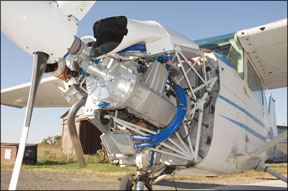
Are you getting the most performance from your airplane? The fact is a considerable amount of unused performance gets overlooked by the average owner/operator. Both performance and range can be improved through common operational techniques, performing regular maintenance procedures and careful planning. Most of this “hidden performance” can be gained back from wasted fuel and increases in the airplanes useful range. In turn, you can reduce the annual operating costs. And with average aviation fuel prices nudging $6 a gallon in the U.S., who wouldnt want to enhance their airplanes efficiency? Thankfully, its not as complicated as it may seem. You just need to make the machinery work the way it was designed to work. One method is to ensure the airplane is as mechanically sound as it can be. Then, well look at improving its basic aerodynamics, followed by some smarter flight planning. Finally, well look at ways to save fuel while airborne.

Read More »

When Flying Birds Collide with Your Aircraft

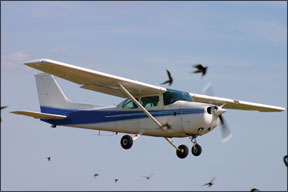
As we practice our license to learn, some hazards demand our frequent attention: Traffic, weather and terrain are the top three. They present varying levels of predictability, and a huge amount of brain power and economic investment has been poured into keeping pilots out of the teeth of these hazards. But what about the less predictable living hazards that share the airport-and sky-with us? Plenty of critters live on and around airports, and as for sharing the sky with birds, well, they got there first. Sometime in the 1980s, a Japan Airlines-bound ab initio student at Napa Airport, Calif., (APC) had a rough time understanding the tower controllers by-the-book NOTAM. She warned, “Aircraft in the vicinity, be aware of large waterborne fowl in and around the airport environment.” After several futile rounds of the hapless student pilot requesting that she say again, she finally bellowed, “Birds! We have birds on the runway!” Birds in the aviating environment are far from the cute critters alighting on Cinderellas hand. A brown pelican, for instance, can pack a punch, weighing up to six pounds (and lets hope you never encounter the 33-pound Dalmatian pelican). Turkey vultures weigh up to 10 pounds; however, the mass generated by a closure rate greater than your en route cruising speed can be incredibly destructive. Size doesnt always matter: The tiny starling is a feathered bullet, with a body 27 percent more dense than the herring gull.

Read More »

Causes of Hypoxia and Flying Non-Pressurized Aircraft at Lower Altitudes

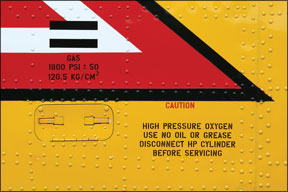
Twelve thousand five hundred feet. Fourteen thousand. Fifteen thousand feet. If youre a pilot, you immediately recognize the significance of these altitudes. Each triggers different requirements for supplemental oxygen use. Most of us learn the FARs associated with these requirements early in our primary training so we can spout them back on written exams and in the oral portion of the Practical Tests. After that, we may never think much more about them. But like most FARs, the oxygen rules are a minimum standard of safety. Of what real-world relevance are the oxygen requirements of FAR 91.211? From the standpoint of safety, when should you be using supplemental oxygen? Supplemental oxygen, for those not familiar with the term, is additional oxygen added to ambient air. The goal is to provide enough “added air” to bring the O2 users oxygen intake up to the same level it would be at a target altitude (usually sea level). The need for additional oxygen increases with altitude, since (obviously) the higher you go, the more O2 you have to add to give the breather sea-level air. For example, one aircraft manufacturers automatically regulated oxygen system meters supplemental air at the rate of 0.5 liters/minute/person at 5000 feet, scaling up to 2.8 liters/minute/person at Flight Level 250.

Read More »
Pilot in aircraft
Sign-up for newsletters & special offers!

Get the latest stories & special offers delivered directly to your inbox.

SUBSCRIBE