













Register

Coming Up Short of The Runway

Its morbidly fascinating to look at landing accidents involving pilots who came to grief while shooting an ILS in instrument weather. By contrast, VFR landing accidents tend to involve loss of control after landing, usually a result of too much speed at touchdown. Few VFR landing accidents involve crashing short of the runway itself. Yet, when actual IFR weather moves in and the airplane is on the ILS, the converse occurs, and suddenly pilots develop a proclivity for crashing before ever getting to the runway. As would be expected because an airplane is going far faster prior to the time it touches down than when it is when rolling out, landing accidents when flying the ILS in IFR conditions are more often fatal than landing accidents when flying VFR. The instrument landing system has been around for over a half century. In its own way, it is instrument flyings simple and reliable old boot; the two-needle, three-dimensional approach system that funnels one to a touchdown spot about 1500 feet down a comfortingly long runway. With a time-proven design that guides arriving aircraft over the runway threshold at a safe 50 feet or so, how come so many GA pilots find a way to depart from the friendly confines of the ILS arrival cone and smack into the planet before getting to the runway? Why are so very few GA ILS accidents in IFR of the sort where the airplane overshot the touchdown point and went off the end of the runway as is expected in VFR conditions?

Gemini Sparkle

Key Takeaways:

  • During ILS approaches in IFR conditions, many GA pilots crash short of the runway, often fatally, which contrasts with VFR accidents that typically occur after touchdown.
  • This dangerous trend stems from an ingrained habit, developed in VFR training, where pilots prematurely reduce power, slow down, and maneuver for a "short landing" upon sighting the runway, disregarding the ILS guidance.
  • Applying this VFR habit in actual IFR weather leads to risks like stalling due to ice, re-entering clouds below minimums, or misidentifying the runway due to poor visibility and crosswinds.
  • To prevent these accidents, pilots should maintain a constant approach speed and diligently follow the glideslope and localizer all the way to the runway threshold before initiating power reduction and full flap deployment.
See a mistake? Contact us.

Its morbidly fascinating to look at landing accidents involving pilots who came to grief while shooting an ILS in instrument weather. By contrast, VFR landing accidents tend to involve loss of control after landing, usually a result of too much speed at touchdown. Few VFR landing accidents involve crashing short of the runway itself. Yet, when actual IFR weather moves in and the airplane is on the ILS, the converse occurs, and suddenly pilots develop a proclivity for crashing

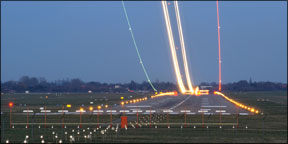
Runway Lights

288

Ready to Sell Your Aircraft?

List your airplane on AircraftForSale.com and reach qualified buyers.

List Your Aircraft
AircraftForSale Logo | FLYING Logo
Pilot in aircraft
Sign-up for newsletters & special offers!

Get the latest stories & special offers delivered directly to your inbox.

SUBSCRIBE

