










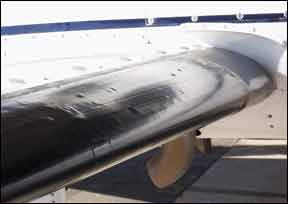
Icing Gear
Each anti- or de-icing technology has benefits and drawbacks. If you’re flying with boots, use them early and often.

Each anti- or de-icing technology has benefits and drawbacks. If you’re flying with boots, use them early and often.
A pilot launching for Hawaii proves the first few moments of any heavy or overweight takeoff are critical.
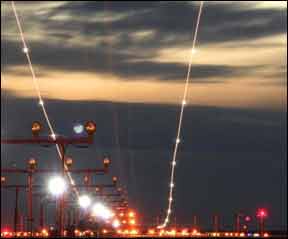
The inoperative table doesn’t cover every possible system failure. Plus, you also need to consider facility outages and equipment failures at your alternate.
Just because the vast majority of the airplanes most of us fly have their little wheel mounted on the nose instead of the tail doesn’t mean the nosewheel is immune to abuse. Nor does it mean we can ignore the nosewheel’s peculiarities, even if an airplane with one is much easier to handle on the ground.

The FAA-prescribed practical test is the final hurdle every pilot must pass to earn a new certificate or rating, and the practical test standards (PTS) are where the requirements for success are spelled out. The PTS is what both aspiring pilots and examiners use to determine what’s to be done on a practical test and how. It’s supposed to be the final assessment of whether a pilot can conduct safe flight operations.
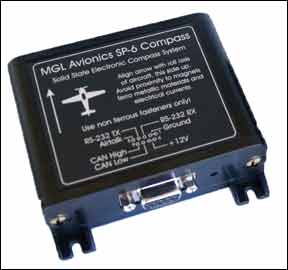
The latest-technology glass panels do many more things than the old, tried-and-true “steam gauges” with which many of us grew up. Through the “magic” of a software-driven display supported by various sensors, modern flight instrumentation can provide easy-to-read attitude information and a wealth of other data that simply wasn’t available before. But there’s no free lunch. Along with their additional capabilities and accuracy, glass panels also bring different failure modes to the cockpit. One of these new-tech failure modes involves the way in which they determine the aircraft’s heading, along with other information, most of which firmly belongs in the nice-to-have-but-not-critical category. In many situations, losing heading information isn’t the end of the world—especially if GPS navigation remains available—but it can have a ripple effect on the panel’s various other systems and capabilities. I recently learned the hard way how failure of the heading sensor(s), usually a magnetometer, may not be a failure at all, depending on how the equipment is designed and installed.
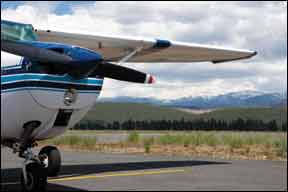
By the time student pilots near the practical exam, they’ve usually got a pretty good idea of how and why to calculate density altitude (DA). If they’re lucky, they’ve even done some high-altitude takeoffs with an instructor, or at least simulated DA’s effects by using much-less-than-full power settings on a few takeoffs. Those tables and graphs overlook an important characteristic of the air in which we’re trying to fly: its humidity. Two classic concerns with mountain flying are density altitude and pressure altitude. Actual altitude doesn’t affect aerodynamic performance. Most of us plan our high-elevation arrivals and departures as early in the day as practical, and are extra attentive on warmer days when seated behind a normally aspirated engine. While reduced horsepower is certainly one reason to be wary of high-DA situations, the thinner air also means higher true airspeeds—and lower indicated ones—resulting in the airplane “thinking” it’s higher than it really is. The impact is felt through mushier controls, since there are fewer air molecules flowing over them. There’s also an impact on propeller efficiency, since its blades are airfoils. The net effect, of course, translates into longer, faster takeoff rolls.
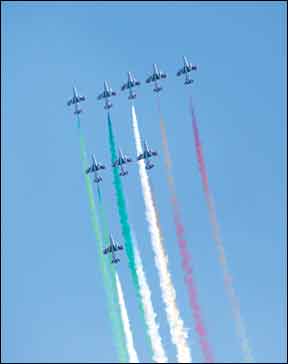
Seemingly for generations pilots have argued over which controls speed and which controls altitude: power or pitch. At varying times the FAA contributed support to both sides with publications outlining flying techniques and training information. The very existence of the arguably adolescent-level debates ignores the hard reality: In powered aircraft neither one works alone. To achieve optimum performance in any setting requires balancing the two to best match the needs of the moment. Different combinations—and different sequences—give us everything from the best climb to the best cruise to the best economy to an optimal descent profile or best-profile for an instrument approach. In all cases, the power equation varies according to the altitude you seek, and the pitch attitude necessary varies with the desired airspeed. Just as an aircraft needs to obtain and maintain a specific pitch angle to match its bank angle in a level turn at any given speed, smooth, coordinated flight requires managing both pitch and power. But before we discuss how best to achieve the desired balance, let’s return to the basics of the impact of pitch and power on a powered aircraft.
As a student of NTSB reports and an active instrument flight instructor, I have come to the conclusion we do not stress preparedness for the missed approach procedure enough, either in initial instrument training or in instrument proficiency checks. In addition to collisions with obstacles because of an improperly flown missed, the General Aviation Joint Steering Committee, an FAA/industry working group charged with identifying and mitigating the causes of fatal general aviation accidents, has identified loss of control during a missed approach as one of its focus scenarios. This suggests that—even when the pilot attempts to fly the missed approach procedure properly—the workload of doing so may be greater than the pilot is prepared to handle. So how can we make certain we are properly briefed for the missed approach, so we know how to fly it correctly? What can we do to reduce pilot workload while flying the missed?
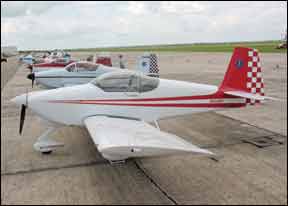
According to the NTSB, “Experimental amateur-built (E-AB) aircraft represent nearly 10 percent of the U.S. general aviation fleet, but these aircraft accounted for approximately 15 percent of the total—and 21 percent of the fatal—U.S. general aviation accidents in 2011.” With those numbers in mind, along with the fact E-ABs represent one of the fastest-growing portions of general aviation in the U.S., the NTSB last year initiated a major study of the segment.The study’s results were adopted by the NTSB in May 2012, after detailed analysis of accident records going back 10 years, in-depth investigations of all E-AB accidents during 2011, a broad survey of E-AB aircraft builders and wide-ranging discussions with industry. What, if anything, did they find? What were the study’s recommendations? Most important, can the study’s results be applied to those of us not flying so-called “homebuilt” aircraft?

Get the latest stories & special offers delivered directly to your inbox.
SUBSCRIBE