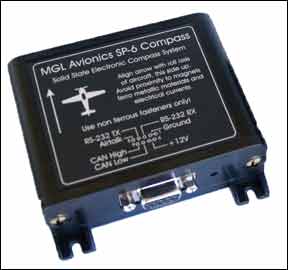
The latest-technology glass panels do many more things than the old, tried-and-true “steam gauges” with which many of us grew up. Through the “magic” of a software-driven display supported by various sensors, modern flight instrumentation can provide easy-to-read attitude information and a wealth of other data that simply wasn’t available before. But there’s no free lunch. Along with their additional capabilities and accuracy, glass panels also bring different failure modes to the cockpit. One of these new-tech failure modes involves the way in which they determine the aircraft’s heading, along with other information, most of which firmly belongs in the nice-to-have-but-not-critical category. In many situations, losing heading information isn’t the end of the world—especially if GPS navigation remains available—but it can have a ripple effect on the panel’s various other systems and capabilities. I recently learned the hard way how failure of the heading sensor(s), usually a magnetometer, may not be a failure at all, depending on how the equipment is designed and installed.
Modern "glass panel" avionics, while advanced, introduce new failure modes, such as providing erroneous heading information from magnetometers.
The author experienced this firsthand, discovering the inaccuracies were caused by natural magnetic anomalies in the Earth's crust, common in mineral-rich regions like the northwestern U.S.
Experimental EFIS units may not warn about these geophysical disturbances, and the phenomenon is often overlooked in pilot training, emphasizing the need for pilots to consult detailed sectional charts for such warnings.
The latest-technology glass panels do many more things than the old, tried-and-true “steam gauges” with which many of us grew up. Through the “magic” of a software-driven display supported by various sensors, modern flight instrumentation can provide easy-to-read attitude information and a wealth of other data that simply wasn’t available before.
288
CREATE A FREE ACCOUNT
Sign up to keep reading
Create a free account to continue. Already a member? Sign in below.