Amy Laboda Monday, August 22, 2016

An Instrument Proficiency Check Each Year

the applicant must demonstrate the ability to perform the Tasks listed in the table below. The person giving the check should develop a scenario that incorporates as many required Tasks as practical to assess the pilot’s ADM and risk management skills.””

Read More »
Amy Laboda Monday, December 22, 2014

Making Your Own Luck

One of this magazines missions is to help reduce general aviations accident rates. Ideally, there would be no fatalities. We want to see an end to poverty and war, too, but were not holding our breath on either. In the world of aircraft, a mechanical world, things are still going to break and pilots are going to have to respond quickly, thoughtfully, and appropriately in order to make aircraft accident fatalities go away. Sometimes they may have to augment that skill with luck, too.

Read More »
Amy Laboda Tuesday, September 16, 2014

Looking Out The Window

This I know: If you see something with your own two eyes, you probably can avoid it. Happened to me just last month. A regional airliner, working with ATC, was approaching its destination. I was working my way around the Class C airspace, at the center of which the airliner was aimed.

Read More »
Amy Laboda Tuesday, August 19, 2014

Practical Preflights

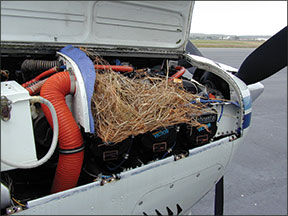
When it comes to preflighting an airplane, there is nothing more true. Sure, you can follow the diagram laid out in the pilot’s operating handbook, or routinely drone through a do-list of items a mile long that are spelled out in the aircraft’s preflight check list, but if you don’t understand what problems you are looking for, what’s the point?

Read More »
Amy Laboda Tuesday, July 22, 2014

Checklist Complete?

I once had an emergency while serving as pilot in command. It was a big one. It was the type of emergency that means you will shortly be landing somewhere, anywhere, so you best hurry up and get ready. There were red-box—or bold—items, the ones you memorize, to perform. Fortunately, not too many. And in the 90 seconds from the start of my emergency until we were egressing from the cockpit, there was a moment.

Read More »
Amy Laboda Thursday, May 15, 2014

Things That Go Bump In The Air

Turn on your faucet—any faucet. Start with just a slow stream of water. See how smooth, transparent it is? That’s an example of laminar flow. Now, accelerate it by opening the taps fully. Notice how it roils, as a brook after a rainstorm. What you see is the essence of turbulence.

Read More »
Amy Laboda Thursday, March 13, 2014

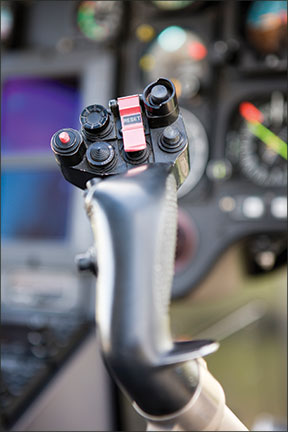
Pushing Reset

We all have been there. You’re on a certificate or rating checkride and you make one little mistake—nothing huge, nothing that puts the outcome of the flight or the practical test in jeopardy—yet. The examiner, who has been discreetly scribbling away on a notepad throughout your performance, ticks something off, but shows only a carefully schooled poker-face. You don’t hear, “Stop the flight.” So you continue. But you get a little rattled. Come on, everyone does! The examiner doesn’t care, though. What you do next is the important part: Can you stop the fault-chain you triggered with your first error?

Read More »
Amy Laboda Thursday, January 16, 2014

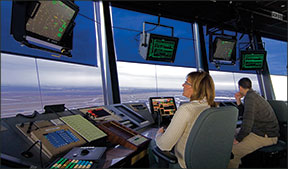
Get What You Want From ATC

Let’s face it: If you can’t get what you want in life, why bother? That same adage holds when you interact with air traffic control (ATC). Whether you’re VFR or IFR, if you can’t get what you want from ATC, your trip will take longer, burn more fuel and generally annoy you to the point where you actually begin to believe the old adage, “If you have time to spare, go by air.” It doesn’t have to be that way. After all, you are the pilot-in-command (PIC) and that sweet voice on the other side of the radio frequency is there to help you, right?

Read More »
Amy Laboda Thursday, December 19, 2013

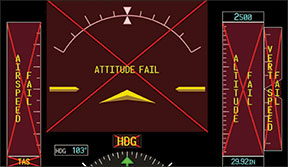
Double Or Nothing?

There can no longer be any debate: The advent of the attitude heading air-data reference system (ADHRS) and its incorporation into electronic flight information displays (EFIS has revolutionized the way pilots fly in instrument conditions. The ADHRS/EFIS combination have eliminated the brain-sopping task of repeatedly scanning in rapid succession six key analog instruments, some round power dials and annunciator lights while gleaning critical flight information. The pilot had to first process the information it received from the attitude indicator, altimeter, airspeed indicator, directional gyro/horizontal situation indicator, turn coordinator and vertical speed indicator through her vision, compare it with navigational information and develop, on her own, a three-dimensional picture of where the airplane was in space-time. By the time all that has been accomplished, the situation has changed, since the pilot and the craft are moving at a pretty good clip.


Read More »
Amy Laboda Friday, August 23, 2013

Wing Shape And Ice

I’m a South Florida lady, and so is my fine flying machine. It’s relatively fat wing, tapered tips, relatively thin horizontal and vertical tail surfaces and elevator with “horns” are made of .032 aircraft-grade aluminum coated with paint (and not even that much paint). And even though I’m at a balmy 30 degrees North latitude, a momentary jaunt through the middle of a building cumulous cloud at the right altitude and outside temperature can easily coat my aircraft in a shiny glazing of thick, clear ice.

Read More »
Loading Posts