Features

Simulating Proficiency

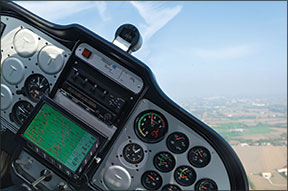
Each year, some number of pilots come to grief because they can’t handle the demands of instrument flight beyond straight-and-level. The AOPA Air Safety Institute’s 2011 Joseph T. Nall Report, which took a close look at general aviation accidents in 2009, found 22 accidents that year in which a non-commercial fixed-wing aircraft was involved in a weather-related accident with an instrument-rated pilot aboard. Of them, 16 involved fatalities. We can do better.
Read More »

Reluctant Test Pilot

As anyone who reads this magazine knows, most GA accidents are caused by the loose screw between the seat and rudder pedals. “Pilot induced” is the leading cause of accidents, not mechanical failure. But sometimes even mechanical failures can be attributable to aeronautical decision-making, like deciding to trust an aircraft after it has been in maintenance.

Read More »

Handle With Care

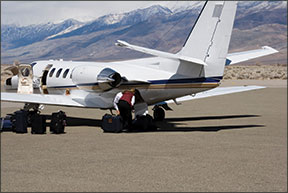
In his timeless classic Fate Is The Hunter, Ernest K. Gann regales readers with several tales of in-flight emergencies, hairy takeoffs and grateful landings. Perhaps the book’s most memorable takeoff involves a grossly overweight C-87 departing Agra, India, on a hot day, aimed directly at the nearby Taj Mahal mausoleum. Of course, Gann didn’t know the airplane was overweight before beginning the takeoff. How he and his crew flew it could be viewed as a clinic on how to handle an overweight airplane.

Read More »

Rust-Colored Water

Ensuring adequate flow of clean fuel to your engine(s) would seem to be a pretty basic part of ownership and regular/pre-flight inspections. Yet, according to AOPA Air Safety Institute’s 2011 Nall Report, “Eight accidents were attributed to fuel contamination, six of them by water. Seven of those airplanes were more than 20 years old, and at least three had been tied down outdoors for extended periods during which they were not flown regularly.” Some people apparently didn’t get the memo.

Read More »

Pilot/Controller Duties

Amy Laboda writes in February’s issue that “…controllers are not required to correct you if you read back a clearance incorrectly.” A retired SoCal Tracon controller explained to me why it is important for controllers to catch bad readbacks.

Read More »

Nine Miles

There are many things about flying that pilots and aircraft owners can control. They choose their own training and qualifications, how well the aircraft is equipped and maintained, and where, how and when it is flown. In fact, it’s been said that pilots are just control freaks acting out in all three dimensions. While there may be an element of truth to that sentiment, there are some things remaining completely out of a pilot’s control.

Read More »

Airshow Arrivals

I swear it happens at every fly-in I attend. I’m approaching the airfield at the recommended airspeed and altitude, following a ground track that was clearly delineated in an airshow-issued notice (sometimes an FAA Notam at larger gatherings) and I’m listening—not talking—on the designated frequency for the show, when a random pilot pops up and announces that he’s “a-comin’ in!” This guy (or gal—I’ve heard them both) knows nothing of any special procedures for the show. He may not even know there is a show going on. He just wants to land, perhaps for a bite at the terminal café, and be on his way.

Read More »

Ch-Ch-Changes

At this point, there really should not be a debate about the beneficial changes implemented during the electronic charting “revolution.” Overlaying a GPS-derived position onto an accurate chart in real time is a trick even entry-level consumer-grade devices can do, with the right software and data. And with the advent of digitized paper charts on those same devices, it’s never been easier—or less expensive—for pilots to keep up with their charting needs. Until I went all-electronic, I’d always used government charts, first provided by NOAA, and then by the FAA’s AeroNav branch. I chose them over Jeppesen’s offerings because the booklets were easier to update than Jepp’s loose-leaf binder system for several reasons.

Read More »

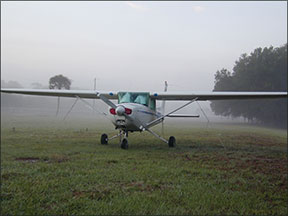
Short and Soft-Field Takeoffs

Short-field landings are all about using excellent technique to get your airplane into a tight spot. That same technique, however, can put you in an even tighter spot when it’s time to leave.

Read More »

Subtle Risks

As pilots, we spend a lot of time focusing on obvious hazards to our flight operations: convective activity, icing, low ceilings and other conditions. Pilots who fail to manage such risks constitute a disproportionate share of fatal accidents. These flight conditions, however, are not the only potential hazards that we should consider for the purposes of managing risk. Tasks and procedures required on every flight are also potential hazard sources and should be viewed through the risk management lens. These include such routine and necessary tasks as takeoffs and landings, even under benign conditions, as well as operations under calm skies in VMC conditions when there is still other traffic to avoid.

Read More »
Pilot in aircraft
Sign-up for newsletters & special offers!

Get the latest stories & special offers delivered directly to your inbox.

SUBSCRIBE