Features

Pressure At Work

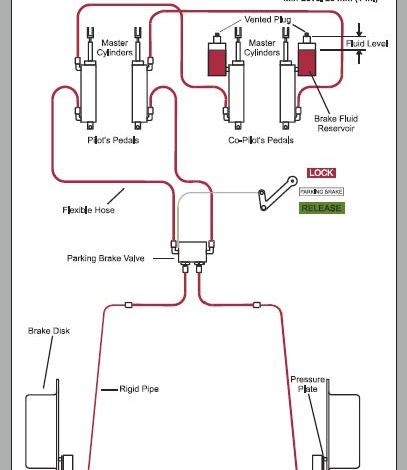
Flying behind air-cooled powerplants, free of radiators or coolant tanks, it’s easy to forget most aircraft still need liquids of some type to operate safely and reliably. When those fluids are put under pressure to actuate a mechanism, we’ve created a hydraulic system, sometimes defined as something “using pressurized fluid to drive machinery or move mechanical components.” It also can be defined as transferring “energy by pressurizing fluid to force movement of a slave to produce the action sought.”

Read More »

No Way Out?

Only five percent of general aviation accidents during 2010 occurred in instrument meteorological conditions (IMC). But these accidents comprised 18 percent of all fatal crashes that year, and almost two-thirds of them proved fatal. According to the AOPA Air Safety Institute’s 2011 Nall Report, this is a familiar pattern.

Read More »

Doing It Yourself

Perhaps the most expensive aspect of aircraft ownership is maintenance. Owners of even relatively simple airplanes—fixed gear and a fixed-pitch prop, for example—can save real money by learning and performing basic work. The FARs allow pilots of aircraft used in non-commercial operations (and even some flying for hire) to perform specific tasks on their own, without the need for a certificated technician.

Read More »

The Real Deal

Back in the 1950s, social critic and philosopher Lenny Bruce said that no one is shocked anymore. He was probably correct, given our national tolerance for the excesses of those in the entertainment biz, and those seeking to join the weirdness. Yet, I find my level of amazement at flight schools that grind out new instrument pilots without insisting that they actually fly an airplane in the clouds remains at the near shock level.

Read More »

Ambiguous ATC

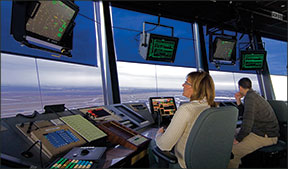
The ship has long since sailed, but labeling air traffic controllers as “controllers” has been something of a disservice to pilots everywhere. That simple convention has conferred on those responsible for separating traffic in the air and on the ground an authority over the outcome of a flight they really don’t have. Perhaps “coordinator” or “counselor” would have been better job titles.

Read More »

Short-And Soft-Field Landings

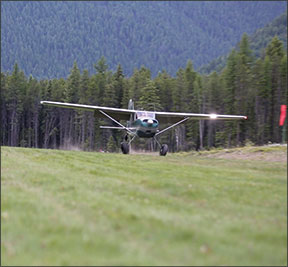
Obstructions, sand, mud, wandering animals and other surprises like the end of the runway rushing up to meet you…these are just some of the hazards common to short and soft fields. We all think we’re trained for them, but there’s a big difference between training and reality. I’m not knocking what CFIs teach or what’s required on the practical tests, but what you learned in your training may be insufficient to prepare you for the real thing.

Read More »

Get What You Want From ATC

Let’s face it: If you can’t get what you want in life, why bother? That same adage holds when you interact with air traffic control (ATC). Whether you’re VFR or IFR, if you can’t get what you want from ATC, your trip will take longer, burn more fuel and generally annoy you to the point where you actually begin to believe the old adage, “If you have time to spare, go by air.” It doesn’t have to be that way. After all, you are the pilot-in-command (PIC) and that sweet voice on the other side of the radio frequency is there to help you, right?

Read More »

Risk Management In The Real World

In the first two parts of this series (Aviation Safety, September 2013 and November 2013), I related how I used practical risk management techniques to meet the challenges of using my Beech Bonanza on a typical (for me) multi-stop, multi-week business trip that took place in June 2013. Having been trained in an era before risk management was emphasized (which is still the case, although change is coming), I now recognize I was fortunate to have successfully addressed these hazards without incident. I’d like to say it was my superior piloting skill, but I’m afraid that chance also played a big role. I emphasize this background because, like much of the present general aviation community, I was trained in another era.

Read More »

Double Or Nothing?

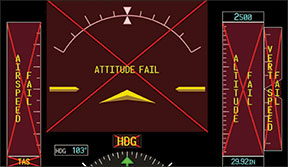
There can no longer be any debate: The advent of the attitude heading air-data reference system (ADHRS) and its incorporation into electronic flight information displays (EFIS has revolutionized the way pilots fly in instrument conditions. The ADHRS/EFIS combination have eliminated the brain-sopping task of repeatedly scanning in rapid succession six key analog instruments, some round power dials and annunciator lights while gleaning critical flight information. The pilot had to first process the information it received from the attitude indicator, altimeter, airspeed indicator, directional gyro/horizontal situation indicator, turn coordinator and vertical speed indicator through her vision, compare it with navigational information and develop, on her own, a three-dimensional picture of where the airplane was in space-time. By the time all that has been accomplished, the situation has changed, since the pilot and the craft are moving at a pretty good clip.

Read More »

Stop The Prop?

Engine out!” After climbing through 8400 feet msl, the engine’s hum became a sputter and I immediately set to work. I pulled back on the yoke until the sky filled the windscreen and danced on the rudder pedals to keep the wings level. The nose bobbed up and down as I fought for the highest […]

Read More »
Pilot in aircraft
Sign-up for newsletters & special offers!

Get the latest stories & special offers delivered directly to your inbox.

SUBSCRIBE