Features

Wrong Airport, Wrong Runway

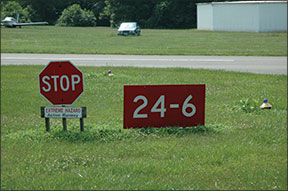
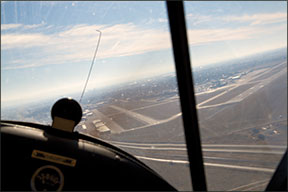
You are on approach in busy airspace with an even busier cockpit…you are changing frequencies, receiving vectors, looking for traffic. You are well into the descent phase. As you flip through your kneeboard to get ready for the final phases of flight, you instinctively start looking for the runway. You see one in front of you just as ATC asks, “Do you have the airport in site?”
Read More »

Icing Stories

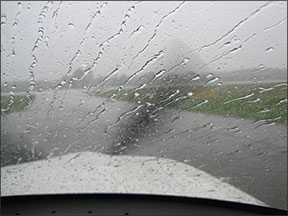
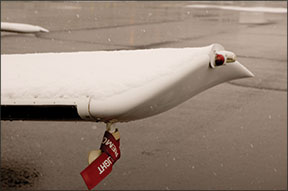
Ice isn’t nice. And this time of year, it’s much easier to find when airborne in most places throughout the Northern Hemisphere. Thankfully, forecasting and reporting technologies have improved over the years to the point where, at least in our experience, it’s rare to find ice where it wasn’t in a forecast. At the same time, even piston singles can be equipped for flight in known icing conditions, albeit briefly. All that is to say icing shouldn’t be the problem it used to be. Unless, of course, you’re off your plan, or the forecasters blow it.

Read More »

Takeoff Starvation

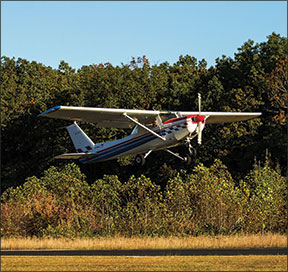
When considering various portions of routine flight operations, it’s safe to say that landings comprise a majority of the time spent in training and practice. But takeoffs also pose risks; perhaps most important among them is that the airplane isn’t ready to fly. The reasons could involve something simple like a pitch trim setting or a door that isn’t properly latched. Ensuring these kinds of problems are resolved before adding takeoff power is one reason before-takeoff checklists were invented.

Read More »

Dissecting The PIO

We see it happen here all too often. The Franklin County Airport in Sewanee, Tenn., sits at the western edge of the Cumberland Plateau. During cooler months, northwest winds are thrust up the side of the plateau and swirl back down toward the airport. Tall trees surround the runway and make the airport difficult to see throughout the approach. Pilots in the pattern are greeted by updrafts followed by downdrafts that can make landing on our 50-by-3700-foot runway a challenge.

Read More »

Pitot-Static Systems

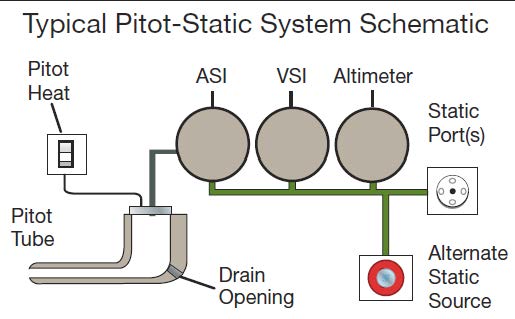
No matter how much automation we fly behind, no matter how many air-data computers are installed and no matter how simple it is, it’s likely a pitot-static system—pretty much like the one Lindbergh flew across the Atlantic—is what generates airspeed and some other basic flight information aboard the aircraft we fly. These systems are relatively simple, consisting of basic sensors, some plumbing and sensitive instrumentation. The difference in air pressure does all the work.

Read More »

Departure Difficulties

Too often, instrument training can focus only on approaches, those procedures at the end of a flight allowing us to find a runway and land on it. But well before we’re cleared for an approach, we have to take off, climb to altitude and get through the en route system to someplace close to our destination. Sure, approaches are sexy, but other portions of an instrument flight are just as important. Take initial climb and departure, for instance, something at which pilots routinely fail.

Read More »

Embracing Risk

It’s often difficult to compare the risks imposed by different activities, but it’s reasonable to state flying a certified single-engine airplane for an hour on a severe-clear day isn’t as risky as spending that same time performing low-level aerobatics in an Experimental airplane. At the same time, and according to John King of King Schools, “you’re more likely to have a fatality in a GA airplane than in a car” when traveling the same distance. If the added risk exposure we get from flying didn’t provide some benefit—more efficient transportation, for example, or pure enjoyment—we might not do it at all. But the simple enjoyment of boring holes in the sky and other benefits outweighs that risk for many of us.

Read More »

Ground Ops

Before we can fly, we probably have to taxi. At sleepy, non-towered facilities, getting from the ramp to the runway and vice versa usually isn’t much of a challenge unless the surface’s condition poses one. Meanwhile, towered facilities and larger airports bring their own challenges.

Read More »

Do Not Apply

When you think about it, the rules applying to non-commercial, Part 91 flying are very lenient. We can take off when we want, go pretty much where we want, and don’t need to talk to anyone unless the weather or the location demands it. Still, that’s not enough for some pilots, who perhaps think their skill, experience or immediate needs outweigh the need to comply with even minimal requirements.

Read More »

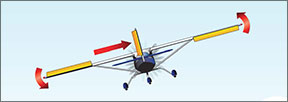
Stall Recovery: Ailerons Or Rudder?

At the last minute on final approach, you see an obstacle on the runway. You’ve initiated a go-around, but in your haste you let the nose rise too much, or even pull it up excessively for fear of hitting trees at the far end of the airport. The stall warning horn sounds but you don’t respond quickly enough, and the airplane begins to shudder—the “first aerodynamic indication” of a stall. One wing begins to drop. As you push forward to reduce the angle of attack and break the stall, do you coordinate rudder and aileron to level the wings or force yourself to hold the ailerons neutral and level the wings with rudder alone?

Read More »
Pilot in aircraft
Sign-up for newsletters & special offers!

Get the latest stories & special offers delivered directly to your inbox.

SUBSCRIBE