Features

Self-Service

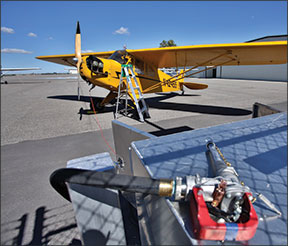
It hasn’t been that long ago that self-serve aircraft fueling didn’t exist. Many currently involved in the industry got their start as relatively unskilled labor running fixed pumps, driving tanker trucks and climbing ladders to pump aviation fuel. Simple economics dictated the end of full-service fuel dispensing at many airports, replaced with self-serve facilities. The good news with self-fueling is it’s usually cheaper than full-service. But it doesn’t come without a price.
Read More »

Which Approach?

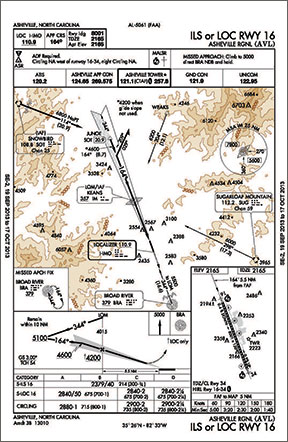
When blessed with a choice of approach procedures at their destination, instrument pilots usually will choose the one providing the lowest minimums, in the belief doing so affords them the best chance to get in. That may be true when the weather is at or below minimums for the airport’s other procedures, but it’s not the only consideration.

Read More »

Showmanship

To me, showing off in an airplane means conducting an efficient flight as planned and avoiding the worst weather, culminating in a smooth landing and an on-time arrival. For others, it might mean loops and rolls, flying inverted or a seemingly endless series of other aerobatic maneuvers visible to spectators. Each operation carries its own risks.

Read More »

Abnormals

Things can go “bump” in the night. Daytime, too. Most of them either have been considered before or encountered by someone, resulting in a section of your AFM/POH labeled “Emergency Procedures.”

Read More »

Real-World Nordo

With all the literal and figurative bells and whistles in today’s cockpits, something as mundane as losing communications with ATC is rare. One reason is the stuff we have in the panel these days is a couple of light years ahead of even two decades ago in reliability. But loss of communications—going “no radio,” or Nordo—thanks to our installed avionics isn’t the only failure mode we might encounter. In fact, your airplane and its equipment may not even be the problem.

Read More »

Flying Defensive Patterns

All pilots fear mid-air collisions (MACs), even though they’re relatively rare. The AOPA Air Safety Institute’s 2011 Nall Report, an annual look-see at general aviation’s safety record in the U.S., found only four of them. That means the other 1373 accidents occurring in the U.S. during 2010, the year examined, involved other causes, including the always-interesting stupid pilot tricks. Of the four mid-airs in 2010, one of them involved no fatalities; in only one MAC did everyone aboard both aircraft suffer fatal injuries.

Read More »

Weak Links

Not a flight goes by when I don’t think about the potential for a landing-gear problem. It’s not that I’m a pessimist and think something is bound to happen—I don’t—but the moment you fly a complex aircraft, you’ve multiplied the number of things that can go wrong. I bristle when someone trots out the old “there are those who have and those who will” maxim about gear-up landings. It’s just not that simple.

Read More »

Too Dark, Too Low

Perhaps because of its various attractions, night flying presents its own set of challenges. Let the sun go down, and all kinds of aviation-related mischief can ensue. The basic problem, of course, is humans are not well-adapted to seeing and doing complex things in low-visibility conditions. So, we have to compensate.

Read More »

The Art of Post-Crash Survival

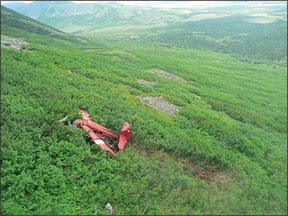
The why doesn’t matter. It could be catastrophic engine failure, a mid-air, a broken fuel line or a severe downdraft, forcing you to the ground. The punchline is you’ve crashed, off-airport and in a rural location. If you followed all the advice in last month’s article, “The Art of Crashing,” the aircraft’s impact was at a low angle, at a low speed and you didn’t have too much downward g-loading, minimizing the chance of spinal compression injuries. What was once a capable flying machine now is spread across a nice long debris field, meaning you stretched out the crash and dissipated energy over a good distance.

Read More »

Pre-Flight Follies

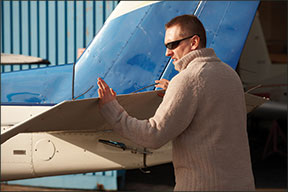
When did you last experience an embarrassing moment on the takeoff roll? Have you ever had to taxi back to the ramp to deal with a problem discovered during the run-up? Any moments of tension or near-terror because you missed something during the pre-flight? Most pilots can recite at least one tale about discovering they missed something in the pre-flight inspection. The idea at its root is to never, ever start the engine without a thorough look-around to be sure all remains as it was when you last landed the airplane. In the case of the day’s first flight, you’re conducting an inspection to confirm the aircraft’s airworthiness, general condition, fuel status, etc.

Read More »
Pilot in aircraft
Sign-up for newsletters & special offers!

Get the latest stories & special offers delivered directly to your inbox.

SUBSCRIBE