Features

Five Landing Fixes

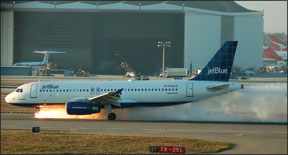
Especially when looking at recent accidents involving scheduled airliners, it occurs that some people are still having problems with their landings. Yes, they can be difficult to master, especially when crosswinds or other factors complicate things and distract us. But this shouldn’t be so hard.

Read More »

The Art of Crashing

When considering how to crash, my first bit of advice is don’t do it. Since the reality of any flight is that things can go wrong, that isn’t particularly helpful, I know. What can go wrong? Your crankshaft can break, your fuel lines can clog or, if you are a damn fool, you can run out of gas. The point is, someday your engine may stop working for reasons beyond your immediate control and your next option is an off-field landing, or worse. If you’re lucky, you will be mid-field downwind at your home airport and it will work just like the last time you practiced engine-out procedures—you do still practice those, right?

Read More »

Wing Shape And Ice

I’m a South Florida lady, and so is my fine flying machine. It’s relatively fat wing, tapered tips, relatively thin horizontal and vertical tail surfaces and elevator with “horns” are made of .032 aircraft-grade aluminum coated with paint (and not even that much paint). And even though I’m at a balmy 30 degrees North latitude, a momentary jaunt through the middle of a building cumulous cloud at the right altitude and outside temperature can easily coat my aircraft in a shiny glazing of thick, clear ice.

Read More »

Departure Procedures

The instrument-rated pilot of a Cessna 182S Skylane received an IFR clearance about 15 minutes prior to departure from Runway 18R. Witnesses reported observing the airplane pass directly over their work site at a very low altitude, about one mile south of the airport. Radar data disclosed that the airplane was airborne for about 1.5 minutes. Following departure, the airplane made a left bank to an easterly heading while gradually increasing its altitude to 1000 feet msl. The last two returns show an altitude of 900 feet msl and a slight change of direction back toward the south.

Read More »

Real-World Risk Management

Regular readers of this journal are familiar with the series of articles I’ve written and advice I’ve given on the art and science of risk management. By now, you’re probably curious as to whether I actually use and implement the information and practices I recommend in my own aviating, or whether I’m merely speculating from some safe, lofty journalistic perch.

Read More »

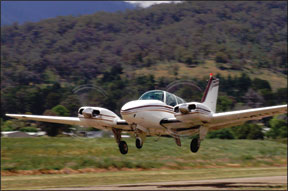
Twin Takeoffs

Departing from a 4200-foot runway, the twin engine Beech B60 Duke lifted off after a 1500-foot takeoff roll. The landing gear was immediately retracted but at approximately 100 feet agl, a large puff of black smoke erupted from the left engine. Witnesses stated the airplane pitched up and then banked sharply to the left. At approximately 500 feet agl, the airplane banked 90 degrees to the left in a nose-down attitude, rolled inverted and impacted a building, killing the pilot and passengers. It was a classic VMC rollover accident, resulting from the pilot’s failure to establish and maintain an airspeed equal to or greater than the airplane’s minimum controllable airspeed in one engine inoperative (OEI) flight.

Read More »

Gear Emergencies

I’ve really only had one landing-gear-related situation in many years of flying retractables. In that event, a brand-new gear motor—installed at annual—failed to extend the gear while airborne after several successful tests on jacks. After an uneventful landing, the motor was repaired and there were no further issues with that airplane or its landing gear system. Between the failure and the uneventful landing, however, the cockpit was a bit busy. Fortunately, the right-seater was a rated pilot and mechanic.

Read More »

Safer By The Hour?

Earlier this year, I passed the magical 1000 hours total time. I suspect I am safer. But whenever I read NTSB reports, they seem to cover the full range of pilot experience, so I have to question that assumption. Am I really safer or am I just likely to perform a different set of stupid pilot tricks to which pilots of my experience are prone? I certainly feel safer than I did at 100 hours, when I was still intimidated with how to enter the pattern at an unfamiliar airport. I also feel safer than I was at 500 hours, when my big concern was being able to fly an approach in actual IMC and how to properly enter a holding pattern using my fresh instrument rating. I know I can do these now, so I am a bit less intimidated.

Read More »

Avoiding Extreme Weather

As anyone who’s paid attention to Central U.S. weather the last few months knows, it’s been a particularly violent spring across “Tornado Alley.” Midwest storms made national news and reintroduced repeat targets—such as Moore, Okla. Well ahead of the storms and far in front of the inevitable miles of destruction images, Americans coast to coast shared ringside seats of the progressing destruction thanks to the coverage of storm chasers who shared real time some of the clearest videos and still images ever made of in-progress tornadoes. Most images came from a large contingent of ground-pounders but, more than ever before, much of the resulting imagery was captured through the efforts of people aboard aerial platforms, whether helicopter or fixed-wing.

Read More »

Master The Rudder

Rudder coordination is vital to stall and spin avoidance, which is where most attention to rudder coordination training is focused today (with good reason). But when you develop a feel for proper rudder input, you’ll not only manage high angles of attack correctly, you’ll also get better aircraft performance all around. Yes, even in the latest airplanes, there is still a need to stress proper rudder use in all phases of flight. If you’re an experienced pilot, you probably recall an instructor in your early days endlessly hounding you to “step on the ball” to coordinate with the rudder.

Read More »
Pilot in aircraft
Sign-up for newsletters & special offers!

Get the latest stories & special offers delivered directly to your inbox.

SUBSCRIBE