Features

Post-Flight Debrief

Pull the mixture or condition lever and the propeller comes to a stop. Turn off the switches and what had been saturated with noise and vibration becomes still and quiet. After removing your headset and while sitting in the momentary silence that follows a flight, perhaps you’ll hear the engine ticking as heat dissipates. It’s time to pack up and leave the cockpit: Your work is done, right? No, not quite. To get the full benefit of the experience you just had, to learn from every flight, you need to spend just a few moments debriefing your flight.
Read More »

Go? Or No-Go?

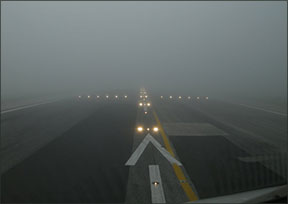
The primary flight training experience doesn’t adequately prepare most students for the real world of getting from Point A to Point B. Conventional wisdom, often conferred upon us during that primary training phase, teaches us to make an either/or decision about launching on a proposed flight. Unfortunately, the “go/no-go” decision is more complex than that, and the question must be answered using risk management techniques. The answers will be different for departures, while en route and when conducting an approach to the destination.

Read More »

Buttonology

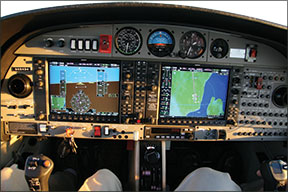
I remember my first flight as left-seater in a TAA (technically advanced aircraft). Too. Many. Buttons. And each switch, knob and button had multiple roles, depending on my stage of flight and the information I wanted to pull up or program into it. And harmony? Well, other than the integrated glass panels available on then-new Cirrii and Cessnas, those first TAAs were hybrids of systems from Avidyne, Bendix/King, Chelton, Dynon and Garmin. The logic of pulling up information or programming them was just different enough between the companies to make you cross-eyed trying to remember it all.

Read More »

Fine Print

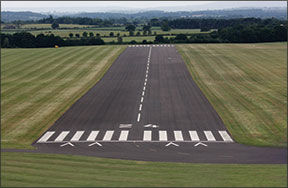
One of the keys to safe and successful instrument flight is paying attention to details. Often the difference between arriving at your destination uneventfully and not arriving there at all after diverting is hidden in the notes and symbols on an approach chart. What does it mean when a procedure is marked as “not authorized”? Doesn’t ATC protect you by refusing to clear you for an unauthorized procedure?

Read More »

Cheapgasitis

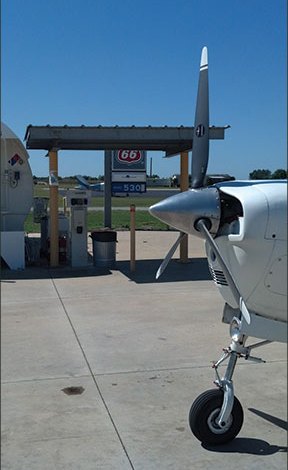
In their older years, my parents were cheapskates. When I visited them in their Southern Texas retirement community, they always were delighted to share their favorite places, those with senior discounts, dollar-breakfast specials and cheap all-you-can-eat buffets. The same proved true when buying unleaded: I thought it odd they would drive six miles round-trip to save $0.05 a gallon. After my father filled his tank, I asked how much he had put in. Twelve gallons, he answered; he just saved 60 cents. I pointed out it took us 15 minutes to save 60 cents, so he was paying himself about $2.40 an hour…just a little observation. His answer was: 1) he’s retired, so he likes saving money, 2) polite people keep their math to themselves, and, 3) nobody likes a smart ass.

Read More »

Slowing Down

One of the most dramatic demonstrations of the ways in which airplanes handle differently as speed drops came several years ago at the hands of a Bellanca Super Decathlon. I was getting some dual, but was having trouble adjusting to its lack of wing flaps. Normally, when I want to slow down, I throw out the landing gear and then the flaps. Since none of that was working with the Super-D, my landing approaches were all over the place as I wrestled with how it managed energy.

Read More »

Hover Mode Is Inop

My only real experience with of helicopters results from serving as self-loading freight on a handful of occasions. I know rotorcraft flying involves many similarities to fixed-wing operations: The basic FARs applying to rotorcraft pilots are the same ones governing fixed-wing drivers, for example. The charts often are the same; so are airport operations.

Read More »

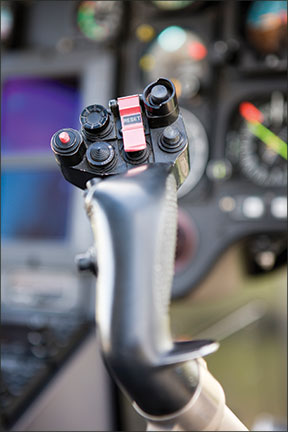
Pushing Reset

We all have been there. You’re on a certificate or rating checkride and you make one little mistake—nothing huge, nothing that puts the outcome of the flight or the practical test in jeopardy—yet. The examiner, who has been discreetly scribbling away on a notepad throughout your performance, ticks something off, but shows only a carefully schooled poker-face. You don’t hear, “Stop the flight.” So you continue. But you get a little rattled. Come on, everyone does! The examiner doesn’t care, though. What you do next is the important part: Can you stop the fault-chain you triggered with your first error?

Read More »

Your Other Wings

Unless you’re someone we’d really like to get to know better, it’s likely you’re not flying around in your own personal jet. Which means you probably are flying behind, between, below or in front of at least one propeller. They’re marvelous devices, often subjected to substantial forces as they unceasingly (we hope) spin thousands of times per minute. They also can be a bit mysterious, even the fixed-pitch variety.

Read More »
Pilot in aircraft
Sign-up for newsletters & special offers!

Get the latest stories & special offers delivered directly to your inbox.

SUBSCRIBE