Features

Secondary Controls

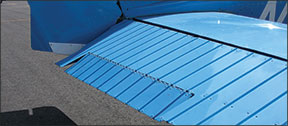
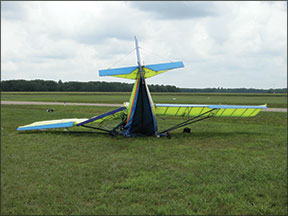
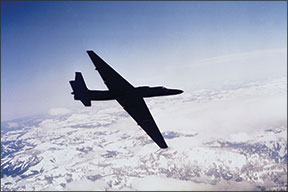
You’re probably familiar with your airplane’s primary control surfaces, what they are, where they are and how they work. (If not, now’s a good time to research the topic.) According to the FAA, primary controls are those “required to control an aircraft safely during flight,” and are the rudder, ailerons and the elevator/stabilator of a conventional airplane. The pitch-control surfaces of a canard-configured airplane usually are considered primary controls, also.
Read More »

Good Samaritan

High-altitude operations are known to require extra care and attention. The thinner air reduces takeoff and climb performance when compared to sea level. While a turbocharger helps overcome reduced engine power, even it must be managed correctly to obtain maximum performance. Problems can arise if the crew doesn’t have much experience with high-altitude takeoffs and might not be exercising every precaution.

Read More »

Why Can’t Johnny Fly?

The stats are in, the tallies tallied and the totals have been summed up: Loss-of-control tops the list of general aviation accident causes. Recent studies by industry and government point to loss-of-control (LOC) accidents in all their variations are the leading cause of GA accidents, both fatal and otherwise. According to the U.S. Government Accountability Office, GAO, “From 1999 through 2011, nonfatal accidents involving general aviation airplanes generally decreased, falling 29 percent, from 1265 in 1999 to 902 in 2011.” That’s the good news. The bad news is there were still more than 200 fatal accidents each year during the period.

Read More »

SIDuational Awareness

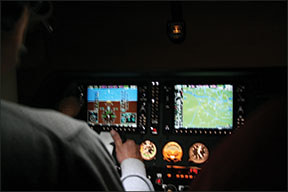
Conditions were about 600 overcast, visibility four miles in haze as I prepared to depart the Santa Maria Public Airport/Capt G. Allan Hancock Field (KSMX) in Santa Maria, Calif. I was flying a well-equipped Beechcraft A36 Bonanza sporting a Garmin 530/430 stack and a Honeywell KFC225 autopilot/flight director—the airplane and configuration with which I’m most familiar and current.

Read More »

Higher Is (Usually) Better

We regularly see non-turbocharged piston singles cruising in the 4500-6500-foot range, even when wind and weather aren’t operational considerations. Meanwhile, a few thousand feet higher, the ride’s better—as is visibility—there’s better comm and navaid reception, and likely a lot less traffic. So, why do some pilots of personal airplanes prefer to cruise at lower-than-optimum altitudes? Why do others go as high as they reasonably can for the trip length? Is the extra time and fuel worth climbing a few more thousand feet?

Read More »

How Much Proficiency Is Enough?

I had my Bonanza set up perfectly for the straight-in ILS Runway 22 approach at Malabo, Equatorial Guinea (FGSL), following a short, 63-nm flight across the Bight of Biafra from Douala, Cameroon (FKKD). It was actually a rare clear day near the equator and I could easily see the nearly 10,000 foot Pico de Basile only 10 miles south of Malabo, certainly a potential terrain hazard to be managed if it had been actual instrument conditions and I had been concerned about the missed approach. That would be one of many risks to be managed in this environment.

Read More »

Not Just For Jets Anymore

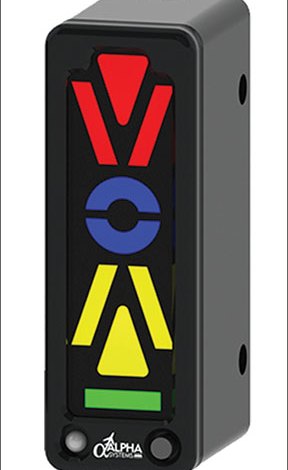
Forty percent. In any context that’s a sizable percentage. In ours, 40 percent represents the share of fatalities aviation-safety advocates pin to one category of crashes: loss-of-control accidents (LOC). Reducing LOC accidents and their fatalities led the FAA to put two available tools at the top of its 2013 list of most-desired general-aviation safety enhancements. The winners? Airbag seatbelt systems and angle-of-attack (AoA) indicators.

Read More »

The Zen Of Vectors

There are three basic ways to navigate in the IFR system: On a published route, visually or via a radar vector. Visual IFR navigation is usually reserved for expediting approaches while published routes can be anything charted, including terminal procedures and en route airways. But radar vectors might be thought of as ATC’s red-headed navigation stepchild: They may or may not involve a published route, and often have a visual component.

Read More »

Takeoff Engine Failures

The tower controller reached for the crash phone several times before I finally set my feeble J-3 Cub down on the 9000-foot runway for a full-stop landing. Apparently, my desire to practice low-level engine outs was accompanied by the controller’s incipient heart failure. On my side of the mic, I was cleared for takeoff, so I did what I had planned: I pushed the throttle forward to the firewall, climbed as expected (perhaps a bit steeply given the wind and my goal of practicing the worst case, an engine out in VX climb), then yanked the power at 200 feet over the runway to simulate an engine out.

Read More »

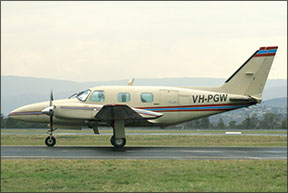
Failure To Feather

Each aircraft type has its own set of limitations with which operators must comply if it’s to meet its airworthiness and certification standards. The aircraft’s documentation—a collection of manuals, handbooks, placards and revisions—tell us what those limitations are and how we are to fly it. But what if a critical bit of information wasn’t in that documentation? Or what if it was buried somewhere not easily accessible in flight? How would pilots and operators know of it?

Read More »
Pilot in aircraft
Sign-up for newsletters & special offers!

Get the latest stories & special offers delivered directly to your inbox.

SUBSCRIBE