











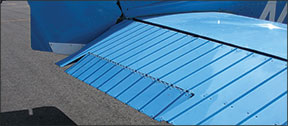


You’re probably familiar with your airplane’s primary control surfaces, what they are, where they are and how they work. (If not, now’s a good time to research the topic.) According to the FAA, primary controls are those “required to control an aircraft safely during flight,” and are the rudder, ailerons and the elevator/stabilator of a conventional airplane. The pitch-control surfaces of a canard-configured airplane usually are considered primary controls, also.

Meanwhile, your airplane probably has some other control surfaces—known as secondary controls—which serve various functions. They often augment the primary controls but also can be used to change a wing’s shape, for example, which can improve low-speed performance. They also can be used in emergency situations. In some airplanes, moving what you think is a primary control actually changes a secondary control surface’s position, which then moves the primary surface. Let’s explore.

