Features

Matching The Plane To The Mission

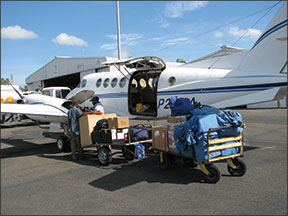
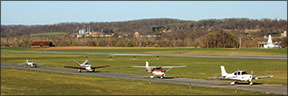
Many of us fly, or have flown, some rather capable high-performance single-engine airplanes providing excellent long-distance transportation value and utility. Flying a Cirrus, Centurion, Bonanza or Mooney and cruising between 150-180 knots allows you to operate over the entire country on a practical basis. You can, however, achieve almost as much utility from simple fixed-gear airplanes, providing you know and account for their limitations, your “utility envelope” and certain associated risks.
Read More »

Advanced Stalls

Every primary student who’s at least been ready to solo has experienced a few stalls and recoveries. If they’re lucky, they also are introduced to different kinds of stalls, and how the ways we enter them can help determine their characteristics. Along the way, we learn ways to recover from them. We learn these maneuvers for three reasons: So we’ll recognize, avoid and be able to recover from them.

Read More »

Practical Preflights

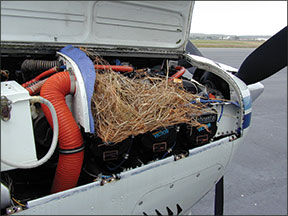
When it comes to preflighting an airplane, there is nothing more true. Sure, you can follow the diagram laid out in the pilot’s operating handbook, or routinely drone through a do-list of items a mile long that are spelled out in the aircraft’s preflight check list, but if you don’t understand what problems you are looking for, what’s the point?

Read More »

Max-Gross Weight Ops

My brother slipped me a piece of paper on which he’d jotted three numbers: 260, 240 and 180. If you haven’t guessed, they’re weights. Add me and the load is 860 pounds well-marbled (not 170-pound), above-average Americans. Add full tanks, 56 gallons of fuel and we would approach gross weight. I had yet to add backpacks, fly-fishing gear and food for a week, but after that I’d have to start trading fuel for payload, and worry about CG as well. Welcome to the world of gross-weight ops.

Read More »

Keeping Me in Suspense

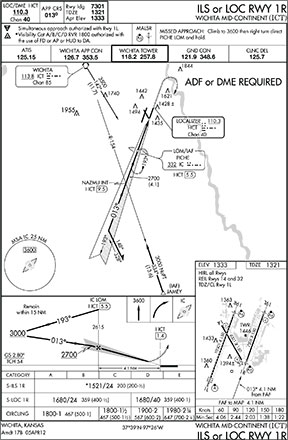
As an active instrument instructor, I frequently see confusion in my customers about making the transition from an approach to the missed-approach procedure using a GPS. Even many pilots with a great deal of instrument time don’t demonstrate mastery of a GPS navigator’s “suspend” mode, or know how vital its proper use is to safely executing a missed approach.

Read More »

Both Ends Of The Candle

One of the reasons many fly personal aircraft is to travel. Even simple, slow airplanes can be used for personal and business transportation, within limits, and they’re the preferred solution for many. And when trying to get from one location underserved by the airlines to another, there’s really no better solution.

Read More »

Why Can’t Johnny Fly?

The stats are in, the tallies tallied and the totals have been summed up: Loss-of-control tops the list of general aviation accident causes. Recent studies by industry and government point to loss-of-control (LOC) accidents in all their variations are the leading cause of GA accidents, both fatal and otherwise. According to the U.S. Government Accountability Office, GAO, “From 1999 through 2011, nonfatal accidents involving general aviation airplanes generally decreased, falling 29 percent, from 1265 in 1999 to 902 in 2011.” That’s the good news. The bad news is there were still more than 200 fatal accidents each year during the period.

Read More »

Wind Triangles Revisited

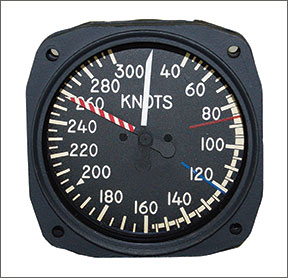
Airspeed is one of the first things we learn about in fixed-wing primary training, It’s an all-important tool for managing an airplane’s performance and helps us determine when we can do certain things, like deploying flaps or lowering landing gear. Too, pilots typically are taught to “aim” for a certain airspeed when performing various maneuvers and at various stages of normal flight. But there are different kinds of airspeed. For example, what we read directly off the instrument panel is subject to error and interpretation, and often must be corrected before it can be used for even basic tasks like navigation. Depending on the aircraft and the conditions, the airspeed instrumentation we use can be merely advisory, or it can be wildly inaccurate for our immediate needs.

Read More »

Checklist Complete?

I once had an emergency while serving as pilot in command. It was a big one. It was the type of emergency that means you will shortly be landing somewhere, anywhere, so you best hurry up and get ready. There were red-box—or bold—items, the ones you memorize, to perform. Fortunately, not too many. And in the 90 seconds from the start of my emergency until we were egressing from the cockpit, there was a moment.

Read More »

Deviant Behavior

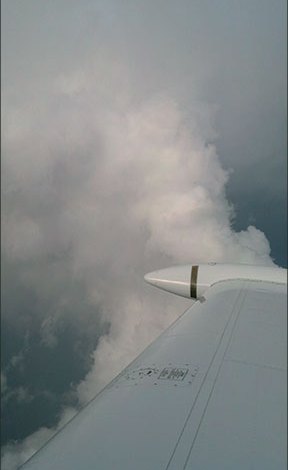
It’s that time of year again in the Northern Hemisphere, when the average cross-country flight is going to have to deal with thunderstorms. Where I live, in Florida, this time of year each mid-afternoon brings with it the rumble of thunder, usually followed by some hard rain, then cooler temperatures. That’s on the ground, of course,

Read More »
Pilot in aircraft
Sign-up for newsletters & special offers!

Get the latest stories & special offers delivered directly to your inbox.

SUBSCRIBE