Features

From Denial To Final, II

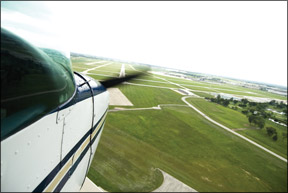
There you are, droning along in cruise. Suddenly, theres a vibration, then a power surge, then combustion ends…and youre flying a glider. For a moment you hesitate-no one is immune from at least a split-second of indecision, most of us much longer-and then you realize you have an engine failure. You maintain control, point the aircraft in the direction of a place to land, then confirm the failure. If you have time and altitude you can try to restart the engine, but if the failure is catastrophic youll quickly find theres nothing you can do to fix the engine from the pilots seat. You are committed to a glide and a power-off landing.
Read More »

July 6, 2010, Mooresville, N.C., Beech F33A Bonanza

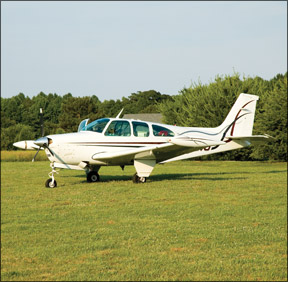
At about 1830 Eastern time, the airplane was substantially damaged during a forced landing into a lake following a loss of engine power. The private pilot was not injured. Visual conditions prevailed. During a downwind-to-base turn, at about 500 feet agl, the pilot began the final checklist for landing and activated the fuel pump.

Read More »

Is That Too Much Airplane For You?

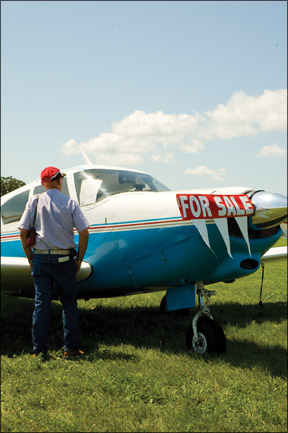
Years ago in a sleepy college aircraft economics class, we learned the pecking order of items to consider when acquiring an aircraft. The short list included the usual items of damage history, engine time, avionics, operating costs and a variety of other factors making obvious sense. But one aspect of aircraft acquisition we werent taught is an issue thats gained prominence in the current sales climate: the consequences of buying too much airplane. With used aircraft pricing at an all-time low, its easy to get sucked into a convincing fantasy that the airplane of your dreams is also one fitting your skills, operating budget and mission.

Read More »

Open-Door Policy

The Cessna 150 I first soloed had a time-between-window-openings of about three hours. My instructor and I had suffered the event a couple of times on my way to soloing at-as luck would have it-about nine hours. Sure enough, as I lifted off the runway on my second touch-and-go, the window on the “far” side of the 150s “cabin” decided it was time I had some fresh air and noise. As if I needed another challenge. What I really needed was three hands: one for the yoke, one for the throttle and one to grab the window latch. Not capable of all three tasks, I climbed away from the runway to what I considered a safe altitude, loosened my death grip on the throttle, reached over, closed the window and latched it. After an otherwise uneventful circuit, I landed to pick up my instructor, who was still laughing. For all I know, he still is.

Read More »

Going Soft

My first time landing on something other than pavement was with an instructor in a Piper Arrow. I had yet to earn my private certificate, and we were out doing a combination of familiarizing me with a complex/high-performance airplane and transporting some items for the FBO. The most memorable occasion also involved an instructor: We were returning from a spin-training session to a grass strip just soaked by a passing shower. He landed long, locked the 152s brakes in standing water and we sluiced our way to within 30 feet of the fence at the far end. More than anything, that was a demonstration of how not to do it.

Read More »

NPAs: Stable Or Not?

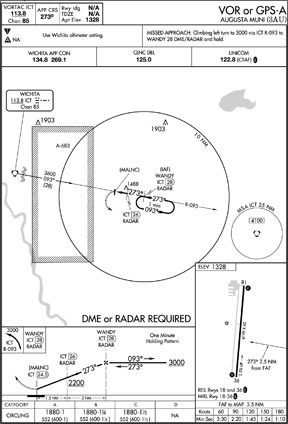
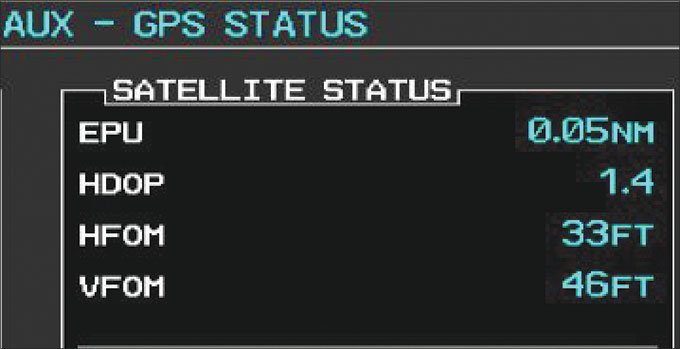
Over the past few years the FAA has added new non-precision instrument approaches at a remarkable rate-thousands of procedures with names like LNAV and VNAV, and ILS-comparable LPV approaches-2208 LPV approaches alone. The common denominator among these relative newcomers to an instrument pilots nomenclature is their dependence on the wonders of GPS, in particular, Wide Area Augmentation System-based (WAAS) GPS. The primary benefit of a WAAS-enhanced approach is availability of a pseudo glideslope generated by the in-cockpit GPS navigator, bringing ILS-like vertical guidance where theres no ILS.

Read More »

Train To Mitigate Risk

In the last decade, the general aviation fatal accident rate, which had been decreasing for some time, reached a plateau and has stubbornly resisted industry and FAA efforts to further reduce it. Hovering in the range of 1.20-1.38 fatal accidents per 100,000 flight hours, this safety record is widely considered a deterrent to general aviation growth and may be one of the reasons student starts have continued to decrease. As a community, we may have oversold the benefits of a new generation of technically advanced aircraft (TAA) to an emerging latent market of individuals who are not traditional enthusiasts and who wish to use these aircraft for safe transportation.

Read More »

Mountain Wave

Learning to fly as I did in the relatively flat Eastern U.S., I never really had to deal much with windy, mountainous terrain until after I earned my instrument rating and started using a personal airplane for transportation. My most memorable encounter involved flogging a Skyhawk north out of Asheville, N.C., at 9000 feet. Improbably, I had a tailwind. All was well until passing Mt. Mitchell, the highest point in North Carolina. While I enjoyed the tailwind, I did not enjoy the mountain wave it generated. I soon found my relatively heavy 160-hp Skyhawk needed to be in a climb attitude with full power-which aint much-to maintain a descent rate of less than 300 fpm.

Read More »

IFR Chart Choices

A long time has passed since Elroy Jeppesen first started drawing basic descriptions of ways to get into airports when the weather was down. Thankfully, aeronautical charting has evolved with technologies and operational needs. These days, the latest panel-mount avionics and handhelds coax us into the “paperless cockpit” realm, but a variety of factors havent eliminated dead-tree charts.The good news is we have a choice, even if its among only two basic publishers. Another piece of good news is we can put down one publishers chart and pick up the others without too much confusion. While there are qualitative differences between the two publishers, a major distinction is how they distribute updates. And despite a third-party company simplifying the process, theres still a price to pay when it comes to managing revisions.

Read More »

Finessing Fuel

Few in-flight emotions evoke more sweat and discomfort than when youre unexpectedly low on go-juice and arent sure your remaining fuel is enough to keep the engine spinning until touchdown. If ever youve experienced the accompanying emotional swing, you already know that they stay with you. First comes disbelief-“I cant be that short….” Next comes the quiet surge of adrenaline-juiced anxiety between asking yourself the useless rhetorical question-“How did this happen?”-and when you turn to a useful one: “What do I do to survive this?” For the lucky, the final wave of emotions comes after the airplane is on the ground intact, on a real runway with the engine running…if, that is, youre really living well.

Read More »
Pilot in aircraft
Sign-up for newsletters & special offers!

Get the latest stories & special offers delivered directly to your inbox.

SUBSCRIBE