Features

Trainings Future

The FAA rightly has taken its lumps on many things, leading to a healthy dose of skepticism among many in the industry whenever the agency tries something new. This is especially true whenever theres a rulemaking activity affecting general aviation training. I knew this, of course, when I began work as manager of the FAAs General Aviation and Commercial Division. After a few months in my new job, I began surveying the landscape, which included the Garmin 430 phenomenon (I installed one in my Bonanza, as well as a multifunction display and weather data link) and a visit to Cirrus highlighted the coming “glass cockpit” revolution.
Read More »

Self-Induced Pressure

Whenever we use a personal airplane for travel, we impose on ourselves pressure to complete the flight. The same is true of driving a car, weeding a garden or writing a magazine article: There is at least one thing we want to accomplish by engaging in an activity. The pressure may be subtle, and most of the time it doesnt affect the flights outcome, but its there. But pressure often is not the least bit subtle. On one extreme, maybe weve simply told someone were going to fly over someones house at such and such a time. If were late, or dont make the flight at all, we might be accused of wimping out, or perhaps of not being a good enough pilot to find the house.

Read More »

Partial-Panel Prep Tips

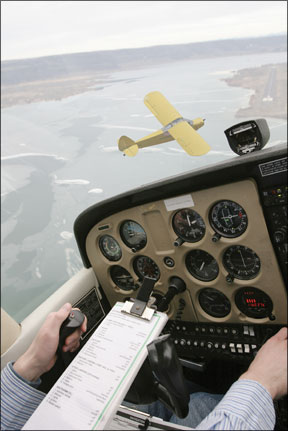
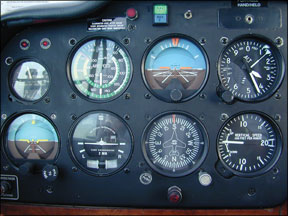
Instrument failure doesnt happen often. But when it appears in an accident report, its almost universally fatal. Instrument failure is part of the required syllabus for the IFR rating, and on the list of items to be included in an instrument proficiency check (IPC). While failures not resulting in an accident or incident arent reported, the record shows a casual, once-in-a-while demonstration of partial-panel skills doesnt prepare many pilots when an instrument actually fails in IMC. Here are 10 tips you can use in the course of every flight to prepare yourself for partial panel.

Read More »

Sim-Based Training?

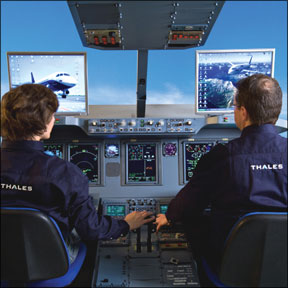
I fly regularly, adding about 400 to 500 hours per year these days in a combination of ferry and instruction work. So why do I even think about simulator-based recurrent training? What good does it do to fly a sim when I get 60 or 70 real IMC approaches each year, along with lots of flight planning in real life? While Im certainly not the most experienced pilot out there, I still go in for simulator-based recurrent training. By contrast, the average general aviation pilot flies nowhere near that much. Instead, he or she might reasonably ask, “If I get a BFR, isnt that enough? After all, I only fly locally and the occasional cross-country for a $150 hamburger.” There are two basic answers, which are both simple and complicated.

Read More »

Five Diversion Details

Some days are like trying to nail Jell-O to the wall: Youve planned well, the airplane is ready and fueled, youre fit to fly the trip…only the trip isnt ready for you. Best-laid plans and all that, but along the way something changed. You have to divert. You need a new plan. Maybe its because Mother Nature threw up a wall with swirling black clouds spelling out, “Go away!” or spread soft-but-deadly IFR scud on the flight path of the VFR pilot. Maybe someone landing at your destination forgot to put down the gear before flaring above the airports only runway. The Fates can deal up a common ground loop or any one of a dozen other ways to effectively mark a big white “X” on your destinations runway.

Read More »

Got Rudder?

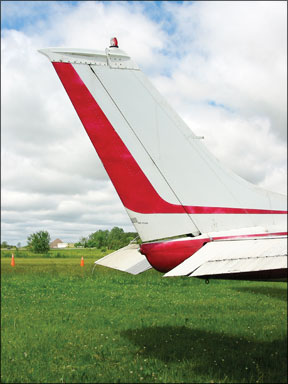
During checkouts of rated pilots, I usually ask them to explain why the rudder is on the airplane. More than half of rated pilots will tell me the rudder helps turn the aircraft, which is not only wrong but is a very dangerous belief. Less than half of pilots will correctly identify the main purpose of the rudder, to correct for adverse yaw. By failing to correctly understanding the rudders purpose, these pilots exhibit a failure in our training system. Moreover, by misusing the airplanes primary controls, they arent flying it properly or efficiently. This realization has many implications-an indictment of our training systems among them-but the dangers of misusing the rudder also must be acknowledged. Lets discuss the rudders proper role, plus the effects and dangers of misusing primary controls.

Read More »

Retrofitting Restraint

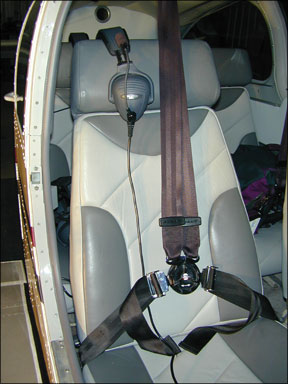
While none of us plan to crash our airplanes, stuff happens. The NTSBs database is replete with accident reports involving events like engine failures and ensuing off-airport landings where the engine started and ran fine after the investigators arrived. In many of them, plenty of fuel was aboard and carburetor ice was ruled out. Most of those reports go on to state the engine failed for unknown reasons. We cant choose when well have to set one down but-by avoiding hostile terrain like mountains and oceans, or flying only in daytime VFR-we can choose many of the conditions well experience. We also have the ability to maximize the likelihood of a favorable outcome.

Read More »

Distracted Maneuvers

Flying has been said to involve hours and hours of boredom populated with moments of sheer terror. Of course, if were doing it right, there might be a number of times when were very busy, but avoiding the moments of sheer terror is what its all about. Indeed, one of the things separating seasoned pilots from those with less experience involves how we respond when things dont go as we planned.

Read More »

Is See-And-Avoid Dead?

In August 8, 2009, a Piper PA-32R-300 Lance and a Eurocopter AS350BA collided over the Hudson River between New Jersey and Manhattan. The pilot and two passengers aboard the airplane, and the pilot and five passengers aboard the air-tour helicopter were killed. Both aircraft were substantially damaged. On September 14, 2010, the National Transportation Safety Board (NTSB) held a public hearing to approve its probable cause finding. The NTSB determined “the inherent limitations of the see-and-avoid concept…made it difficult for the airplane pilot to see the helicopter until the final seconds before the collision.” The NTSB also found fault with a Teterboro Airport (TEB) tower controller, who was on a personal telephone call as the Piper departed the facility.

Read More »

Playing Defense

Unless our flights purpose is training or flying for recreation, were usually trying to get somewhere for a reason. Were on a mission, so to speak, and have the goal of getting from Point A to Point B as quickly and efficiently as possible. Unfortunately, we sometimes omit “as safely as possible” from that list. Its human nature to have a goal for most of our activities, something pilots often express in the form or a flight plan. Events, conditions or fate can conspire against our ability to meet those goals, however. Examples include mechanical, physiological or meteorological obstacles.

Read More »
Pilot in aircraft
Sign-up for newsletters & special offers!

Get the latest stories & special offers delivered directly to your inbox.

SUBSCRIBE