Features

Owner-Performed Maintenance

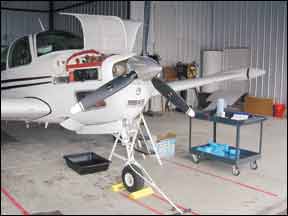
Ive always been fond of pointing out one of the most dangerous things in personal aviation is a private pilot with a #2 Phillips screwdriver. Thats because Ive occasionally come across the aftermath of an owner who tried but failed to accomplish a simple inspection or maintenance task without the proper knowledge, tools or training. Too often, the results demanded a “real” mechanic to come in and fix the mess. And, while Ive tried to do as much preventive maintenance on my airplane as I can, Ive often gotten in over my head and needed some professional assistance, too.Thankfully, the FAA still allows certificated pilots to work on their aircraft, performing some relatively mundane tasks.
Read More »

Ducking Under

A crash occurring during an instrument approach almost always happens because the airplane descends below the published minimum altitude. Its easy for any pilot to say, “Id never do that,” and dismiss this brand of controlled flight into terrain (CFIT) as a non-hazard…at least for ourselves. True, evidence suggests that some “ducking under” decision height, decision altitude or the minimum descent altitude is intentional-the pilot knowingly flies “just a little bit lower” to try to find the runway in the murk. But ducking under is not always intentional-a conscientious pilot may be susceptible to ducking under in some circumstances. The question is, how can we avoid the traps?

Read More »

Unknown Icing

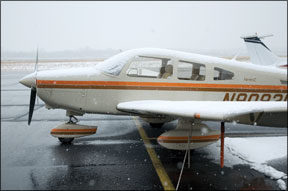
This time of year in the Northern Hemisphere, airframe icing takes on much greater importance for most of us flying personal airplanes than it does at other times. There are good reasons for that, and anyone trying to conduct regular winter operations should closely monitor weather trends and plan accordingly. But the seasons wet and cold can create an icing-accident situation even on a severe-clear day with dry air. All it takes is some water and cold temperatures. The fact is, you need not encounter textbook icing conditions for the slick stuff to pose a threat when the ice hides inside the airframe, out of sight, probably out of mind but most definitively not out of the picture.

Read More »

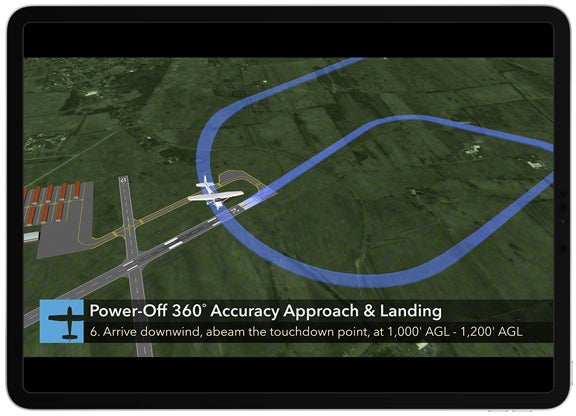
Prepping For The IPC

November 12345, cross 20 southeast of the Nashville VOR at 4000….” “Maintain best speed to the outer marker….” “Hold as published, expect further clearance at one-five past the hour….” “Radar contact lost, intercept Victor 509, report crossing NXTFX intersection….” “November 12345, an amendment to your direct clearance; fly heading 220 degrees to intercept the OKC 355 radial, then cleared to the OKC 30 DME fix, thence inbound on the Pioneer VOR 195 direct Pioneer, Victor 77 Wichita, direct….”

Read More »

A Military Perspective On General Aviation

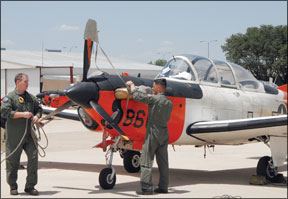
For most general aviation pilots, military aviation is something of a mystery. The equipment usually is different-though many civilian designs have been placed in military service-and its the rare GA pilot whose mission involves dropping or shooting things. Of course, the process of taking someone off the street and turning them into a pilot commanding several million dollars of often-lethal hardware-after only months of training and a few hundred hours of flight time-is much more refined than most civilian flight training.But military aviation can offer several lessons for general aviation, especially when considering risk management. And while civilian operations also are vastly different from the militarys, that doesnt mean the transfer of valuable lessons is one-way. After years of Marine Corps flying, I recently “transitioned” to general aviation. I learned a few things worth sharing.

Read More »

December 2, 2010, St. Augustine, Fla., RANS S6ES Experimental

The airplane was substantially damaged during a forced landing at 1522 Eastern time. The solo airline transport pilot incurred minor injuries. Visual conditions prevailed. The accident flight was the first after the airplanes engine was removed and replaced with a used Rotax 912 ULS. After an extended engine run-up, the airplane took off.

Read More »

Horizontal Lift

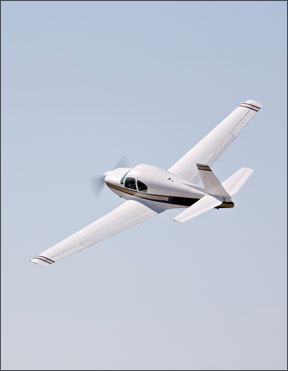
When discussing the concept of turning an airplane, there are at least two separate and completely different concepts. One is in the navigational sense of turning to a new course or heading. However, this article is concerned with another concept: moving the airplane in a curved flight path. Curving or bending the flight path changes the airplanes longitudinal axis orientation with respect to the earths surface. Of course, this occurs while moving through the air. This curving flight path is one of only two the airplane can make-the other, unsurprisingly, is straight.

Read More »

Overwater Gear

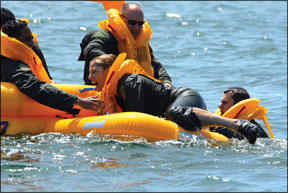
On December 4, 2010, a Piper Malibu, re-engined with a PT-6 turboprop under a supplemental type certificate, took off from Cozumel, Mexico, heading north. It never made it. Instead, according to press reports, more than two hours after takeoff and while in cruise at FL260, the turbine engine stopped producing power, turning the pressurized single into a glider. It took about 25 minutes for the Piper to glide down to the Gulf of Mexico, where it was successfully ditched close to an oil rig. The ditching site was some 170 miles south of New Orleans, the planes destination.

Read More »

Positive Rate

Launching into instrument conditions usually is a busy time, especially for the single pilot. When ceilings are low, the almost-immediate transition from conducting a takeoff visually to flying the airplane on instruments can be very demanding. The airplane is at its heaviest for this flight and at a relatively low airspeed, plus were trying to do many things at once, including navigating, communicating and aviating. Doing it without any reference to the natural horizon means we can be at our busiest for normal, non-emergency operations.

Read More »

Slow Down, You Move Too Fast

One of the reasons people become pilots is we like the idea of going fast. As children with a Radio Flyer wagon at the top of a hill, we learn very early going fast can be fun but also has some associated dangers, usually summarized as “going too fast.” Even though were older, presumably wiser and flying what might be the latest airframe with all the whiz-bang gadgetry in it we can afford, theres still such a thing as going too fast. Once the aircraft leaves the surface, using visual cues to determine the speed at which we are moving through the air isnt possible. Even while on the runway, if there is any surface wind, pilots know airspeed can be substantially different than the speed we appear to be moving.

Read More »
Pilot in aircraft
Sign-up for newsletters & special offers!

Get the latest stories & special offers delivered directly to your inbox.

SUBSCRIBE