











When discussing the concept of turning an airplane, there are at least two separate and completely different concepts. One is in the navigational sense of turning to a new course or heading. However, this article is concerned with another concept: moving the airplane in a curved flight path. Curving or bending the flight path changes the airplanes longitudinal axis orientation with respect to 288
Horizontal Lift
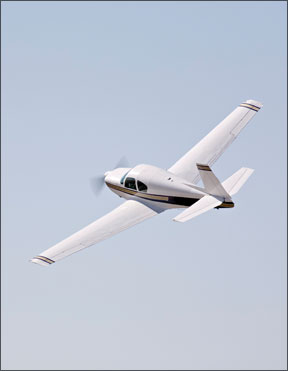
When discussing the concept of turning an airplane, there are at least two separate and completely different concepts. One is in the navigational sense of turning to a new course or heading. However, this article is concerned with another concept: moving the airplane in a curved flight path. Curving or bending the flight path changes the airplanes longitudinal axis orientation with respect to the earths surface. Of course, this occurs while moving through the air. This curving flight path is one of only two the airplane can make-the other, unsurprisingly, is straight.

Key Takeaways:
- An airplane's curved flight path, including turns, is primarily achieved by the downward force generated by the horizontal stabilizer and elevator, controlled via pitch input.
- Ailerons are used to bank the airplane, which enables the horizontal stabilizer's force to generate a horizontal component, pushing the tail away and the nose into the intended turn.
- Rudders are exclusively for correcting adverse yaw that occurs during bank changes and should not be used to initiate or accelerate a turn, as misuse can be dangerous.
Key takeaways sponsored by Aviator Pro | Start Your Training ->
See a mistake? Contact us.

