











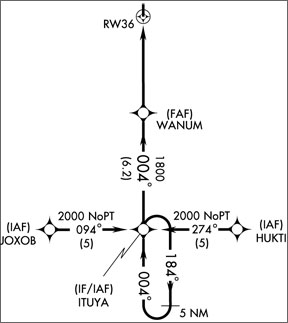
Where you are, smoking into your destination airport. Winds are calm, traffic is sparse, the ceiling is 1500 broken with good VFR underneath, youve got plenty of gas. But a close look at the approach plate creates confusion: Youre being vectored to a nearby fix, but its not at all clear how-or even whether-some kind of course reversal will be necessary. You certainly can slow down enough to easily nail the turn onto final, along with the approach, but something in the back of 288
(Oh) No Procedure Turn
Where you are, smoking into your destination airport. Winds are calm, traffic is sparse, the ceiling is 1500 broken with good VFR underneath, youve got plenty of gas. But a close look at the approach plate creates confusion: Youre being vectored to a nearby fix, but its not at all clear how-or even whether-some kind of course reversal will be necessary. You certainly can slow down enough to easily nail the turn onto final, along with the approach, but something in the back of your mind says it wont be that simple. Suddenly, it dawns on you: Youre going to need to execute a procedure turn.

Key Takeaways:
- Procedure turns (PTs) are fundamental instrument flight maneuvers enabling pilots to align with an approach's final course, especially when radar vectors are not provided.
- Pilots can execute PTs using various techniques, such as a standard outbound sequence, the 80/260 turn, or a holding-pattern style course reversal, with the latter being mandatory if charted.
- Proficiency in PTs is valuable as it offers pilots flexible and potentially more efficient ways to descend and configure for an approach compared to radar vectors in some situations.
Key takeaways sponsored by Aviator Pro | Start Your Training ->
See a mistake? Contact us.

