Features

Tight Circle

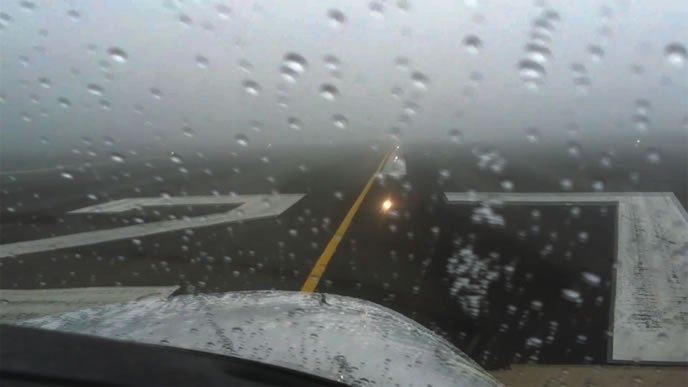
Circling an airport after an instrument approach procedure (IAP) to land on a runway other than the one aligned with the IAP is something all instrument-rated pilots have practiced. Its a maneuver that places an airplane relatively close to the ground-sometimes at half the traffic-pattern altitude-and can require steeply banked turns.
Read More »

Some Weight In The Back?

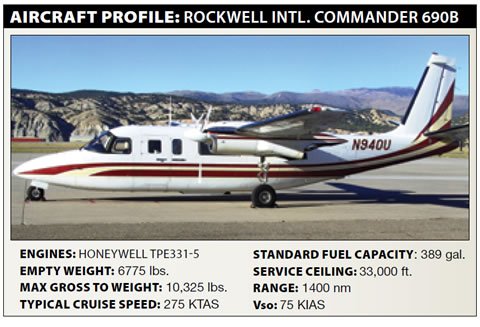
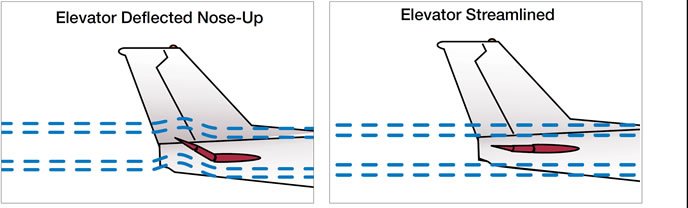
You shouldnt have gotten through private pilot ground school without understanding that, for the same power and weight, minimizing drag will result in an increased airspeed. A gross example might be the difference in airspeed with flaps extended at, say, 55-percent power and when theyre retracted. Of course, no one cruises with flaps extended, but you may inadvertently be adding to the airplanes total drag in cruise when you load it.

Read More »

Timed-Out Takeoffs

Ive not found any published data on the subject, but after years or reading accident reports Ive formed the opinion that pilots making takeoffs that will be followed by a flight on an IFR flight plan may unconsciously add a little more I gotta go come hell or high water attitude than their normal, Type A, mission-completion orientation to the decision-making process.

Read More »

Crossing The Streams

All pilots and controllers know about wake turbulence, the vortices streaming out and downward from an airplanes wingtips anytime its generating lift. We know theyre strongest when the generating airplane is heavy, clean and slow. We know not to fly in-trail of a larger airplane at the same altitude unless there are at least three minutes separation, preferably more.

Read More »

Im Special. May I Come In?

In the scenario described at the top of this article, were trying to get back to home plate in 800 overcast and two miles, somewhere in the U.S. Its a good idea to get an IFR clearance to deal with that low of a ceiling. But what if the ceiling was 5000 overcast, or unlimited, with the same two miles of visibility? Youd still need a clearance to get home, but it doesnt have to be an IFR.

Read More »

No Charts? No Problem…

The ease with which we can carry current charts in an EFB app means theres usually no good reason we dont have approach plates aboard. But stuff can happen. Youll need a little more help from ATC.

Read More »

IFR On The Fly

Sometimes you just get set up. You got up early, looked out the window at a nearly clear sky and figured youd fly the 80 miles or so to visit a buddy and hang out at his airport instead of yours. You whipped out your tablet for a full briefing and to make sure there were no TFRs. The forecast advertised nothing below 5000 broken and four miles viz all day, so you headed for the airport, did the preflight and motored off over the horizon.

Read More »

Safety On The Ground

One of the greatest risks lightning poses to aviation involves ground-based operations: people working outdoors are particularly vulnerable. A 2013 report by the American Meteorological Society indicated that lightning safety rules for ground-based aviation are not standardized. Airports set their own standards for ceasing and resuming operations, as do FBOs. Here are some typical guidelines for airport management tied to lightning proximity:

Read More »

Lightning

Most measurements put lightning in the range of 5000 to 20,000 amps, but 1971s strike to the Apollo 15 launch vehicle was measured at 100,000 amperes.

Read More »

Detection Tools, Then And Now

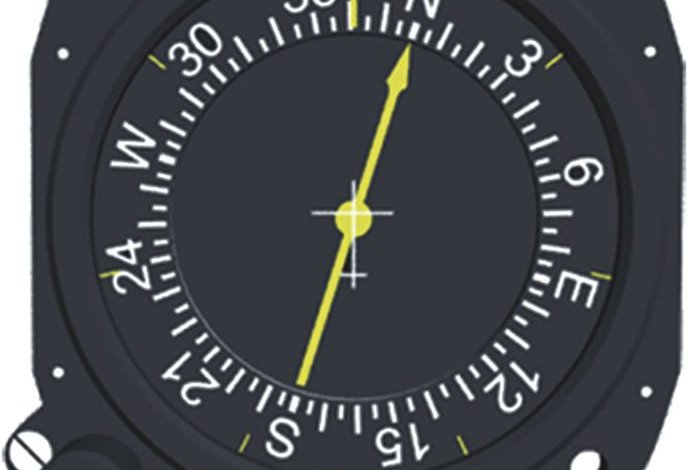
In the beginning, airborne lightning detection was a bug, not a feature. Older radios, especially the automatic direction finder (ADF), tended to fall down when thunderstorms and associated lightning were about. Communications became filled with static and the ADF needle pointed to the lightning, not the desired station. Soon, enterprising pilots figured out the ADF was pointing at a dangerous part of the thunderstorm and used it as an avoidance tool, coarse though it was. Then, weather radar become small and light enough to routinely be fitted to transports, relegating the ADF to pointing at outer markers again.

Read More »
Pilot in aircraft
Sign-up for newsletters & special offers!

Get the latest stories & special offers delivered directly to your inbox.

SUBSCRIBE