











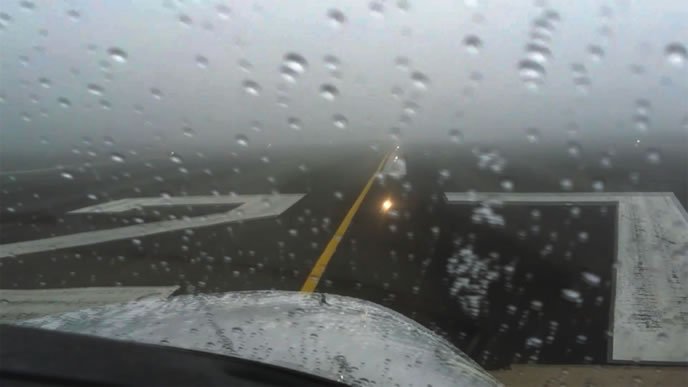


I’ve not found any published data on the subject, but after years or reading accident reports I’ve formed the opinion that pilots making takeoffs that will be followed by a flight on an IFR flight plan may unconsciously add a little more “I gotta go come hell or high water” attitude than their normal, Type A, mission-completion orientation to the decision-making process.
There is no such thing as an emergency takeoff, yet I see accident reports of pilots launching into weather that is well below what’s needed for the approach back into the airport and then losing control not long after punching into the clag despite the fact that the weather was forecast to become solidly VFR within a couple of hours (and did). I have looked at crashes after takeoff where the airplane was well over gross, the runway was plenty long enough to abort the takeoff even after getting into the air, yet the pilot, on an IFR flight plan, pressed on. Not surprisingly, he discovered that once he pulled the airplane out of ground effect, the airspeed started deteriorating and the airplane either sank back to the ground or ran into an obstruction. It can happen like this.

