Register

Search Results for: maintaining your airplane

Features

Low And Slow

Pilots like to talk about speed and how fast they fly, often to the exclusion of other aircraft characteristics; its fun to go fast, no doubt. Witness how many aviators seek out the fastest flivver their finances can support. But the ability to power up to cruise, trim for speed, engage the autopilot and start fiddling with an iPod requires far less skill and hand-flying ability than working at the lower end of the airspeed dial. And we dont learn much at the top of the green. Demonstrating slow-flying skills takes up part of our training time; slow flying is an item in the FAAs Practical Test Standards for sport pilot certificates on up.
Read More »
Aircraft

Carbon Cub SS

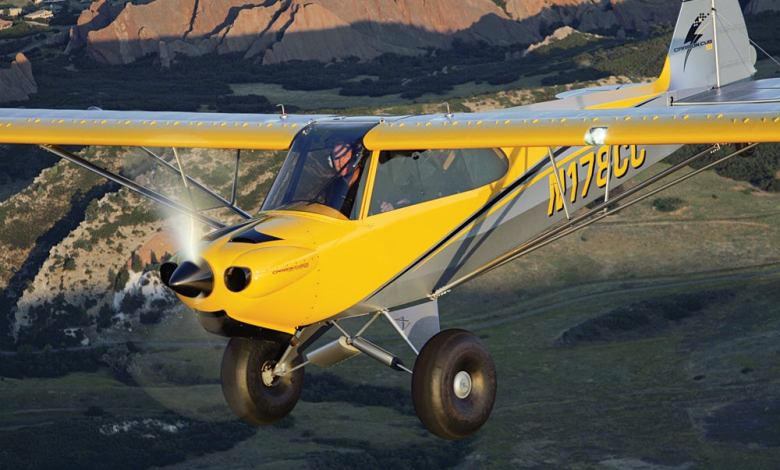
Yeee-Haa! That was the unbridled reaction to my first solo takeoff in a Carbon Cub SS, the new LSA from CubCrafters. When I pushed the little black knob forward to unleash the 180 hp CC340 engine, the tail lightened swiftly and the airplane quickly started dancing softly on its 29-inch Alaska Bushwheel Airstreak tires before […]

Read More »
Features

What Goes Around Comes Around… Again

Sometimes the only answer to a situation is, “No, not this time.” Maybe it applies during a to-minima instrument approach where the ground never appears; maybe while attempting VFR flight toward weather deteriorating into IMC. Often, it should be the first part of the answer to a questionable landing-with the second part of the answer being, “Yes, Im going around.” The high-profile landing accident involving a Hawker Beechcraft Premier IA at EAA AirVenture 2010 in Oshkosh, Wis., served to elevate the topic. But venue aside, normal application of the requisite skills and judgment can work there, just as they do elsewhere.

Read More »
Features

Right Seat Tips

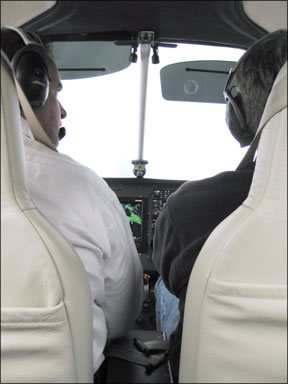
General aviation is just as prone to pithy sayings as any other worthwhile endeavor. When it comes to managing risk and defining the top three riskiest things weve seen, they include taking off with air in the fuel tanks, a private pilot with a #2 Phillips screwdriver and two pilots trying to fly the same airplane at the same time. While statistics and common sense bear out the fact two pilots up front enhances safety, there remain numerous instances when this has not proven true. Not surprisingly, after accidents with two pilots onboard, the actions of the PIC get the most scrutiny when fault is being assigned.

Read More »
Pilot Proficiency

Gear Up: How Blurred Vision Clarifies Things

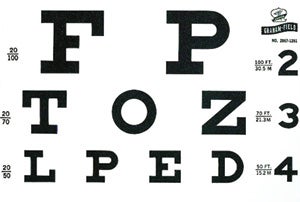
The bright, very bright, sunlight flickered through the Mercury Tracer’s side window making a strobe light effect. The snow was piled high on the sides of the road and the sunlight on the snow was overwhelming my sunglasses. As I drove down the 19-degree hill, in the 19-degree weather, the combination of frost on the […]

Read More »
Airmanship

Going Soft

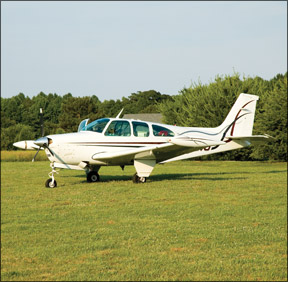
My first time landing on something other than pavement was with an instructor in a Piper Arrow. I had yet to earn my private certificate, and we were out doing a combination of familiarizing me with a complex/high-performance airplane and transporting some items for the FBO. The most memorable occasion also involved an instructor: We were returning from a spin-training session to a grass strip just soaked by a passing shower. He landed long, locked the 152s brakes in standing water and we sluiced our way to within 30 feet of the fence at the far end. More than anything, that was a demonstration of how not to do it.

Read More »
Features

NPAs: Stable Or Not?

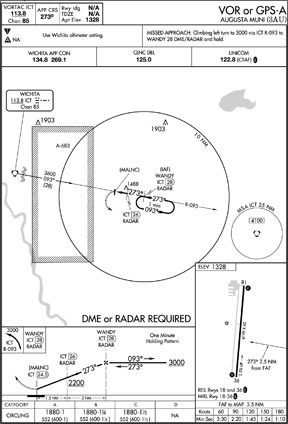
Over the past few years the FAA has added new non-precision instrument approaches at a remarkable rate-thousands of procedures with names like LNAV and VNAV, and ILS-comparable LPV approaches-2208 LPV approaches alone. The common denominator among these relative newcomers to an instrument pilots nomenclature is their dependence on the wonders of GPS, in particular, Wide Area Augmentation System-based (WAAS) GPS. The primary benefit of a WAAS-enhanced approach is availability of a pseudo glideslope generated by the in-cockpit GPS navigator, bringing ILS-like vertical guidance where theres no ILS.

Read More »
Pilot Proficiency

How Do You Define ‘Risk’?

We’ve all been asked, “Isn’t flying little airplanes risky?” And we all have our own answers. If you’ve been using the old chestnut, “It’s safer than driving to the airport,” then you’ve been cheating, at least a little bit. No, statistically, flying light aircraft is much riskier than driving a car. But it is true […]

Read More »
Features

IFR Chart Choices

A long time has passed since Elroy Jeppesen first started drawing basic descriptions of ways to get into airports when the weather was down. Thankfully, aeronautical charting has evolved with technologies and operational needs. These days, the latest panel-mount avionics and handhelds coax us into the “paperless cockpit” realm, but a variety of factors havent eliminated dead-tree charts.The good news is we have a choice, even if its among only two basic publishers. Another piece of good news is we can put down one publishers chart and pick up the others without too much confusion. While there are qualitative differences between the two publishers, a major distinction is how they distribute updates. And despite a third-party company simplifying the process, theres still a price to pay when it comes to managing revisions.

Read More »
Pilot Proficiency

Understanding Electrical Systems

I sometimes chuckle when I think about the complexity of the electrical systems in new airplanes, particularly single-engine airplanes. Most current production singles have multiple electrical buses, more than one electrical power source and, often, emergency backup batteries. And that’s great. But there is still only one engine, and if it quits, the airplane is […]

Read More »
Pilot in aircraft
Sign-up for newsletters & special offers!

Get the latest stories & special offers delivered directly to your inbox.

SUBSCRIBE