Register

Search Results for: maintaining your airplane

Airmanship

An Airspeed For All Occasions

At times during my training it often seemed the phrase most often uttered by the instructor was, “Watch your airspeed,” or its more-assertive variant, “Mind your speed.” If I didnt respond immediately, he continued his urgings, which usually escalating in volume and octave. That I eventually figured it out is evidenced by a piece of FAA paper in my pocket. And that was just the primary training. In talks with other many fellow aviators, we found a shared memory of instrument instructors who seemed almost sadistic in their ability to distract us with airspeed warnings when all we wanted to do was center the needles or roll out on the correct heading. We all recalled the endless grilling as our instructors drilled us on our ability to quote, hit and hold target speeds. Of course, by the time wed hit instrument training, we all understood and absorbed the message-one which remains clear as crystal years later: Managing all of the multiple, simultaneous demands of flying becomes considerably easier once I could instinctively and automatically manage power and pitch to achieve the correct airspeed for each condition.

Read More »
General

Staying Sharp While Flying Less

Everybody is flying less these days. Flight time in piston-powered personal airplanes is probably off the most due to the high fuel prices, but the economy and fuel costs are trimming flight hours for airlines and corporate operators, too. The noise office at my home base, Westchester County Airport just north of New York City, […]

Read More »
Airmanship

Proficiency Checklist Could Save You Fuel Costs

We all work hard to develop the skills necessary to pass a checkride. A lot of effort and expense is involved. But we often lose sight of the real objective-not just building those skills to pass a checkride, but to keep those skills sharp so that we might call upon them when theyre needed. One mechanism to help us do that efficiently is a proficiency checklist, one inspired by an Aviation Safety article enough years ago that its been lost in the easily accessed archives. Recently weve gotten some feedback from long-time readers that they liked the article and still use the ideas presented there. They suggested we revisit the idea and present it again. Given the extraordinary cost of fuel and flying today, its become ever more difficult to allocate the money to just go up and play or even to simply maintain proficiency. Increasingly, weve got to have a specified purpose to justify going flying. Before we delve into the proficiency checklist, though, lets take a look at the way a typical GA pilot maintains proficiency.

Download a FREE Checklist To Track Your Proficiency

Read More »
Unicom

Aviation Questions And Comments

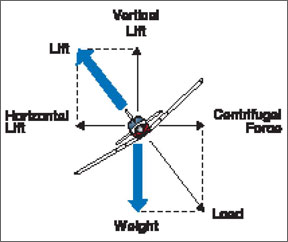
Referring to your September 2008 article, “Batteries Not Required”-a nice review of cross-country basics-I have a question and two comments. The question refers to the flight log: Why is “1.2” in the logs Time box when the block time was 1+35 or 1.6? One comment involves missing a possible teaching opportunity by not discussing MOAs, the planned route and altitude, and the floor of the Lemoore C MOA. The other comment involves the sidebar, “Lifts Horizontal Component,” which discusses steep turns and includes a quote from an FAA publication on the need to create additional lift in a turn. You then add your conclusion that “Increasing angle of attack, of course, increases the stall speed.” This is not the message I would want my students to gain from your article. Your statement is not true in the commonly practiced stall entries from 1G straight and level flight. There the increasing angle of attack doesnt “increase” stall speed. In truth, even in the situation under discussion-stalls while turning-it is the increased load factor that increases the stall speed. It can be argued that increasing angle of attack does often increase load factor (pull ups, turns, etc.) but wouldnt it be preferable to instead conclude that stall speed increases as a result of increasing load factor? That is a true statement always.

Read More »
Aircraft Analysis

Maximizing Aircraft Efficiency

Are you getting the most performance from your airplane? The fact is a considerable amount of unused performance gets overlooked by the average owner/operator. Both performance and range can be improved through common operational techniques, performing regular maintenance procedures and careful planning. Most of this “hidden performance” can be gained back from wasted fuel and increases in the airplanes useful range. In turn, you can reduce the annual operating costs. And with average aviation fuel prices nudging $6 a gallon in the U.S., who wouldnt want to enhance their airplanes efficiency? Thankfully, its not as complicated as it may seem. You just need to make the machinery work the way it was designed to work. One method is to ensure the airplane is as mechanically sound as it can be. Then, well look at improving its basic aerodynamics, followed by some smarter flight planning. Finally, well look at ways to save fuel while airborne.

Read More »
Features

Causes of Hypoxia and Flying Non-Pressurized Aircraft at Lower Altitudes

Twelve thousand five hundred feet. Fourteen thousand. Fifteen thousand feet. If youre a pilot, you immediately recognize the significance of these altitudes. Each triggers different requirements for supplemental oxygen use. Most of us learn the FARs associated with these requirements early in our primary training so we can spout them back on written exams and in the oral portion of the Practical Tests. After that, we may never think much more about them. But like most FARs, the oxygen rules are a minimum standard of safety. Of what real-world relevance are the oxygen requirements of FAR 91.211? From the standpoint of safety, when should you be using supplemental oxygen? Supplemental oxygen, for those not familiar with the term, is additional oxygen added to ambient air. The goal is to provide enough “added air” to bring the O2 users oxygen intake up to the same level it would be at a target altitude (usually sea level). The need for additional oxygen increases with altitude, since (obviously) the higher you go, the more O2 you have to add to give the breather sea-level air. For example, one aircraft manufacturers automatically regulated oxygen system meters supplemental air at the rate of 0.5 liters/minute/person at 5000 feet, scaling up to 2.8 liters/minute/person at Flight Level 250.

Read More »
General

Oshkosh Is More Important Than Ever

General aviation has always been divided, or bifurcated as the business school types would say. One group flies for personal travel and recreation, and the other flies for business reasons. Most people who fly for business actually enjoy flying, particularly the owner-pilots, but even those who are strictly passengers are often aviation enthusiasts so the […]

Read More »
Features

Forget The Checklist

Every Flight Manual, every Pilots Operating Handbook and every aftermarket pilots guide contains checklists. Normal and emergency, and in some airplanes, abnormal and alternate procedures checklists attempt to cover most situations youre likely to encounter. The FAA, instructors and authors (myself included) expend great effort trying to get pilots to use printed checklists. So it may seem odd to read there are times when a printed series of steps is too cumbersome to use. There are some times when you should forget the checklist. Most in-flight situations are not so time-critical that forgetting to move a switch or control spells immediate disaster. These conditions provide enough time for you to make inputs or move controls, then as time permits pull out a checklist and verify you have forgotten nothing. For instance, when leveling off from climb to cruise you may forget to close cowl flaps; the engine may cool rapidly as airflow accelerates, and cooling drag may prevent the airplane from reaching its maximum speed. But the engines not going to quit, and the airplane isnt going to fall from the sky. Level off, then as time permits reference a printed checklist to catch and correct your omission.

Read More »
Accident Probes

Job One

One of a pilots most dreaded scenarios-beyond, perhaps, the mid-air collision-is an engine failure shortly after takeoff. Even multi-engine pilots arent immune, since the pilot of the typical light twin at gross weight and little altitude often has little from which to choose-except exactly where the NTSB investigation will begin. In a single, at least, when the engine fails shortly after takeoff-for whatever reason-we know whats going to happen. We also know to maintain control of the airplane, choose the most suitable off-field landing site and do everything we can to avoid obstacles. Of these maxims, maintaining control is always the most important and, depending on the terrain, sometimes the easiest to ensure. Over the years, much research and actual accidents have proven the likelihood of surviving such an event is much greater if the airplane touches down at minimum speed, in a slightly nose-high attitude and with its wings level. In other words, under control. Or, as legend R.A. “Bob” Hoover has been quoted, “If youre faced with a forced landing, fly the thing as far into the crash as possible.”

Read More »
Editor's Log

Odds And Ends

For years, NASAs Aviation Safety Reporting System (ASRS) has been an invaluable, timely source of information for researchers and observers interested in how our national airspace system works. Granting limited immunity to those who complete an ASRS form and send it in is one of the few things the FAA has done right in the enforcement arena. In addition to maintaining a detailed database of submitted incidents (which likely didnt make even the trade press), the organizations Web site (asrs.arc.nasa.gov), includes free and immediate access to a wide variety of research papers and other resources to anyone interested in learning more about the “real world” of aviation.

Read More »
Pilot in aircraft
Sign-up for newsletters & special offers!

Get the latest stories & special offers delivered directly to your inbox.

SUBSCRIBE