Register

Search Results for: maintaining your airplane

Features

Crosswind Considerations

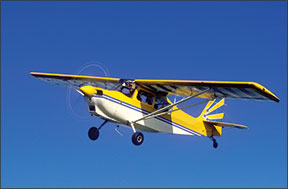
Like debates on high-wing versus low, discussions of “proper” crosswind techniques stand among those topics that split pilot opinions. Roughly speaking, it’s long seemed that aviators maintain membership in one of three groups: One group favors flying crabbed approaches and departures. Another insists the wing-low, upwind-gear-first technique works best. The final group recognizes values in both and offers an answer often irritating to members of the other two groups: It depends, they say. Pilots should be competent enough to embrace either solution to crosswind transitions, employing the technique best for the time, the place and the aircraft.
Read More »
Features

Climb Considerations

long ago, an instructor explained to me that knowing the various options for using the airplane, the different ways to make it do what’s needed, and the savvy to use those different models as appropriate, differentiated aviating from rote piloting. In the case of using climb abilities to your benefit, the best preparation begins with knowing and understanding all available options, knowing the plane and practice.

Read More »
Pilot Proficiency

The Human Factor: Dangerous Distractions

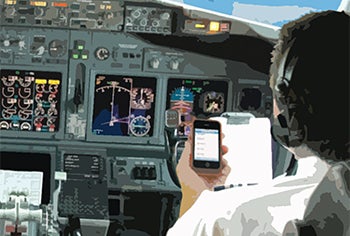
The impact of people’s fascination with, even addiction to, cell phones and texting is becoming more evident every year. Consider the following: • A study found that children using cell phones are 43 percent more likely to be hit by a vehicle while crossing the street than children who are not using cell phones. • […]

Read More »
Airmanship

Head In The Game

Pilots of personal aircraft ultimately have all the responsibility to ensure a flight is conducted safely. To help meet our responsibilities to ourselves and our passengers, we need to minimize the outside world’s distractions when we sit down in the cockpit to focus on the task at hand. Different pilots have different ways of focusing, but one common thread is blocking out anything unrelated to ensuring the upcoming flight’s success. That’s a major challenge when we serve as baggage handler, dispatcher, meteorologist and pilot. It’s also a major challenge in the dynamic world of air show pilots. An air show’s sights, sounds and attention-grabbing activities perhaps make it one of the worst places a pilot can be prior to a flight. But pilots about to fly their air show routines have implemented a formal “quiet time,” allowing them to focus on their upcoming flight and get into “the zone” or “the game,” if you will. Here’s how they do it.

Read More »
Airmanship

No Electrics? No Problem!

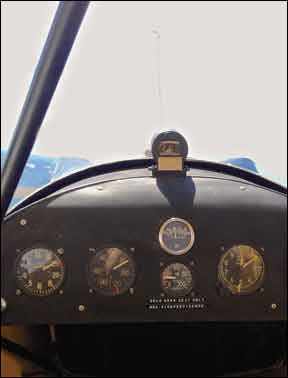
A pilot can learn a great deal by stripping his or her flying down to its fundamental roots. Flying an aircraft without an electrical system puts you in touch with the basics of flying by altimeter, whiskey compass, pilotage and pure stick-and-rudder skills. On the mechanical side, it’s a chance to commune with the engine using only the minimum required instruments. There’s also a certain romance to flying a vintage plane, especially one lacking an electrical system. It harkens back to the barnstorming days when men were real men, women were real women and there was no TSA to verify the difference via pat down. Even in this era of modern instruments, glass panels and gadgets, there’s still room in the skies for a basic plane with minimal systems. Here’s how.

Read More »
Pilot Proficiency

In The Clouds

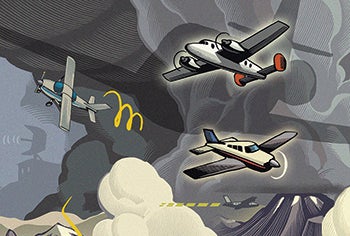
** | |Illustrations by Chris Gall**| In Joni Mitchell’s 1969 song “Both Sides, Now,” a haunting and sentimental little earwig, the singer laments that after looking at clouds “from both sides now,” she really doesn’t know them very well at all. The same could be said for many pilots. Even after thousands of hours in […]

Read More »
Pilot Proficiency

Short and Rough Field Landings

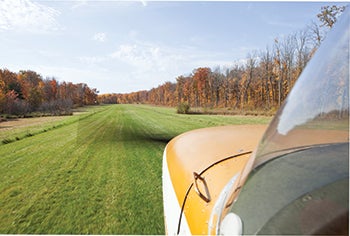
We all have to learn how to perform short- and soft-field landings as part of the training for the private pilot certificate. The short-field landing is one of the most difficult maneuvers because of the precision required to pass the task. You have to maintain the approach speed to accuracy and land the airplane within […]

Read More »
Pilot Proficiency

Get Into Position

We all strive for accurate, smooth landings that we can produce predictably each time we fly. One step that will help you to standardize your landings is getting yourself into the best position in the pilot’s seat. You need to be able to comfortably reach the controls, and make sure that the forward picture is […]

Read More »
Pilot Proficiency

Getting Back to Hand-Flying

There’s little debate that the prevalence in today’s airplanes of modern glass cockpit displays, GPS navigators, datalink weather receivers and the host of other high-tech gear that we now take almost for granted has in fact made flying easier and safer. Still, the already-too-high accident rate for light general aviation airplanes hasn’t budged in the […]

Read More »
Airmanship

Flying the Nosewheel

Just because the vast majority of the airplanes most of us fly have their little wheel mounted on the nose instead of the tail doesn’t mean the nosewheel is immune to abuse. Nor does it mean we can ignore the nosewheel’s peculiarities, even if an airplane with one is much easier to handle on the ground.

Read More »
Pilot in aircraft
Sign-up for newsletters & special offers!

Get the latest stories & special offers delivered directly to your inbox.

SUBSCRIBE