Register

Search Results for: maintaining your airplane

Features

Wing Shape And Ice

I’m a South Florida lady, and so is my fine flying machine. It’s relatively fat wing, tapered tips, relatively thin horizontal and vertical tail surfaces and elevator with “horns” are made of .032 aircraft-grade aluminum coated with paint (and not even that much paint). And even though I’m at a balmy 30 degrees North latitude, a momentary jaunt through the middle of a building cumulous cloud at the right altitude and outside temperature can easily coat my aircraft in a shiny glazing of thick, clear ice.

Read More »
Features

Departure Procedures

The instrument-rated pilot of a Cessna 182S Skylane received an IFR clearance about 15 minutes prior to departure from Runway 18R. Witnesses reported observing the airplane pass directly over their work site at a very low altitude, about one mile south of the airport. Radar data disclosed that the airplane was airborne for about 1.5 minutes. Following departure, the airplane made a left bank to an easterly heading while gradually increasing its altitude to 1000 feet msl. The last two returns show an altitude of 900 feet msl and a slight change of direction back toward the south.

Read More »
Features

Real-World Risk Management

Regular readers of this journal are familiar with the series of articles I’ve written and advice I’ve given on the art and science of risk management. By now, you’re probably curious as to whether I actually use and implement the information and practices I recommend in my own aviating, or whether I’m merely speculating from some safe, lofty journalistic perch.

Read More »
Pilot Proficiency

Taming Stalls and Spins With Technology

| There’s only one foolproof way to ensure you don’t end up as an accident statistic in yet another stall/spin fatal crash: Avoid stalling in the first place. Yet if the goal is to avoid stalling, why do we spend so much time practicing stalls? After all, 97 percent of stall/spin accidents that start at […]

Read More »
Pilot Proficiency

The Human Factor: Be Predictable

It was a normal Saturday morning. I had just left the bank and pulled up to the busy street to wait for a break in traffic so I could make a right turn. I had quickly checked to the right when I first stopped at the sidewalk, and then focused on the traffic approaching from […]

Read More »
Pilot Proficiency

A Nice Little Book

From time to time I find myself in the study of some aviation aficionado — former Flying editor Stephan Wilkinson comes to mind — admiring the cargo of his bookshelves. Many a volume that I would like to sit down with on a rainy afternoon; many that I have never heard of. The lavishly illustrated […]

Read More »
Pilot Proficiency

Aftermath: Basic Mistakes

The owner of the float-equipped Maule saw it crash. He was there to watch as his friend and a passenger arrived in the airplane. “I witnessed the airplane fly over the field,” he wrote, “and enter a downwind for a landing on Runway 4. As the plane turned from base to final, it banked at […]

Read More »
Accident Probes

Losing The Flick

The Flick,” the big picture, is how situational awareness often is described. As short descriptions go, it’s a good one. The big picture can mean different things to different people, of course, but it generally breaks down into knowing where you are, where you’re going, what it’s going to take to get there and whether the resources to complete the flight are available. The resources can be any number of things. In particular, they usually boil down to keeping tabs on fuel, weather and terrain. Lose the flick on either one of these three, and you could find yourself in these pages.

Read More »
Aircraft

Cessna Grand Caravan EX

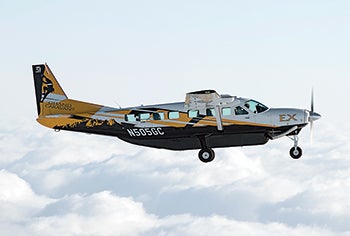
Last year at AirVenture, Cessna rolled out its latest Caravan, and it is the most powerful Cessna-built 208 yet. The new model will maintain its 208B designation, but it will give operators a great deal more power, thanks to a new Pratt & Whitney turboprop engine — the PT6-140 — which Pratt developed expressly for […]

Read More »
Features

Using A Flight-Risk Assessment Tool

It’s impossible to deny the importance of risk management in maintaining safe flight operations. Accident data consistently show the root cause of some 75 percent of general aviation’s fatal accidents is the pilot’s poor or non-existent risk-management skills. Whether they were never properly trained to consider the consequences of their decisions, didn’t understand those consequences or minimized their importance, we’ll never know. But we do know that a large proportion of them could have been prevented if the accident pilots had performed even minimal analysis of the risks presented by their proposed flight.

Read More »
Pilot in aircraft
Sign-up for newsletters & special offers!

Get the latest stories & special offers delivered directly to your inbox.

SUBSCRIBE