Register

Search Results for: maintaining your airplane

Training and Proficiency

IFR to VFR-on-Top

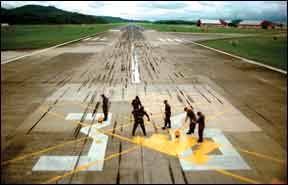
These days, with GPS-direct clearances available for IFR flights, you may think that filing for a VFR-on-top clearance doesn’t make sense. And being governed by both VFR and IFR rules may not sound particularly attractive either. But there are times when these clearances can be very handy. When there are localized low clouds, as there […]

Read More »
Pilot Proficiency

Proficiency on a Budget

With the economic downturn and unemployment and underemployment that ensued, many Americans are enjoying less disposable income. As a result, your flying budget may not be what it was a few years ago. And meanwhile, the cost of flying has risen. We all know that staying proficient is equivalent to reducing the risks associated with […]

Read More »
Aircraft

Future Copter

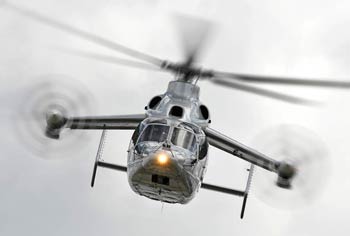
Suddenly there’s a red-hot competition under way to develop rotorcraft capable of flying at sustained speeds well above the theoretical limits of conventional helicopters. To meet the challenge, engineers at some of the top helicopter manufacturers are turning out radical concepts that look downright bizarre. But the big surprise is these odd birds actually fly […]

Read More »
Pilot Proficiency

More Mnemonic Madness

After seeing Martha Lunkin‘s recent Mnemono-Maniacal Moments column, longtime Flying reader David Karnes thought our readers might benefit from his dad’s approach to mnemonics, which takes the form of a poem. The poem makes sense. Kenneth Karnes recently bought a Cessna 210 and needed a way to remember the new procedures associated with his high-performance […]

Read More »
Aircraft

Jumpseat: Flying a Hair Dryer?

Flying a light jet hadn’t been on my radar. But when Tom Torti offered me a spin in his Citation Mustang, I couldn’t refuse. With a couple of exceptions, I had never really flown a smaller jet, the 727 being my first jet. The opportunity to compare notes with the 777 seemed like a great […]

Read More »
Accident Probes

Close To Zero

From almost Day One of our pilot training, we’re told to stay out of and 20 miles from a thunderstorm. We’re also told not to fly into instrument conditions without an appropriate rating and clearance. Yet, the accident record shows many pilots regularly ignore those admonitions. The accident record, however, doesn’t reflect the number of pilots who bend or break them and live to do it again. We’d guess that number is substantial.

Read More »
Features

Ground Handling 101

Each flight of a land-based airplane begins and ends at the tiedown, or in the hangar. Even if you’re flying a seaplane, glider or helicopter, some degree of preparation, care and feeding of your aircraft occurs on the ground/water, where it actually spends most of its time. How we operate an aircraft on the ground doesn’t carry with it the same levels of risk as when we’re airborne, but like anything involving aviation, there are right ways and wrong ways to do things.

Read More »
Features

Seven IFR Prep Tips

Approach, could you read back the arrival waypoints…we can’t seem to find that arrival….” The request got my attention because it came from the aircraft somewhere ahead of me in the soup of a thick overcast, headed to the same airport. The controller had just warned of a pending change to my arrival plans by changing those of the flight ahead of me. Taking that change as a cue, it was easy to turn to the last plastic-protector page in my little IFR folder—where I’d already inserted the appropriate page. It was less luck than experience, which had tutored me on the likelihood of a traffic conflict with another airport’s arrivals.

Read More »
General

The Human Factor: Learning from Others

My flying has recently come full circle. My first flight was in a Piper J-3 Cub back in the 1950s. I worked line service as a teenager in the 1960s to pay for my flying lessons, and in the early 1970s I earned my fixed-wing ­single-engine and glider commercial and instructor ratings so I could […]

Read More »
Accident Probes

Lack Of Commitment

Failure of a single’s engine is something on which primary students spend a lot of training time. In addition to running the emergency checklist and maintaining control of the airplane, looking for and maneuvering to land on a suitable surface are stressed. Managing the energy stored in altitude and airspeed is but one part of this training; properly performing the emergency checklist is another.

Read More »
Pilot in aircraft
Sign-up for newsletters & special offers!

Get the latest stories & special offers delivered directly to your inbox.

SUBSCRIBE