Register

Search Results for: maintaining your airplane

Features

Five Exercises For Better Crosswind Landings

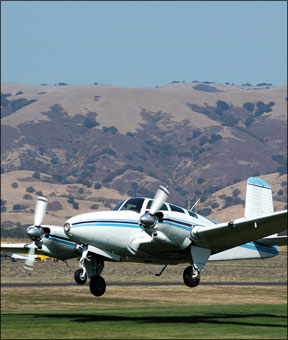
Everybody talks about crosswind practice, but few pilots do anything about it. Crosswinds are the number one factor in weather-related accidents, and even far more in-motion aviation insurance claims. The answer to handling crosswinds is usually to…practice crosswinds. Theres no question that practice makes one (at least closer to) perfect. And, as is the case with most other maneuvers we attempt when flying aircraft, landing in crosswinds requires the artful combination of a number of individual skills. As with so many elements of learning to fly and maintaining proficiency, there are several of ways to develop and improve your crosswind skills. You dont necessarily have to practice them in an actual crosswind, but you do need to be ready to combine them on the day when things are strong and gusty, and not aligned with the runway. Here are five exercises you and your CFI can use to develop better crosswind landing skills.

Read More »
Features

Asymmetry In Action

Symmetry. Balance. These concepts are universal to virtually all human philosophy and aesthetics. An aviation credo is that “if an airplane design looks good, it will fly good.” In most cases, “looking good” means having proportions-and symmetry-that please the eye. We strive for balance and symmetry in the way we fly as well. Pitch attitudes. Bank angles. Airspeeds. Rudder coordination. Almost everything we do is designed to make maneuvers steady and balanced. Some of the most challenging maneuvers on practical tests make us demonstrate symmetry, with airspeeds, altitudes and bank angles at one point of the maneuver equaling those at others, and balanced rudder input throughout. But there are times when we must violate the concept of symmetry to make the airplane perform. Most notably, this means something other than balanced rudder input.

Read More »
Training and Proficiency

Jumpseat: Making It Real

I always look forward to flying with pilots new to the 767/757. These individuals are usually fresh from simulator training at our flight academy. They have suffered the lacerations of being whipped to proficiency. They have spent over a month in the stale and frigid climate of our classrooms and simulators. They are eager to […]

Read More »
Training and Proficiency

Airwork: Aviate, Navigate, Communicate and Motivate!

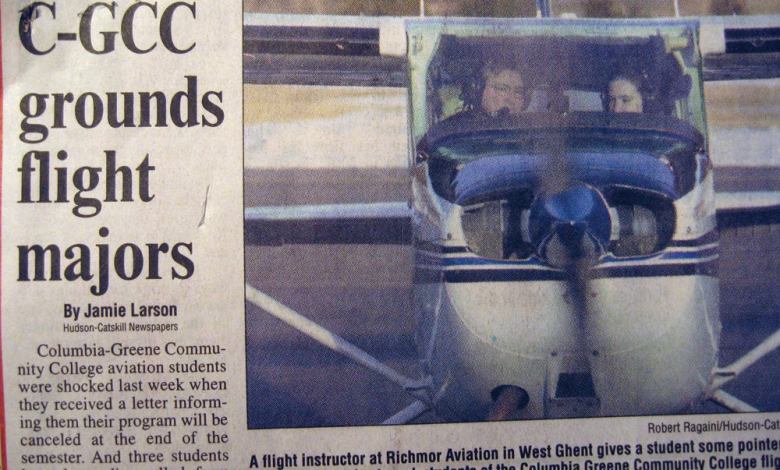
I was surprised and disappointed when I read the headline “C-GCC Grounds Flight Majors” in a local newspaper. Almost two months into the semester, school officials at a community college decided to pull the plug on its aviation sciences program. Earlier in the year I had been asked, along with another person (even more qualified […]

Read More »
Accident Probes

Failure To Multitask?

Whenever Im around non-pilots and the subject of personal aviation comes up, the conversation inevitably turns to the skill set one needs to safely operate an aircraft. (Im sure this is nothing new and has happened to you.) My generic answer is something to the effect of if you can drive a stick-shift car, you can fly a fixed-wing airplane; the motor skill requirements are pretty much the same. Of course, thats not the end of it, especially if youve never driven a stick but have several thousand hours of flight time; in addition to the requisite motor skills, pilots also must be able to prioritize tasks, often performing one or more simultaneously. An example of the latter might involve maneuvering in a traffic pattern while conversing with ATC over the radio and changing the engines power setting, all at the same time. When the smoke clears, its not unlike downshifting, braking and turning a stick-shift car, all at the same time.

Read More »
General

Unusual Attitudes: Heaven It Was

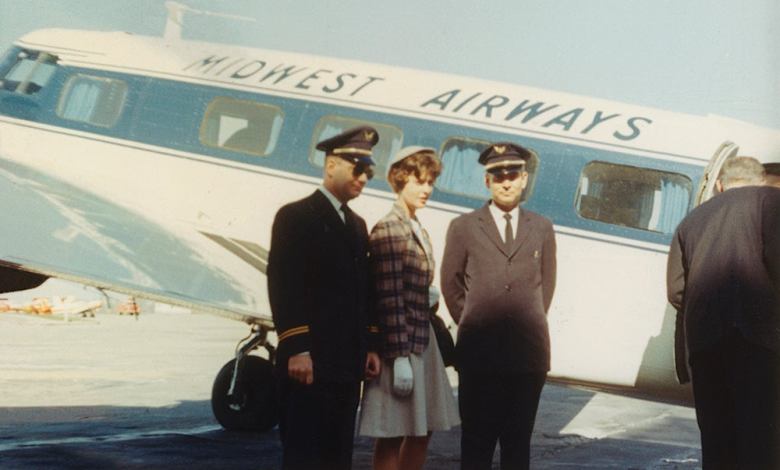
The wag who said he was “sure there was money in aviation because he put it there” might have been Ebby Lunken, who saw a sizable chunk of cash disappear into his beloved Midwest Airways. It was a grand idea and would have succeeded if the income from ticket sales had even approached the outgo […]

Read More »
Aircraft

Remote Control: Flying a Predator

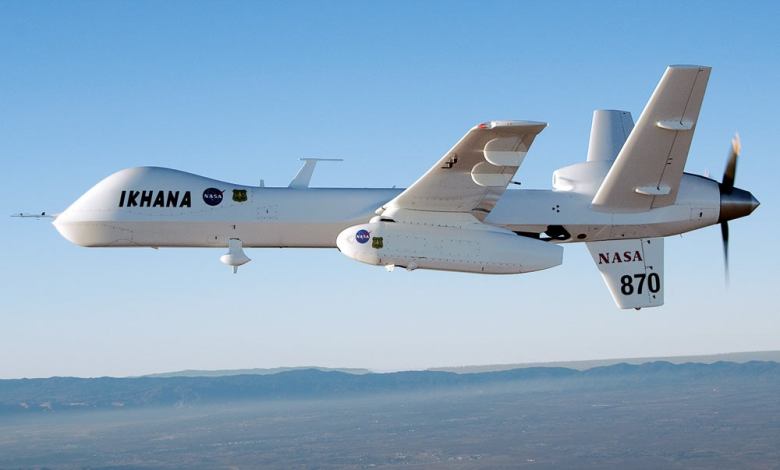
“It’s like flying an airplane without four of your five senses,” says NASA test pilot Mark Pestana. “You can’t smell the fuel, feel the vibration or hear any noises.” Pestana is sitting in the “cockpit” of the unmanned aircraft system (UAS) Ikhana — a civilian version of General Atomics’ MQ-9 Reaper, which is a follow-on […]

Read More »
Aircraft

Flying Diamond’s D-Jet

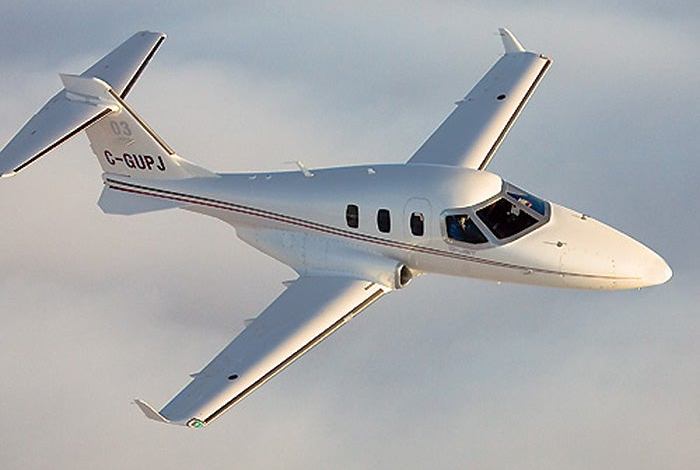
It was odd that, as I taxied out in the number three prototype of the Diamond D-Jet, the last thing on my mind was that there is only one engine. As with any other business jet you can’t see the engines, and the sounds and sensations of one jet engine spinning away are the same […]

Read More »
Unicom

By George

I read with interest your article on VFR into IFR conditions (“Inadvertent IFR,” October 2009). It seems to me you missed one of the most obvious aids to maintaining control of the aircraft: Engage the autopilot and fly the plane with the heading bug on the heading indicator. Nothing could be simpler. Using the autopilot keeps turns at appropriate angles and gives you time to communicate and sort things out. The only additional factor to keep in mind is to maintain proper trim.

Read More »
Airmanship

The Forgotten Maneuver

Go-arounds (sometimes called rejected landings) are something of a “forgotten maneuver” for most pilots. I think this is because the go-around is something were taught as a way to fly away from a botched landing. As we gain more experience and get better at landing, we find ourselves needing this escape route less frequently. The psychology of pilots is such that we try to “recover” from our mistakes, so we also tend to try to turn bad landings into good ones with a nudge of the throttle, a tap on the rudder pedal, or a twist of the controls instead of powering up and climbing away for another try. Instructors can fall into the same trap. Failing to see a reason for a go-around in their experienced students landings, they might not require demonstration of a go-around during a flight review or other recurrent training. If the pilot receiving instruction is instrument-rated, the CFI may consider flying a missed approach to be adequate to demonstrate go-around technique. I must admit for a time I was in that camp as well. When was the last time you practiced a go-around? With experience, ego and unenlightened instruction, it may have been a very long time. So what happens on the day something completely outside the span of your expert aircraft control requires you to call off the landing from a point very near (or even on) the ground?

Read More »
Pilot in aircraft
Sign-up for newsletters & special offers!

Get the latest stories & special offers delivered directly to your inbox.

SUBSCRIBE