Register

Search Results for: maintaining your airplane

Features

The Spin On Spins

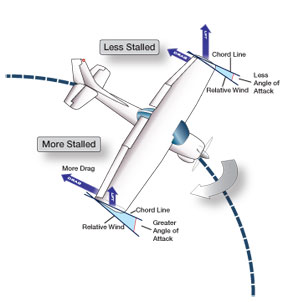
The FAA doesnt talk much about spins. Mostly, they want us to learn to avoid them. Clearly, avoiding an inadvertent spin is good, but it might help to know a bit more about them. Plus, the whole specter of Air France 447 crashing into the Atlantic at what French authorities indicate was a very high vertical speed and a nearly level attitude suggests that it might be nice to know a bit about flat spins in particular. Most of us have heard it before: Spin training used to be mandatory, but sometime after WWII it was decided most inadvertent stall/spin accidents occurred at an altitude low enough to make recovery unlikely and neednt be taught. So, the FAA dropped spin training from all but the CFI curriculum and instead began to emphasize spin avoidance. Now, the FAA is taking that one step further by de-emphasizing stall practice and recovery, and instead concentrating on teaching pilots to avoid stalls. With this progression, soon spins and even stalls may be solely the realm of the aerobat and the accident victim. Our goal, of course, is to minimize the latter, so a little education is in order. Well start with a brief discussion of the stall and then focus on the aerodynamics of spins and their recovery. Finally, well take a look at what makes a flat spin.

Read More »
Pilot Proficiency

How did you get that picture?

One of my early childhood memories from growing up in Southern California is of my dad showing me a litho print of the A4-D Skyhawk in flight that he’d brought home from work at the Douglas Aircraft Company. As I looked at the image, I thought to myself, “How did they get that picture?” never […]

Read More »
Unicom

Questions And Comments

If youre flying along and reduce power while maintaining the established pitch attitude, what happens to airspeed? It starts decreasing, right? To maintain the desired airspeed, wed want to pitch the nose down, wouldnt we? Depending on how stable the airplane is in its pitch axis, it may naturally pitch down, without pilot intervention; if its unstable, its pitch may not change. This behavior depends on how the airplane is designed and loaded. All the Cirrus AFM/POH is saying is that a good short-field technique requires touching down at the minimum airspeed. To achieve that objective, coordinating power reductions and pitch attitude is necessary for optimum performance. As it is in any airplane weve ever flown, including the Cirrus models. That said, some airplanes require a different technique. For example, airplanes like the Seabee or Lake amphibians-with their single pusher engines mounted on a pylon-respond opposite to other singles when power is adjusted. Instead of the nose wanting to drop when power is reduced, in these airplanes it may want to rise.

Read More »
Features

Beyond The Burble

Were going to do what?” Okay; I dont usually get quite that reaction when I discuss full aerodynamic stalls during a preflight brief with my students receiving checkouts, or flight reviews in high-performance aircraft. But you can see it in their eyes. Many pilots havent practiced full stalls since their private pilot checkride, and a large number of my students in 300-horsepower retractable singles-and especially light twins-have never stalled the airplane they currently fly. No wonder theres trepidation about a maneuver some have not flown in many years. No wonder stalls continue to take lift, and life, away. To reduce the chance a stall might go unrecognized or uncorrected, lets go back to what we learned in our early training, and build upon that knowledge to deal comfortably with what occurs beyond the first stall burble.

Read More »
General

The Real Reason for the Private Jet

Despite efforts by the National Business Aviation Association and some aircraft manufacturers, little success has been achieved in changing the public’s mind about private airplanes, especially jets. When the CEOs of the big three (well, the diminished three) automakers arrived in Washington, D.C., in three separate corporate jets to claim taxpayer bailout money, you didn’t […]

Read More »
Training and Proficiency

The Keys to Cruise Flight Safety

Accidents during cruise are almost unheard of in turbine airplanes where the risk is concentrated in the departure and arrival phases of flight. General aviation pilots also come to grief most frequently in the airport vicinity, but an alarming number of accidents happen during cruise, which should be a benign part of any trip. Most […]

Read More »
Features

True Short Field Landings

The short-field approach and landing is something we all learned as student pilots. Commercial students get to show some additional expertise. However, both the private and even commercial requirements are a bit relaxed and dont really prepare us for that maximum performance, white-knuckle experience of putting the airplane down on that postage stamp some joker sadistically calls a runway. When we say “short-field approach and landing,” were really talking about two entirely different situations with different techniques. Obstacles at the approach end of the runway determine how we will make the approach-whether we can “drag it in” a few feet off the ground, or if we have to make a steep descent to clear the FAAs standard-issue 50-foot tree right at the runway threshold.

Read More »
Training and Proficiency

Minimums, Maximums, & Margins

There’s plenty of information on the operating limitations of an airplane. A VG diagram (in some applications called a VN diagram) shows many things including stalling speed, maneuvering speed, maximum allowable speed, maximum indicated airspeed in rough air and maximum allowable G loading, both positive and negative. Operate within the parameters of the VG diagram […]

Read More »
Features

Zero-Zero Departure

Since so much emphasis is placed on approaches during the typical instrument students training, its unsurprising practicing the takeoff into IMC receives little attention. Thats more than a little unfortunate, since the instrument takeoff-especially the zero-zero takeoff-can be much riskier. For our purposes here, well define the instrument takeoff as one in which the aircraft will be in IMC before reaching the lowest altitude specified for crossing the final approach fix of a published procedure for that airport. Well define a zero-zero takeoff as one where the aircraft enters IMC before reaching DH or MDA on a related approach. Often, of course, the zero-zero takeoff is just that: The crew can see neither the end of the runway nor a definite ceiling, and must transition to instruments when the wheels leave the runway. The challenges posed by either procedure arent immediately obvious to those who havent experienced them, which is another reason for greater attention during initial instrument training. Takeoffs are always a busy part of any flight, arguably more so than landings. The aircraft is accelerating, for one, and gathering energy that must be dissipated before stopping if theres a problem. Too, panel gauges, especially mechanical gyros, behave in ways further complicating instrument flight when they are accelerated from a standing stop to climb speed in a few seconds. Various procedures necessary during a takeoff and departure-raising the gear and flaps, for example, or setting power-can wreak havoc with a pilots concentration and the aircrafts trimmed attitude. And it is during the initial climb in IMC when any errors in setting the aircrafts configuration are discovered, at exactly the wrong time for something to be done about it.

Read More »
Pilot Proficiency

Things That Go Bump (Often at Night)

It was a routine flight in every way. A University of North Dakota flight instructor took off from Grand Forks, North Dakota, at 5:45 p.m. with a private pilot who was in the university’s commercial/instrument flight program, for a three-leg, cross-country night flight in a twin-engine Piper PA-44-180 Seminole. It was a clear night with […]

Read More »
Pilot in aircraft
Sign-up for newsletters & special offers!

Get the latest stories & special offers delivered directly to your inbox.

SUBSCRIBE