













Register

The Spin On Spins

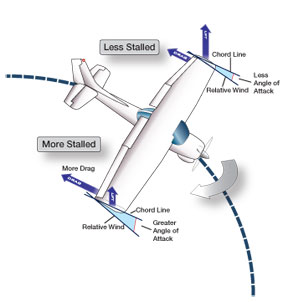
The FAA doesnt talk much about spins. Mostly, they want us to learn to avoid them. Clearly, avoiding an inadvertent spin is good, but it might help to know a bit more about them. Plus, the whole specter of Air France 447 crashing into the Atlantic at what French authorities indicate was a very high vertical speed and a nearly level attitude suggests that it might be nice to know a bit about flat spins in particular. Most of us have heard it before: Spin training used to be mandatory, but sometime after WWII it was decided most inadvertent stall/spin accidents occurred at an altitude low enough to make recovery unlikely and neednt be taught. So, the FAA dropped spin training from all but the CFI curriculum and instead began to emphasize spin avoidance. Now, the FAA is taking that one step further by de-emphasizing stall practice and recovery, and instead concentrating on teaching pilots to avoid stalls. With this progression, soon spins and even stalls may be solely the realm of the aerobat and the accident victim. Our goal, of course, is to minimize the latter, so a little education is in order. Well start with a brief discussion of the stall and then focus on the aerodynamics of spins and their recovery. Finally, well take a look at what makes a flat spin.

Gemini Sparkle

Key Takeaways:

  • The FAA prioritizes spin avoidance, de-emphasizing formal spin training for most pilots, but understanding stalls (loss of lift at critical angle of attack) and spins (a stalled condition combined with autorotation, often from uncoordinated controls) remains crucial.
  • Spins require both a stall and rotation to persist, and the standard recovery technique, known as PARE (Power-off, Ailerons neutral, Rudder opposite, Elevator forward), aims to simultaneously break the stall and stop the rotation.
  • Flat spins, characterized by a nearly level pitch attitude maintained primarily by yaw, are especially dangerous. They are influenced by factors like aircraft mass distribution (e.g., an aft center of gravity) and propeller gyroscopic forces, and can be difficult or impossible to recover from using conventional methods.
See a mistake? Contact us.


The FAA doesnt talk much about spins. Mostly, they want us to learn to avoid them. Clearly, avoiding an inadvertent spin is good, but it might help to know a bit more about them. Plus, the whole specter of Air France 447 crashing into the Atlantic at what French authorities indicate was a very high vertical speed and a nearly level attitude suggests that it might be nice to know a bit about flat spins in particular.


Ready to Sell Your Aircraft?

List your airplane on AircraftForSale.com and reach qualified buyers.

List Your Aircraft
AircraftForSale Logo | FLYING Logo
Pilot in aircraft
Sign-up for newsletters & special offers!

Get the latest stories & special offers delivered directly to your inbox.

SUBSCRIBE