











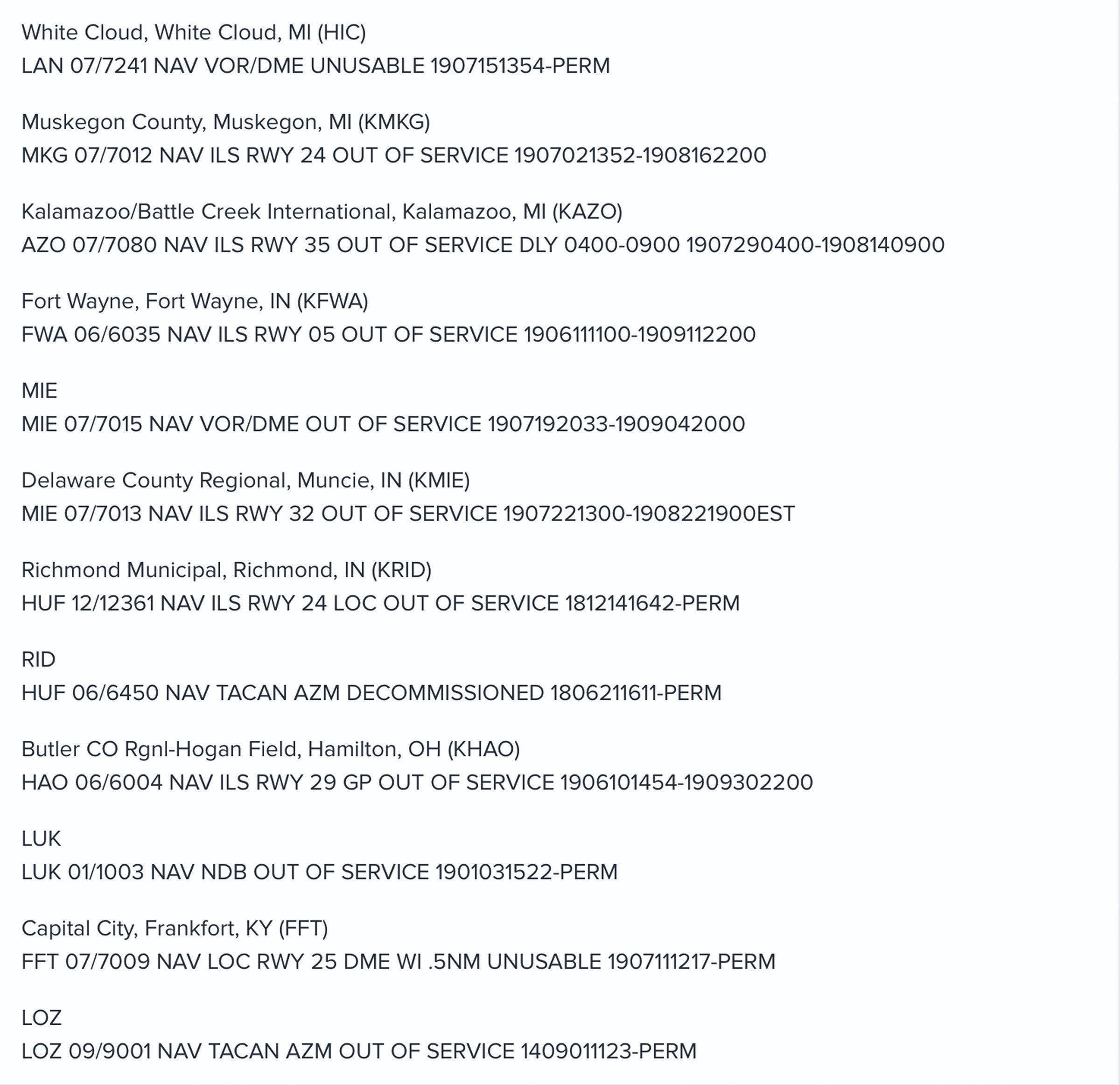


At least in the U.S., the existing Notam (Notices to Airmen) system is one pilots have come to hate. There are too many Notams, many pilots complain, and those that appear in preflight briefings often aren’t relevant. Further, those pilots say, their format makes Notams difficult to read and understand, creating a flight safety issue. Meanwhile, software-based translations can misinterpret standard contractions and render an incomplete or confusing Notam.
Notams have had a rocky decade, getting most of the blame in 2010 when the FAA accused U.S. Senator James Inhofe (R-Okla.) of landing on a closed runway in Texas. He maintained he researched applicable Notams as part of his preflight planning, but didn’t find one for his destination. The FAA didn’t agree and brought an enforcement action against the Senator. In turn, Inhofe developed and in 2012 saw enacted the Pilot’s Bill of Rights, which among other things mandated an overhaul of the Notam system. Subsequent legislation—2015’s Pilot’s Bill of Rights 2, also by Inhofe—sought to further improve the Notam “experience” for pilots. It’s the legislation that created the BasicMed option to traditional FAA medical certificates.

