Register

Stick & Rudder

The First 1000 Feet

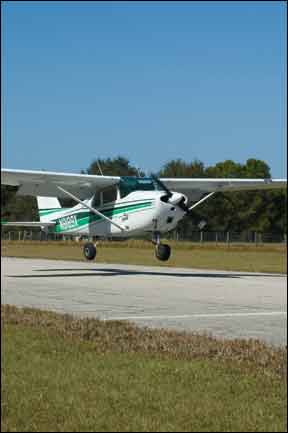
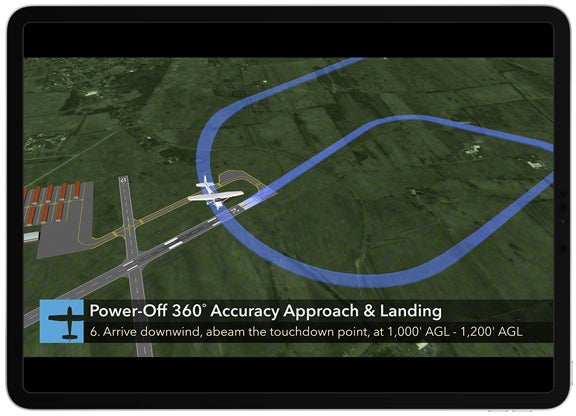
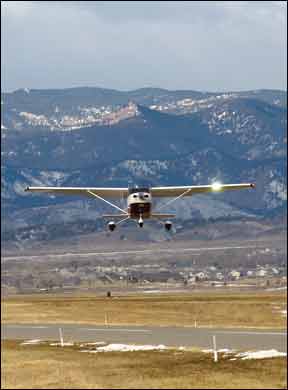
Im always amused by pilots and non-pilots alike who express the view that landing is the most challenging portion of a flight. Yes, it can require all of our skills, but so can other segments, even straight-and-level cruising. The degree to which any flight segment poses a greater or lesser challenge depends on weather, terrain, aircraft loading-essentially all the variables were trained to consider and for which we compensate during our flight planning and execution. When merely considering the challenges posed, one of the oft-overlooked portions of flight is what comes immediately after the airplane clears the runway on takeoff. Depending on things like density altitude, terrain, weather and aircraft loading, the initial climb to clear obstacles and reach a “safe” altitude easily can be the most challenging flight portion. The combination of variables can conspire to rob us of the relatively marginal performance we have right after liftoff, putting us in the weeds.
Read More »

About The Vertical Axis

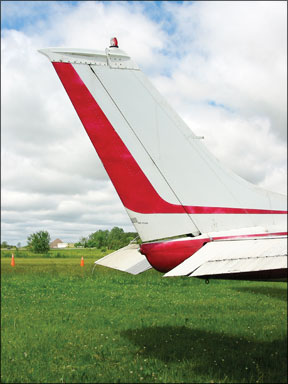
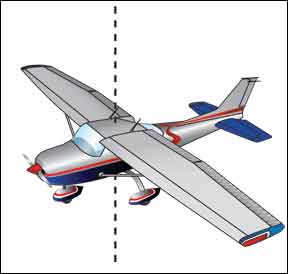
Conventional airplanes have three primary flight controls: ailerons to manage rolling about the longitudinal axis, elevators/stabilators to establish and maintain the desired pitch about the lateral axis, and a rudder to deal with any yawing moments around the vertical axis. All three of these axes meet and pass through the airplanes center of gravity and, when used correctly, are coordinated to produce smooth, efficient flight. If one spends much time listening to the old-timers populating FBO pilot lounges, todays pilots dont know how to use the rudder to manage yaw, especially when flying an older airplane or one with a tailwheel.

Read More »

Nailing The Straight-In Approach

A good portion of our first few hours of flight instruction-the ones coming after learning basic control-involve getting to know the traffic pattern and perfecting what little takeoff and landing technique we can muster. Using the traffic pattern is convenient: We stay in a relatively small area yet experience one takeoff, a climb, a descent and turns, along with a brief period of straight-and-level flight. One outcome of staying in the traffic pattern and doing touch-and-goes is we get to practice many of the basic VFR skills-along with takeoffs and landings-in a relatively short period of time. The educational law of primacy tells us learning to fly a traffic pattern also teaches us it is the only way to properly approach a landing area in an airplane and-to some extent-it is.

Read More »

Yanking And Banking

I watched a demonstration by the pilot of a U.S. Air Force F-22 Raptor on one of the nicer weather-days at this years Sun n Fun International Fly-In and Expo (the day before the tornado hit). The Raptors most unique characteristic-from an observers standpoint and in addition to its efficient conversation of fuel into noise-is its ability to maneuver at extremely high angles of attack-maintaining a constant AoA of over 60 deg. in sustained flight. Watch an F-22-or any other high-performance aircraft-maneuver, however, and you may notice an interesting pattern. Any time the fighter changes attitude under a G-load, the pilot does so incrementally. He or she changes pitch, then changes bank, or the pilot changes bank and then changes pitch. You never see a radical pitch and bank change simultaneously.

Read More »

VNE Revisited

In our January issue, we ran an article, “Slow Down, You Move Too Fast,” which focused on aerodynamic flutter, how high speeds can cause it and what can be done to minimize it. One aspect of the article drew comments and criticism from readers, some of which were published in the Unicom section in our March issue, involved that articles statements referencing a fixed-wing aircrafts never-exceed speed (VNE) as a true airspeed. Many readers rightly took us to task for those statements, pointing out VNE is an indicated airspeed-at least when published for the airplanes they fly-expressing skepticism and questioning our veracity. This article is an attempt to both respond to those valid criticisms and set straight the record associated with never-exceed speeds and our original statements.

Read More »

Using Ground Effect

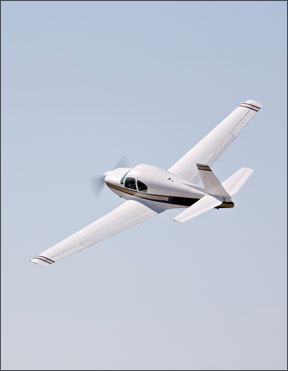
Ever watch an airplane float down the runway before the wheels touch? Mooneys and other clean, long-winged planes are prone to this, especially when their pilots carry a little too much airspeed down the final. How about someone doing a soft-field takeoff, who staggers into the air, nose-high, while bystanders start taking bets on whether the plane will end up in the trees? Both are encountering ground effect, which is basically some free lifting energy produced when an airfoil-whether fixed, as with an airplane or glider, or rotating, as with a rotorcraft-is within a certain distance from a surface, but both also are mishandling it.

Read More »

Glider Lessons

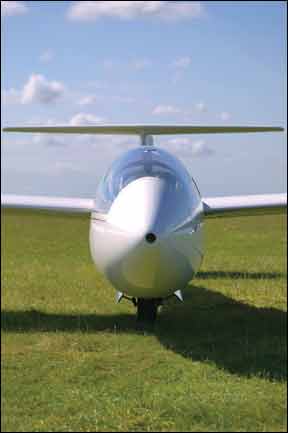
A year ago and mostly for fun, I decided to obtain an add-on glider rating. For any private or commercial airplane pilot, an add-on glider usually can be accomplished in three or four days, provided the weather cooperates. You dont even need a current medical certificate or a drivers license. It also is one of the least expensive add-on ratings an airplane pilot can attain. Flying gliders is fun, but after flying single and multi-engine aircraft for almost 50 years, glider training also helped me to look at airplane flying techniques with fresh eyes. Here are some of the things I learned.

Read More »

Horizontal Lift

When discussing the concept of turning an airplane, there are at least two separate and completely different concepts. One is in the navigational sense of turning to a new course or heading. However, this article is concerned with another concept: moving the airplane in a curved flight path. Curving or bending the flight path changes the airplanes longitudinal axis orientation with respect to the earths surface. Of course, this occurs while moving through the air. This curving flight path is one of only two the airplane can make-the other, unsurprisingly, is straight.

Read More »

Slow Down, You Move Too Fast

One of the reasons people become pilots is we like the idea of going fast. As children with a Radio Flyer wagon at the top of a hill, we learn very early going fast can be fun but also has some associated dangers, usually summarized as “going too fast.” Even though were older, presumably wiser and flying what might be the latest airframe with all the whiz-bang gadgetry in it we can afford, theres still such a thing as going too fast. Once the aircraft leaves the surface, using visual cues to determine the speed at which we are moving through the air isnt possible. Even while on the runway, if there is any surface wind, pilots know airspeed can be substantially different than the speed we appear to be moving.

Read More »

Got Rudder?

During checkouts of rated pilots, I usually ask them to explain why the rudder is on the airplane. More than half of rated pilots will tell me the rudder helps turn the aircraft, which is not only wrong but is a very dangerous belief. Less than half of pilots will correctly identify the main purpose of the rudder, to correct for adverse yaw. By failing to correctly understanding the rudders purpose, these pilots exhibit a failure in our training system. Moreover, by misusing the airplanes primary controls, they arent flying it properly or efficiently. This realization has many implications-an indictment of our training systems among them-but the dangers of misusing the rudder also must be acknowledged. Lets discuss the rudders proper role, plus the effects and dangers of misusing primary controls.

Read More »
Pilot in aircraft
Sign-up for newsletters & special offers!

Get the latest stories & special offers delivered directly to your inbox.

SUBSCRIBE