Register

Stick & Rudder

Becoming Your Own Test Pilot

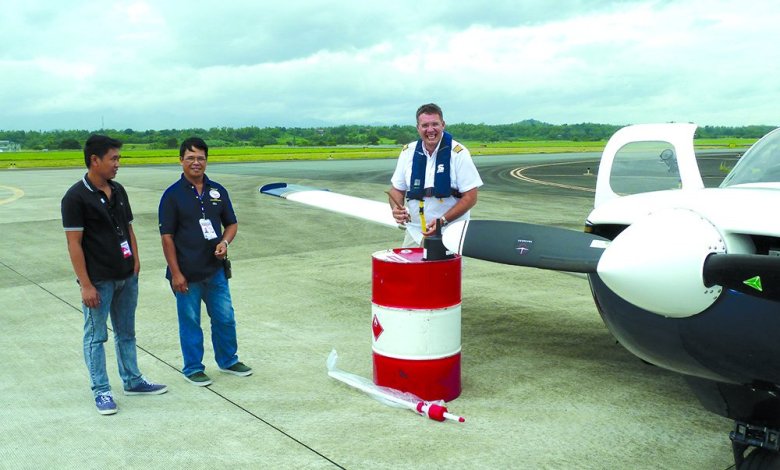
Very few airplanes get precisely “book” performance. Some do better, some don’t quite meet the specs. Meanwhile, common piloting techniques differ from those recommended by the pilot’s operating handbook (POH) or airplane flight manual (AFM). It’s up to you to determine what is “normal” for your airplane, and the way you fly it. To learn what even a type-certificated airplane will truly do and when, you need to test-fly the airplane. For a time, I was the lead instructor for Beechcraft Bonanza training for an international flight safety organization working at the Beech factory airport. Part of the training we provided included flight in the customer’s airplane. One of the items on the flight training syllabus was to show different flying techniques, and compare actual performance received to that predicted by the POH.
Read More »

Fixing Your Flare

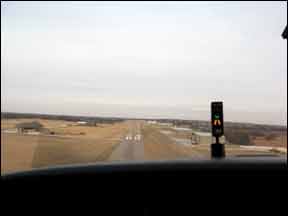
No matter how smooth and enjoyable the flight, your passengers always will remember the landing. Anything other than a single, bounce-free touchdown is ripe for comment and, if your passengers also are pilots, ridicule. While a good landing is a combination of many factors, the last chance you have to affect its outcome is in the flare. Whether you’re flaring too high above the runway or too low, at too high an airspeed or too enthusiastically, there’s usually a fix for what ails your landings. A lot of it can come down to how you transition from approaching the runway with the nose down to the ideal nose-up, power-off attitude, inches above the runway. It’s not that hard.

Read More »

Crosswind Considerations

Like debates on high-wing versus low, discussions of “proper” crosswind techniques stand among those topics that split pilot opinions. Roughly speaking, it’s long seemed that aviators maintain membership in one of three groups: One group favors flying crabbed approaches and departures. Another insists the wing-low, upwind-gear-first technique works best. The final group recognizes values in both and offers an answer often irritating to members of the other two groups: It depends, they say. Pilots should be competent enough to embrace either solution to crosswind transitions, employing the technique best for the time, the place and the aircraft.

Read More »

Climb Considerations

long ago, an instructor explained to me that knowing the various options for using the airplane, the different ways to make it do what’s needed, and the savvy to use those different models as appropriate, differentiated aviating from rote piloting. In the case of using climb abilities to your benefit, the best preparation begins with knowing and understanding all available options, knowing the plane and practice.

Read More »

Five Twin Training Tips

Would you like to declare an emergency?” the controller asked with practiced coolness. Looking at the stopped and feathered left engine on the Cessna 310R I’d had for just 10 days, there was only one possible answer: “Yes.” Moments before, the engine had started vibrating so violently I was afraid it would shake the plane apart. I quickly feathered and shut it down, and called ATC. “Buffalo Approach, Twin Cessna 692, my left engine has failed.” So there I was, about 20 miles from my destination with only one fan turning, taken somewhat by surprise by the failure of a freshly overhauled engine. I stabilized and trimmed the plane, and with airspeed well over the blue line, I keyed in “direct to” on the GPS. Approach indicated they would inform my non-towered destination of my situation and impending arrival.

Read More »

The Alpha Principle

Loss of control in flight (LOC-F) is implicated in 51 percent of all fatal personal and business-use GA accidents, according to the NTSB. The preponderance of LOC-F events are aerodynamic stalls, according to NTSB member Dr. Earl Weener and as reported in his presentation at AOPA Summit in October 2012. Notably, fatal stalls are less common in instructional flight, perhaps because pilots are expecting them when training, and the instructor helps detect and respond to them. In my almost 30 years of experience, stalls and stall avoidance are constantly emphasized and feature regularly in NTSB investigations. I suspect a lot of Aviation Safety readers have even more experience than me, and have seen the same emphasis and crash record even longer.

Read More »

Riding The Storm Out

The flight data recorder retrieved from the crashed twin-engine, modern turboprop revealed that while flying in an area of thunderstorm-generated, airframe-shattering turbulence, its airspeed was 60 knots greater than the published turbulence penetration speed, or the speed for maximum gust intensity (VB). An inflight break-up occurred; structural pieces of the airframe were strewn over miles of countryside. Abnormally increased structural loads imposed on the airframe were suspected as a contributing factor in the accident.

Read More »

Out of Control

There’s no need to go all Type A over this, but piloting an aircraft is among those activities where it’s to our benefit to be something of a control freak. It pays because of all the many bad outcomes that can result from losing control. The variations and possibilities seem infinite, as pilots find new and innovative ways to let physics and aerodynamics take over from them. Stalls—on rotation, turning final and elsewhere—promise particularly harsh results while running off a runway, another common example, hurts less often and less badly.

Read More »

Pitch? Or Power?

Seemingly for generations pilots have argued over which controls speed and which controls altitude: power or pitch. At varying times the FAA contributed support to both sides with publications outlining flying techniques and training information. The very existence of the arguably adolescent-level debates ignores the hard reality: In powered aircraft neither one works alone. To achieve optimum performance in any setting requires balancing the two to best match the needs of the moment. Different combinations—and different sequences—give us everything from the best climb to the best cruise to the best economy to an optimal descent profile or best-profile for an instrument approach. In all cases, the power equation varies according to the altitude you seek, and the pitch attitude necessary varies with the desired airspeed. Just as an aircraft needs to obtain and maintain a specific pitch angle to match its bank angle in a level turn at any given speed, smooth, coordinated flight requires managing both pitch and power. But before we discuss how best to achieve the desired balance, let’s return to the basics of the impact of pitch and power on a powered aircraft.

Read More »

Minimum Airspeed

Most of us use airplanes to go places fast, or at least faster than other forms of personal transportation. Some of us use them to go slow, to check out the fall colors, to look for wildlife and other features on the ground or, being in no real hurry, because we can. Regardless of which mission you’re flying, each flight includes two segments when we’re at something close to the airplane’s minimum controllable airspeed: takeoff and landing. But flying at minimum controllable airspeed can have other uses. For one, it’s a great way to teach a student how to handle an airplane when landing. For another, it can help even rated pilots hone some long-forgotten or disused skills. A third reason can involve checking an airplane’s control system and major surfaces for proper rigging or confirming its flight characteristics.

Read More »
Pilot in aircraft
Sign-up for newsletters & special offers!

Get the latest stories & special offers delivered directly to your inbox.

SUBSCRIBE