Register

Stick & Rudder

Wind Shear Is Another Matter Altogether

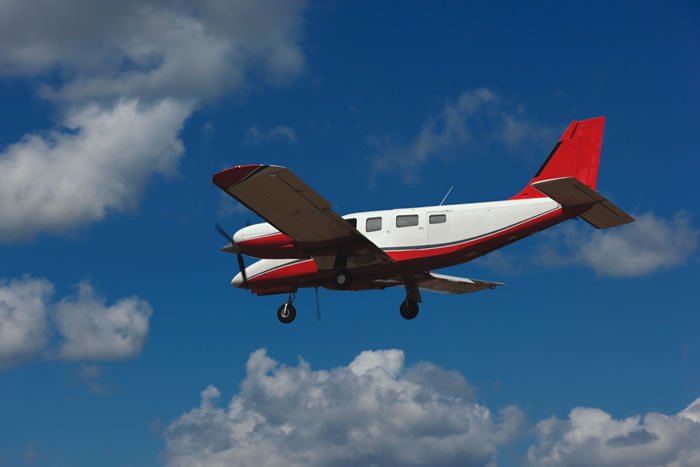
On August 2, 1985, Delta Air Lines Flight 191, a Lockheed L-1011, crashed while approaching the Dallas/Fort Worth International Airport, Texas. While passing through the rain shaft beneath a thunderstorm, Flight 191 entered a microburst, which the crew was unable to traverse successfully. Of the 163 aboard, 134 passengers and crew died; 26 passengers and three cabin attendants survived.

Read More »

Differences

In many ways, talking about flying consistent traffic patterns as a way to help perfect our landings is a fools errand. Thats because each pattern, approach and landing is different. Tower can bring us in directly to the runway on a long final or a short right base, or ask for an extended downwind. What was a mild left crosswind when you landed this morning can be a honker from the right this afternoon.

Read More »

Be Where You Should Be

Since a good landing comes from a good approach, if you fly the traffic pattern the same way each time, youre most of the way toward perfecting your landings. Try these suggestions for what to do and where to be at each point in the pattern, and youll be consistently gliding over the threshold at the proper speed and altitude. Modify as necessary for conditions, of course, but aim to hit each of these yardsticks in the pattern and youll have eliminated some of the more common problems pilots have with their landings.

Read More »

Laid-Back Landings

Year after year, far and away the largest number of fixed-wing accidents result from attempts to get those airplanes back onto the ground. So says the AOPA Air Safety Institutes 23rd Joseph T. Nall Report, examining general aviation safety during 2011. Landing accidents are more than twice as frequent as any other pilot-related accident category, according to the Report. Thats the bad news. The good news is we can do something about it: improve our performance.Theres no question landing an airplane is a complex task, but one way to ensure we always perform well is consistency: do it the same way each time and youll eventually get good at it. In other words, we need to make our landings routine, not excitement-filled adventures where the outcome is in doubt until the last moment.

Read More »

Extreme Maneuvering

Most pilots are content do drone along in the straight-and-level, rarely banking beyond 30 degrees or pitching up and down beyond 10. Meanwhile, aerobatic pilots enthuse in their ability to fly upside down, vertically and in all combinations. Somewhere in the middle of these two extremes are what the FAA calls performance maneuvers, generally thought of as those required on the commercial airplane pilots practical test.

Read More »

All About Ailerons

Last month in this space we tackled “Proper Rudder Use,” pointing out that in many situations involving angles of attack (AoA) at or near the stall, rudder and not aileron should be the control used to maintain both heading and a wings-level attitude. We also explored how rudder is used to compensate for adverse yaw, and presented a simple exercise pilots can use to demonstrate both its proper and improper application.

Read More »

Stall Recovery: Ailerons Or Rudder?

At the last minute on final approach, you see an obstacle on the runway. You’ve initiated a go-around, but in your haste you let the nose rise too much, or even pull it up excessively for fear of hitting trees at the far end of the airport. The stall warning horn sounds but you don’t respond quickly enough, and the airplane begins to shudder—the “first aerodynamic indication” of a stall. One wing begins to drop. As you push forward to reduce the angle of attack and break the stall, do you coordinate rudder and aileron to level the wings or force yourself to hold the ailerons neutral and level the wings with rudder alone?

Read More »

Five Landing Fixes

Especially when looking at recent accidents involving scheduled airliners, it occurs that some people are still having problems with their landings. Yes, they can be difficult to master, especially when crosswinds or other factors complicate things and distract us. But this shouldn’t be so hard.

Read More »

Twin Takeoffs

Departing from a 4200-foot runway, the twin engine Beech B60 Duke lifted off after a 1500-foot takeoff roll. The landing gear was immediately retracted but at approximately 100 feet agl, a large puff of black smoke erupted from the left engine. Witnesses stated the airplane pitched up and then banked sharply to the left. At approximately 500 feet agl, the airplane banked 90 degrees to the left in a nose-down attitude, rolled inverted and impacted a building, killing the pilot and passengers. It was a classic VMC rollover accident, resulting from the pilot’s failure to establish and maintain an airspeed equal to or greater than the airplane’s minimum controllable airspeed in one engine inoperative (OEI) flight.

Read More »
Pilot in aircraft
Sign-up for newsletters & special offers!

Get the latest stories & special offers delivered directly to your inbox.

SUBSCRIBE