Register

Stick & Rudder

FSFs Recommended Elements Of a Stabilized Approach

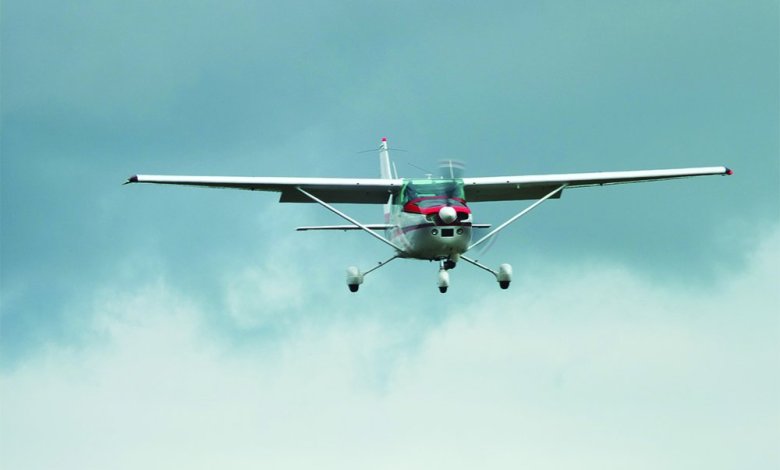
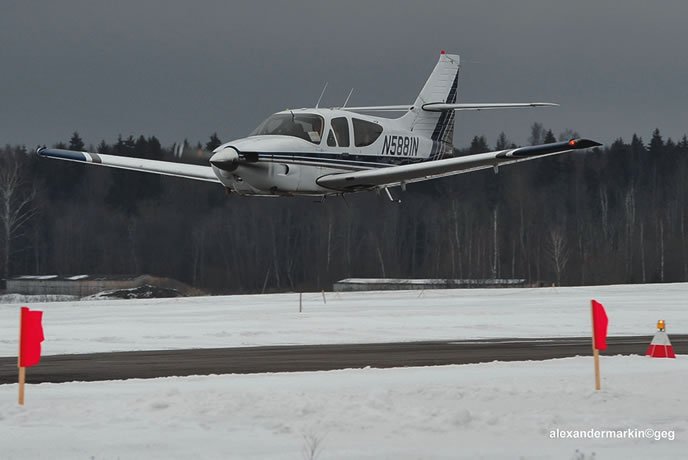
All flights must be stabilized by 1000 feet above airport elevation in instrument meteorological conditions (IMC) and by 500 feet above airport elevation in visual meteorological conditions (VMC). An approach is stabilized when all of the following criteria are met: 1. The aircraft is on the correct flight path; [IMGCAP(1)] 2. Only small changes in heading/pitch are required to maintain the correct flight path; 3. The aircraft speed is not more than VREF + 20 knots indicated airspeed and…

Read More »

Pitch Trim Principles

An airplane will seek the indicated airspeed for which it is trimmed. We might call this the principle of trim, and it is the basis for pitch stability and airplane control. If you understand this basis, you can predict an airplanes response to just about any change in power, control input, autopilot command and even wind shear.

Read More »

Less Power for More Aircraft Range

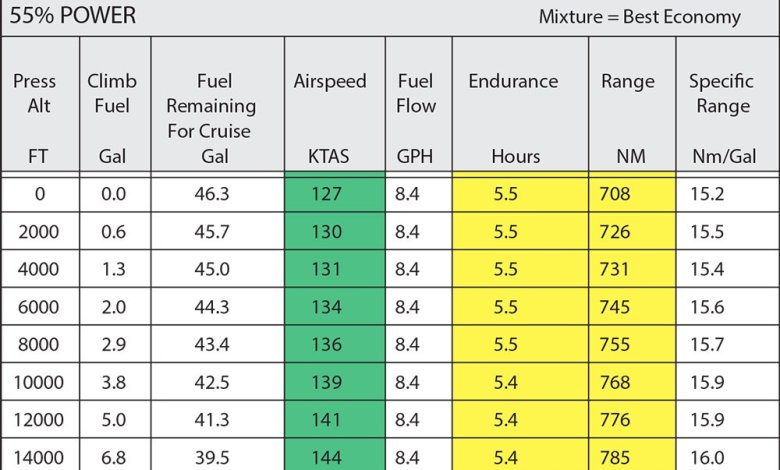
What if getting to B by burning as little fuel as possible is our objective? Or we want to stay aloft as long as possible? There are speeds to fly to achieve those goals, but well have to slow down, usually a lot. And those exact speeds, for best range and for best endurance, usually arent published for personal airplanes. A workaround is to simply use the lowest book power setting. If no limitations prevent it, best range or endurance usually is found at even lower power.

Read More »

The Perils Of Forward CG

Anyone whos made it through primary training knows the importance of determining an airplanes weight and balance. From that training, we know there are real limitations on how much it can carry and where that weight-whether in fuel, cargo or passengers-can be. We also know a lighter airplane performs better than a heavy one, and that weight concentrated near the fore or aft limits can affect aircraft performance.

Read More »

Landing Re-Dos: Things to Think About

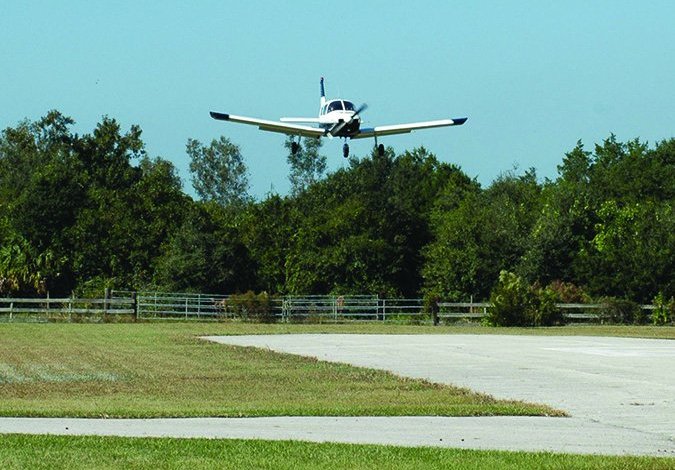
There you are, on short final to a nearby airports runway, hoping to get to the fly-in breakfast before the sausages get too old. Youve made your position reports on the CTAF throughout the pattern, the landing checklist is complete, the airplane is configured for landing and youve nailed the airspeed. All youre waiting for as you glide down to the runway is raising the nose for the flare and the final power reduction. Theres no reason to expect this wont be one of your better landings. Until that airplane thats been sitting in the run-up area decides to taxi onto your runway, turn its back to you and begin accelerating for its takeoff roll. Its time to go around. What will you do?

Read More »

Airspeed & Turbulence: Easy Adjustments

The airspeed indicator always has been one of a pilots most useful tools for measuring aircraft performance. Its colorful, with white and green, maybe a pair of red lines and a blue one, and maybe some yellow. And theres that big white needle we use for bragging rights. Early on, we were taught some of the most important speeds we need to know and use arent marked on it. One of them is the airplanes design maneuvering speed (VA), sometimes confused with the turbulent air penetration speed, which perhaps is better known as design speed for maximum gust intensity (VB).But is there a difference between VA and VB? What is it, and when do you use them? Why? Which should we be concerned more with as a pilot, and when? And airplanes are stressed to lower negative-G limits than their positive G-load limit-what about negative-G encounters in turbulence? Lets look at the operational reality of airspeed and G-load control in turbulent air.

Read More »

Coordinated Flight

Most of the time, the typical pilot flying the typical airplane will be in a straight-and-level attitude. When it comes time to join a traffic pattern, for example, enter a holding pattern or fly an ATC vector, we abandon straight-and-level for turning flight. When we turn, we change the airplanes aerodynamics-the degree of change depends quite literally on the degree of bank-and one outcome can be uncoordinated flight. Ideally, we all would be adept at maintaining coordinated flight, in turns and other maneuvers.

Read More »

Using Ground Effect

The lack of respect many pilots give to ground effect sort of makes it the Rodney Dangerfield of aerodynamics. Its that momentary sag right after takeoff, and that little bit of float on landing. We know about it, but its often an afterthought: Oh, thats how I screwed up that flare. We all should know ground effect is only encountered…well, close to a flat surface, be it liquid or solid, but sometimes we forget.

Read More »

Asymmetric Loads And Maneuvering Stalls

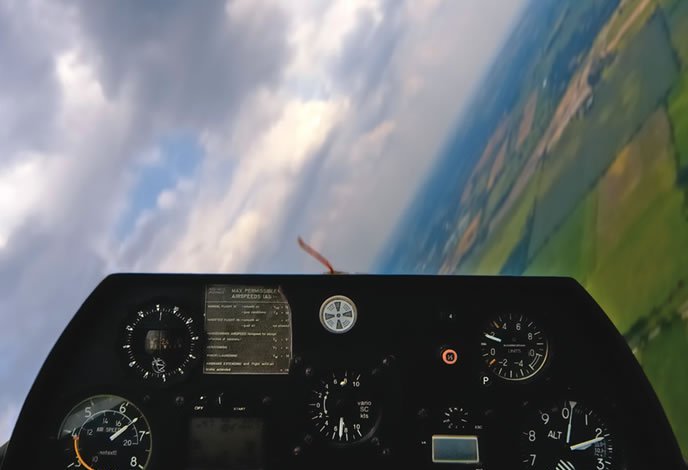
Almost any time the discussion is about stalling at greater than 1g, it usually involves symmetrical flight, where all portions of the airplanes structure are experiencing the same g-loading. But what if, say, one wing is at 2g and the other is at 3g, as might be the case in a rolling (banking) pull-up from a dive? The rising wing is experiencing greater g loading because its generating more lift. The descending wing, on the other hand, experiences less loading because its not generating as much.

Read More »

Maneuvering Stalls

One of the first things primary students learn in their training is the relationship of airspeed to stalls. Unfortunately, the Primacy Law can take over, leaving some pilots with the unshakable belief stalls only can happen at stalling speed, either clean (VS/VS1) or in the landing configuration (VS0). Thats basically true in 1g flight but not if any additional loading is placed on the wings, as often is the case when were maneuvering. In that situation, stall speed increases, sometimes dramatically.

Read More »
Pilot in aircraft
Sign-up for newsletters & special offers!

Get the latest stories & special offers delivered directly to your inbox.

SUBSCRIBE